

Life of a Brave: Exploring The Effects Of AI On How We Learn
by Josue Sanchez, co-Editor-in-Chief
Developments in the field of artificial intelligence (AI) technologies and chatbots, like OpenAI’s ChatGPT and DALL·E, have presented a wide array of opportunities (or temptations) for students, which begs the questions: how can we use AI well, and is there any value in it?
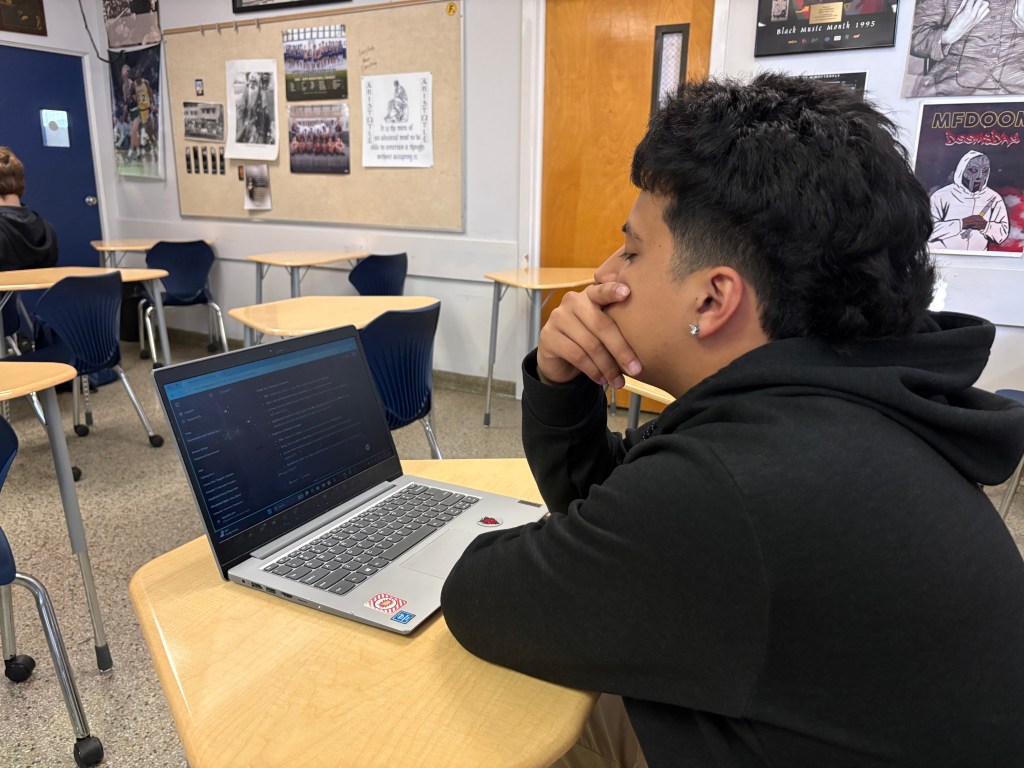
It’s not a reach to say that most students across the country have at least heard of ChatGPT. The chatbot, released by AI research company OpenAI in November 2022, has presented a fundamental shift in the modern discussion around artificial intelligence technologies and programs.
The ramifications of these technologies extend into various facets of life. For example, the widely-known SAG-AFTRA protests in 2023 began because actors and script-writers for movies were concerned about their employers utilizing these technologies, pushing human experiences out of motion pictures.
AI tech has even entered the field of law, with the development of DoNotPay, an AI company that has developed a “robot lawyer,” which allegedly contests erroneous parking tickets for users.
Perhaps most notably, artificial intelligence programs have been affecting the realm of education. As these services are used more and more by students, teachers have resorted to detecting the use of AI-written work in student essays and projects. New websites, like GPTZero and QuillBot, as well as existing software like Turnitin, a commonly-used plagiarism checker, have allowed teachers to monitor student work.
There is an argument, however, that AI technologies are being mismanaged within schools. Is it possible for AI to be beneficial to the learning experience? Or rather, should it be removed from the field of education altogether?
Before addressing these questions, it is important to understand how these chatbots work. When any AI-powered program receives a prompt, whether it is for an image of a cat or an opening paragraph for an essay, it relies on a large collection of training data, typically made up of everything on the Internet. When a user types something into the chatbot, the program makes predictions about what each consecutive word should be, based on the information it has from across the Internet.
This applies everywhere. Asking for an AI drawing of a cat would take information from images across the Internet and use these images to generate an “accurate” response to the prompt. While this is already controversial by itself, the ramifications it could cause in the world of schooling are much greater. Teachers have varying opinions on the use of AI in education.
One of these teachers is Ms. Megan Fennell, the current Social Studies Department Chair, as well as a social studies instructor for both sophomores and seniors. In her time at Bosco, she has seen the impact of AI technologies in education. Her classes generally focus on more in-class work rather than online essays and activities, meaning that she has not seen as much AI work when grading.
That being said, she still believes that AI makes the learning experience less impactful, as it can just “do” the work for students who don’t want to do much.
“I think it dumbs down people, especially since a lot of kids and even adults don’t know how to use AI properly,” said Ms. Fennell. “If you just let them go free range, it can be dangerous.”
Teachers have also learned to tell when students are using ChatGPT, even with rapid developments in the technology.
“I will know if you’re using AI, because I know what you’re capable of,” said Ms. Fennell. “I know your sentence structures. I know what you know, so it can be easy to detect.”
This view is shared by other instructors on campus. Mrs. Michelle Tracy, a current English teacher for freshmen, juniors and seniors, has also seen the rise of AI in schooling. Being in the English department, likely the department that is most affected by AI, she has had to take extra measures to ensure that work is truly student-written.
“With AI, you can completely generate something that’s not yours,” said Mrs. Tracy. “It’s added another dimension to the way we have to detect plagiarism in the classroom.”
She believes that it is much harder to ensure that a student is capturing any information from school, and that this is not just affecting the English department.
With that in mind, the issue is not clear-cut. Some believe that AI can also be used as a tool to help with learning and that it can provide some positive benefits to the learning environment. Many students believe that AI isn’t a tool for cheating, but rather a tool for learning, facilitating the process behind certain assignments.
“It gives me information or ideas for certain assignments, and I make sure to use it responsibly,” said a Bosco senior. “In some cases, I think of it as almost like a Google search but in a more efficient form.”
Others feel that it can serve as a good tool when thinking of ideas.
“I only use it to build ideas when brainstorming on an assignment,” another Bosco student said.
“I feel as though AI can be a double-edged sword,” said someone else. “Yes, the amount of time it can save you when it comes to reading and writer’s block is substantial. But, it is dangerous to the foundation of the younger generations’ reading comprehension, stamina and creativity.”
This belief is shared by teachers as well. Many teachers believe that there are indeed positive ways to use the technology—not to do the assignment, but to help with the process behind said assignment.
“I think it depends on how they want to use it,” said Ms. Fennell. “It has to be up to the teacher and the discretion on what exactly [a student] wants to use it for.”
This belief is also shared by other teachers. Mrs. Tracy, for example, believes in the positive ways that AI could be used to help students comprehend more material.
“It could be a tool for them to actually use their editing skills or use their analytical skills,” said Ms. Tracy. “I think there are beneficial ways that they can be used.”
At the center of this discussion is the topic of appropriate usage. It’s not necessarily about using the AI, but rather how it is used. A student could use it to generate their entire essay on a book they have never read.
However, it’s important to acknowledge that there is a gray area: how about a student turning in their original college applications essay to ChatGPT and asking for improvements? How about asking it for ideas that a student can use to develop their own essay? How about a student asking ChatGPT for sources?
The answers to these questions are not clear. Therefore, it’s best to be mindful of the way that we use these technologies and really think critically about whether the technologies are doing the work, or just helping us with it.
AI has a lot of value for students, but it also carries a lot of risk. Our school, much like dozens of schools in the region, has the purpose of preparing all our students for their future careers and studies. In order to be prepared, it is important for students to actually learn things and to expect the unexpected in life. This is an important part of our lives, and ourselves.
The major question: is AI hampering our ability to learn and to face these challenges, or not? The answer to that question will be rooted less in the AI technologies themselves and much more in the habits of the human beings who use them.
 The Brave News