

Life Of A Brave: Recognizing And Prioritizing The Importance Of Sleep
by Cuahutemoc Solorzano
Having trouble trying to sleep? Trying to balance too many things at once? Learn how to balance your sleep schedule before it leaves long-lasting effects on your health.
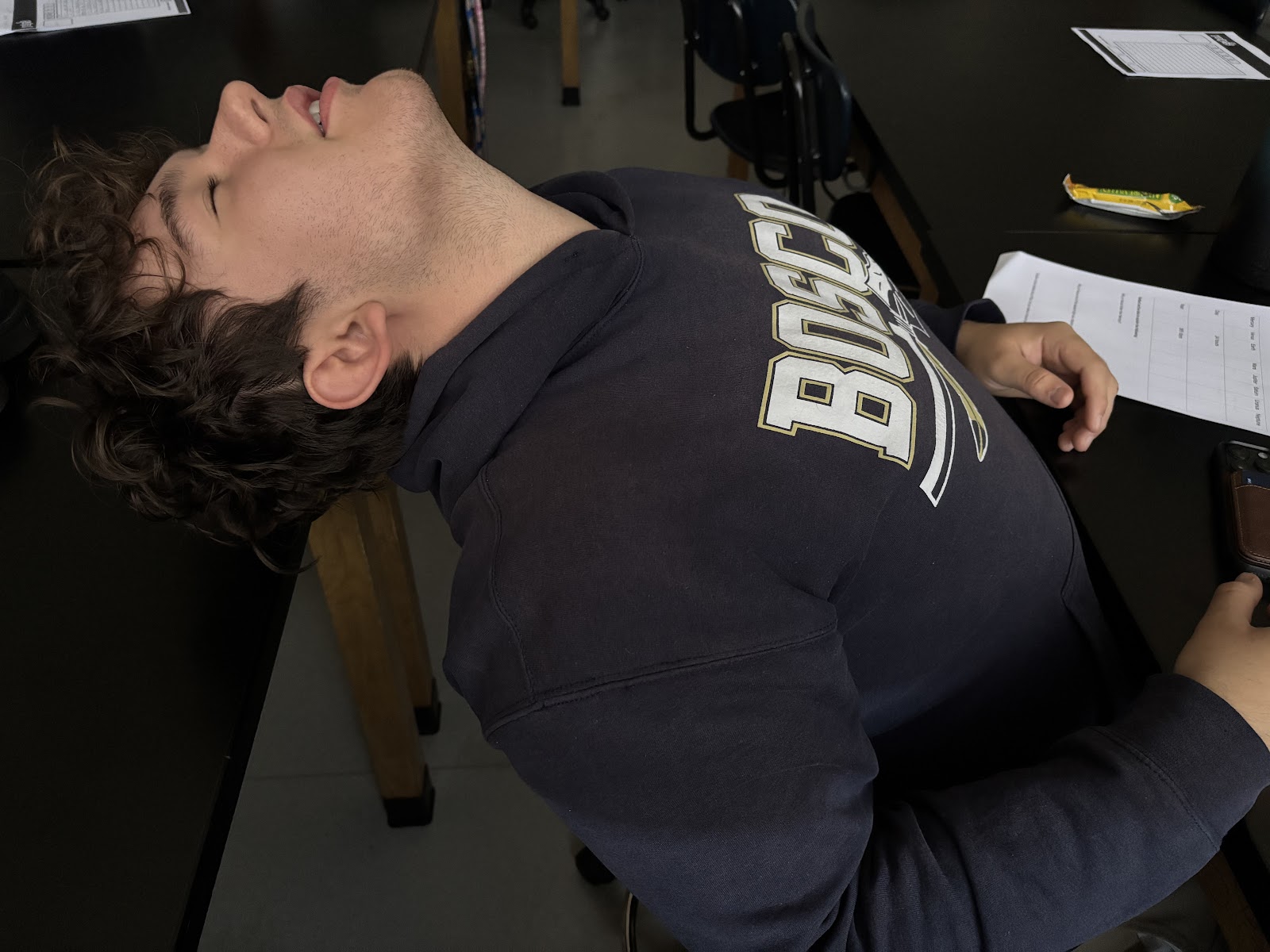
Sleep. Everyone needs it! But not everyone gets the suggested amount of sleep. According to Dr. Francesca Po, St. John Bosco’s Coordinator of Youth Ministry, an extremely low percentage of people only need six hours of sleep—most need around eight to nine hours.
The first four hours of sleep are spent ‘powering down’ while the other four are the actual time your brain is resting. Not getting enough sleep will cause individuals to have less patience the next day and be prone to irritability, according to Dr. Po.
Sleep is important and a lack of it could have long-lasting effects. Fortunately, there are ways to fix a bad sleep schedule.
Technology with blue screens, bright light and audio can keep people awake because they’re being stimulated by them, according to Dr. Po. Try to avoid using technology 30 minutes before going to sleep so the transition from being awake to sleeping is easier.
A lack of sleep may also leave lasting health effects. Sleep regulates the hormones and chemicals in the human body; thus, a lack of sleep will lead to an imbalance of hormones and chemicals in the body, according to Mr. Solorza.
There are three important hormones when it comes to sleep: cortisol, GABA (gamma-aminobutyric acid) and melatonin, according to Mr. Solorza.
“Cortisol helps to wake us up and should decline by nighttime to help us rest. GABA is a neurotransmitter that relaxes us and is usually low in count with sleep deprivation. [Melatonin] is the hormone that helps us relax and fall asleep,” said Mr. Solorza.
An imbalance of hormones makes athletes more injury-prone and causes students to lose the ability to focus and think critically. Individuals deprived of adequate sleep will have little to no emotional stability because their hormones can’t regulate their body, according to Mr. Solorza.
Some students are deprived of sleep because they’re busy juggling extracurriculars, school and college at the same time. Trying to manage all of these things without sleep will increase stress. In order to manage a multitude of responsibilities, a student will need sleep or else they’re more likely to perform poorly.
Jayden Garcia, a junior at SJB and a participant in theater and the Bio-Medical Pathway, shared his experience trying to juggle many responsibilities.
“My sleep schedule is all over the place. Sometimes, I manage to get a good amount of sleep, but I tend to stay up quite late, especially when I have a lot of homework,” said Jayden.
Essays, projects, tournaments—whatever a student might be part of will often lead them to prioritize certain responsibilities over others. But they should prioritize their health.
“Once, I pulled an all-nighter to complete a project and the next day, I found it difficult to concentrate in class,” said Jayden. “Socializing with my friends also felt strange, as if I was not present.”
Poor sleep will have a domino effect on a student’s performance. If they’re unable to focus, then their assignments will decrease in quality. This applies to anything a student may be part of: clubs, performing arts and so on.
Stress and being unable to go to sleep go hand-in-hand. An individual unable to sleep may find it difficult because they are stressed and a student that isn’t getting enough sleep will experience increased stress.
“Stress makes it more difficult to sleep. If I am really worried about something, I have even more trouble going to sleep, which makes me more anxious,” said Jayden.
There are ways to create time for a healthy sleep schedule, though it requires more grit than a usual student might have. Julia Gisel, a student from St. Joseph’s High School with many responsibilities, shares her strategies.
“The way I normally balance all of these activities is by doing all of my homework right when it is assigned, making use of free time in class and [study hall],” said Julia. “When I come home from my various after-school activities, normally around seven to 8pm, I have dinner, then take time to do some of my hobbies and then go to sleep.”
Maintaining a consistent sleep schedule becomes difficult when technology is a core part of most individuals’ lives. It is used for communication, entertainment and so on. Since it takes next to nothing to use technology such as a phone, it becomes difficult to stop using it.
“I try not to go on my phone before I go to sleep,” said Julia. “It’s difficult. I do often find myself scrolling through TikTok to fall asleep, especially on weekends.”
Sleep is perhaps the most neglected part of the trinity of health, as stated earlier by Dr. Francesca Po. Responsibilities are important but sleep is more important to your overall health.
“Prioritize your sleep, as it will have an effect on most other elements of your life, like mental health, school and sports performance and relationships,” said Julia. “Even if it means not getting a homework assignment in on time or not being able to watch a show you were looking forward to, sleep is more important to your overall physical and mental health than anything else.”
Fortunately, Mr. Solorza knows some methods to form a healthy sleep schedule.
“We need to train ourselves to ‘wind down’ as our bedtime approaches. It helps to try and sleep around the same time each night. Finding a calm activity an hour or so before bed helps us calm down. [It’s extremely important to] avoid screen time. We are phone addicts, but the light from phones pauses our brain when it’s trying to transition into sleep mode,” said Mr. Solorza. “Avoiding sugary foods or caffeine drinks before bed and, my personal favorite, trying to calm the mind and avoid thinking of the challenges tomorrow will bring as you try to sleep.”
For an in-depth discussion of sleep and how it affects the body, consider visiting this link. To learn more about how sleep deprivation can affect the body, consider visiting this link.
 The Brave News
Pingback: Life of a Brave: The Importance of Sleep | Dr. Francesca Po