Category Archives: Life of a Brave

Life of a Brave: Attention Spans In The Age Of Technology And How To Develop ‘Grit’

by Cuahutemoc Solorzano

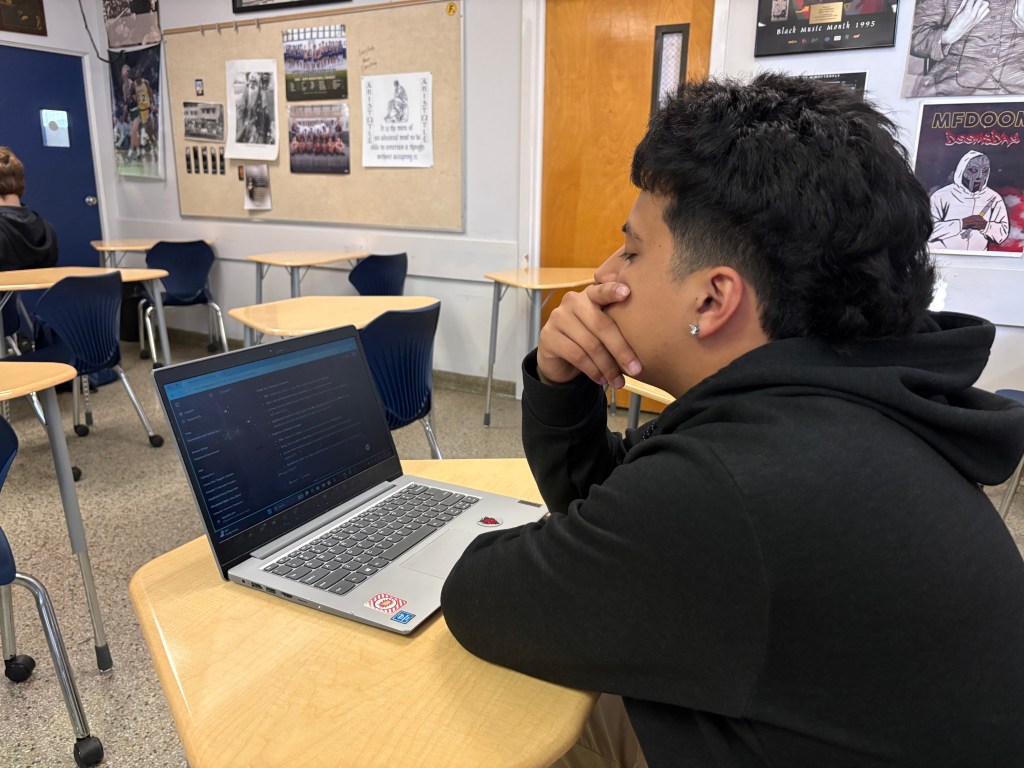
In this world of modern technology and constant distractions, it’s difficult to focus on a single task, but there are ways to create a healthy attention span.

Photo by Dominic Wojtecki, Photo Editor

Attention span, or “grit” as it is sometimes referred, is the amount of time a person can spend focusing on a task without becoming distracted. Grit is a vital ability for an individual to manage responsibilities and achieve goals.

Within the past two decades, attention spans have started shrinking – drastically. 

Mr. Ruben Solorza, St. John Bosco’s AP Psychology teacher, notes that modern phones and media have contributed greatly to the ever-shrinking attention spans within individuals. In particular, younger individuals and students are most affected by technology. 

“There has been a very rapid [decrease] of focus [in students]. It ties back to them wanting to be with their phone. They want to look at their phone; they want to go on Instagram,” Mr. Solorza said. “Basically, everything [else] is seen as a barrier to get to the phone.”

Media has a profound impact on the attention span of the modern individual because it – the phone – provides whatever the individual desires, according to Mr. Solorza. If the user doesn’t enjoy what they’re viewing, then they have the option to find something else to stimulate them.

Individuals are provided with unlimited choices, thus they ‘click’ away from anything not stimulating. The ability to fix a short attention span does exist, though it requires discipline and care. 

Mr. Solorza said that short attention spans can be fixed by learning how to be bored and separated from technology. Individuals must learn to discipline themselves instead of letting others discipline them.

Being bored whilst doing something strengthens an individual’s grit because they’re still paying attention to a task despite not being stimulated.

Individuals should care about fixing their attention span, subsequently developing grit, for their academic future. Grit is extremely important for students headed toward college due to their sudden gain of independence. 

“When you have a lecture in college, you have to be able to sit for longer than ten minutes without getting up or going to do something,” Mr. Brian Miller, a science instructor at Bosco, said. 

Bosco’s teachers have implemented ways to work around the phone – by imitating it. Like smart phones themselves, teachers have begun to provide more choices to students. Mr. Miller provides videos as well as different types of projects and assignments so that he can cater to different learning styles. 

The vast majority of younger individuals were born with technology readily accessible, which ultimately cultivates their addiction to the phone and reduces their grit.

But a different approach of introducing technology to children may change their desire to use a phone.

In Hungary, they teach their children how to appropriately drink alcohol. This eliminates a large desire to drink alcohol because it stops becoming a taboo and, rather, becomes the norm to manage it or not drink at all, according to Mr. Miller. This same practice could be implemented for technology – particularly with phones.

Moderation is key for a stable life.

Not all individuals born in the age of technology are addicted, and some have healthy attention spans. Many students at Bosco are able to focus for long periods of time whilst ignoring distractions. 

Bosco junior William Pearce, a member of the school’s Executive Board, is able to study for hours on end because he knows how his phone will affect him if he uses it.

“If I’m studying for a really big test and I studied for like two hours straight, I know that if I go on my phone I’m going to be on it for way too long. So I’ll pick up my guitar and I’ll play a song,” William said. “Sometimes, I’ll open up my [DJ] deck and I’ll mix for 15 minutes, and then [when] I get bored or when I mess up, [I’ll] go back to my work.”

Maintaining a certain level of grit is difficult for any individual with a phone, but it ultimately comes down to what an individual values. If they value their academics, then they’ll prioritize learning and studying, subsequently learning grit. 

“I think if you’ve grown up valuing school, then it’s a lot easier. My whole family has been centered around school.
I’m the youngest of four, so I’ve seen [my siblings] academically successful. I [can] see why they value it so much and why they’re where they are now,” William said. “ So now I’m the one that’s like, ‘Okay, I have to value it as much as they did to get where they are.’”

Other ways to maintain a level of focus are to gradually decrease the amount of time between studying and breaks. 

“I think something that would help a lot is offering ‘brain-breaks’ so that students would have the opportunity to relax for a minute and regain their focus,” said Isabelle Prata, a senior at St. Joseph’s High School.

Isabelle, or Izzy, has to maintain a level of grit to manage being a part of a variety of extracurriculars: Drama Club, Vitality League (a club that helps organize SJ’s school-wide blood drives) and an active participant in theater. 

Another method she and many other students enjoy is listening to music while working.

“I’ve noticed that playing music with noise cancelling headphones has helped me a lot when it comes to staying focused on my work,” said Izzy. “Any music that I like works for me. I just put on one of my playlists and get to work. It lets me tune out auditory distractions while still having some sort of auditive stimulation so I’m not working in complete silence.”

A decrease in attention span has become apparent in this fast-paced media centered world. It’s impractical to not have a phone, but with it comes unlimited interruptions.

“A lot of time I notice people starting to talk in class or pick up their phones when lectures get lengthy, and I am no exception to this,” Izzy said. “I just noticed that I start getting distracted and all of a sudden I’m twelve TikToks deep on my phone.”

Maintaining grit isn’t easily attainable in this era of distractions but is feasible, as shown by these students. If you’re struggling with focus try to create some distance from the phone, study in intervals or find an environment that isn’t distracting.


Life of a Brave: Bosco Seniors Entering Time of Bitter Sweetness, Nostalgic For The Past And Excited For The Future

by Augustus Rodriguez, Lampoon Editor

As the second semester rolls on, many seniors start to feel the weight that comes with moving on to the next part of their lives and leaving St. John Bosco High School behind.

Photo by Megan Nash, Director of Marketing and Communications

Many seniors of St. John Bosco are starting to realize that their graduation is a lot closer than ever before. This makes them a bit worried about what lies ahead of them in the future. For a lot of seniors, their next stop is towards college.

Most of the seniors will have to say goodbye to their friends at Bosco and, in some cases, even their parents as they go and explore this new part of their lives. This feeling of moving to their next step in life in only a couple of months makes students feel a bit of anxiety and unsure that they are ready.

“I made so many memories and friends here at Bosco and I have to say goodbye to that in a couple of months,” said senior Elijah Sanchez. “I know saying goodbye is hard, but knowing that I only have a few months until I graduate hits me hard.”

To some seniors, St. John Bosco not only gave these boys a feeling of belonging, but it helped them mature into men ready for anything. 

“I was a bit shy back then when I first came into [St. John Bosco] and I felt like it would be hard to fit in,” said senior Jose Cruz. “Once I found my footing in the marching band, I saw how connected the community is.”

The added pressure many seniors experience has affected them emotionally and mentally.

“Moving on to my next stage of life has been very hard on me, as I have been doing my best to keep all my good grades at the expense of my sleep schedule,” said senior Iveangiel Ysita. “The Bosco brotherhood is real, and it shows how much I will miss my friends when I go to college and have less time to hang out with them.”

Some seniors feel like time is moving too fast for them and they feel rushed into being adults.

“I feel like I am rushed into being an adult, which is why I am trying to hold on to my final years of being a kid before I have to deal with the responsibilities of the real world,” said senior Kevin Rodriguez. 

Some seniors are glad to move into their new chapter of life, but still feel like they are being rushed. The seniors feel like they can’t enjoy the present because of the pressure to look into the future.

“I feel a bit overwhelmed about it, just knowing [that] I’m going into a new chapter of my life and reflecting on how fast time has gone and mentally preparing myself for college,” said senior Nelson Macedonio. 

Seniors like Nelson feel ready to go into college, and despite wanting to still want to hold onto their childhood, they know that their family, friends and God will be by their side during this new part of their life.

Even with all these pressures of facing adult life in only a few months, some seniors feel ready and eager to go to college.

“I feel like these last two years of high school have changed me into being more mature,” said senior Noah Jeffery Wayner. “I feel eager and ready for the responsibilities of being an adult.”

Seniors realize they will face the reality that their time here at Bosco is coming to an end. With this sudden realization, certain seniors reflect on what they accomplished during their four years at Bosco. They realize the good times of being at high school and having fun with their friends will come to an end.

“When I was an incoming freshman, I thought high school was going to be the toughest years of my life,” said senior Evan Urbina. “Bosco and its brotherhood, with not only my classmates but my teachers, certainly made my high school experience a bit easier.”

There have been struggles that seniors have also looked back on to see how they improved. Something like struggling with organizational skills when they were a sophomore to now being able to organize efficiently now that they are a senior. Many seniors have also been able to build lasting bonds with their fellow seniors, underclassmen and even teachers.

The seniors themselves didn’t believe that this Bosco brotherhood would be so strong back then, and it helped them form lifelong friendships without even knowing it. For some seniors, Bosco changed them for the better and helped them get closer to God.

“I transferred into Bosco my junior year, coming from a public school. Bosco really changed me for the better,” said Nelson Macedonio. “In a positive way, it brought me closer to God and shaped me into being a better person overall.”

Even with all of this excitement there is some lingering anxiety that comes with graduation. This somewhat causes a domino effect into a student underperforming in their classes because of the stress and pressure of graduating.

Senioritis is pretty common for students, as they feel like their quarter two senior grades don’t matter to colleges. For certain seniors, they will be the first generation to graduate high school and make it to college, which adds on the pressure for them.

Despite all of the fear and anxiety that comes from moving from high school to their college, loads of seniors cannot wait to walk across the stage and accept their well-earned diploma.

Life of a Brave: The Top Five Things You Can Give Up For Lent

by Andy Ortiz, Managing Editor

Lent started last week, but it’s not too late to think of what to give up for it. For those struggling to figure out what to give up for Lent, here are the top five unique things that you can sacrifice for the season that’ll help get rid of bad habits and bring you closer to God.

Photo from ibelieve.com

Figuring out what you want to sacrifice for Lent can be a bit tricky. On one hand, you don’t want to pick something so inconsequential that getting rid of it will have no impact on your life whatsoever. But on the other, you shouldn’t pick something so important that it would be too difficult to live without it. With that being said, here are some ideas for things you could sacrifice during Lent.

#5: Fast Food and Takeout

One of the easiest things to give up is fast food, refraining from ordering food online and spending too much on restaurants. This is good for multiple reasons. For one, your wallet will thank you for relieving it from constant purchases. Second, it’s good to relieve your body from junk food and other things that could harm you in the long run.

The time that you spend getting takeout or eating fast food could instead be used to focus on praying and getting yourself closer to God. In fact, giving up fast food is a very easy segue into fasting for Lent in general, so it’s a good option to hit all the big points of the season.

#4: Time on Technology

This could be TVs, radios, but especially phones and computers. Obviously, in today’s world, it’s really difficult to just completely give up these technologies because they’re so prevalent in our lives. A much better idea would be to limit your time on your devices, both to limit the time you spend engaging with social media as well as to spend more time focusing on yourself and your faith.

An easy way to help limit time on your phone would be to use the built in screen time limits in the settings. You can also hide your most used apps from the home screen and change the colors of the screen to greyscale to help discourage you from using it.

#3: Unnecessary Spending

In today’s world, everything is so expensive. The prices of basic groceries have been getting higher and higher, which is only compounded by bills and taxes. The best way you could relieve that burden is by cutting out any purchases that you don’t actually need, such as trendy clothes, games and accessories.

This can help bring you closer to God in a few ways as well. For one, Catholicism often begs the importance of not being drawn in by the things you don’t need. It’s more worth your time to focus on deepening your connection with God.

#2: Negativity

On the news and on social media, there’s always something bad happening. The news is always reporting some horrible event and people on social media are always causing some meaningless drama. All the negative energy around you can cause you to be negative as well. It makes you complain, it gets you into arguments and it makes you feel down.

By “giving up” negativity for Lent, you can cast out the negative influences in your life and better your spirituality. This involves previous points like refraining from social media, but here it’s a bit more than that. You should avoid complaining and fighting with people and learn to forgive just as Jesus did. Giving up negativity is one of the best sacrifices you could make for Lent because it brings you closer to Jesus in acting as he did.

#1: Nothing at all

This might sound very weird, but perhaps one of the best things you can give up for Lent is nothing at all. Many people focus on giving things up because the faith demands it for the season. As a result some people tend to miss the point of Lent, because they see it as a time to sacrifice something they love just because.

But if nothing at all – then what do you do for Lent? The focus shouldn’t just be on “losing something” as much as it should be giving back to your community. Bosco science teacher Mr. Brian Miller uses Lent as an opportunity to better himself and give back to others.

“I feel that Lent should be an opportunity to make myself better, to find ways to improve myself and maybe improve others,” said Mr. Miller. “Doing service in the community is a great way to help others while also providing introspection on how I am both blessed but imperfect.”

Giving things up for Lent is important, because it shows our sacrifice that we’re willing to make. But if we can’t sacrifice, we could spend our time instead doing charity and finding volunteer opportunities. You can also spend more time praying, paying attention at mass, going to confession and overall trying to be closer to God. In the end, that is the most important part of Lent.

Life Of A Brave: Recognizing And Prioritizing The Importance Of Sleep

by Cuahutemoc Solorzano

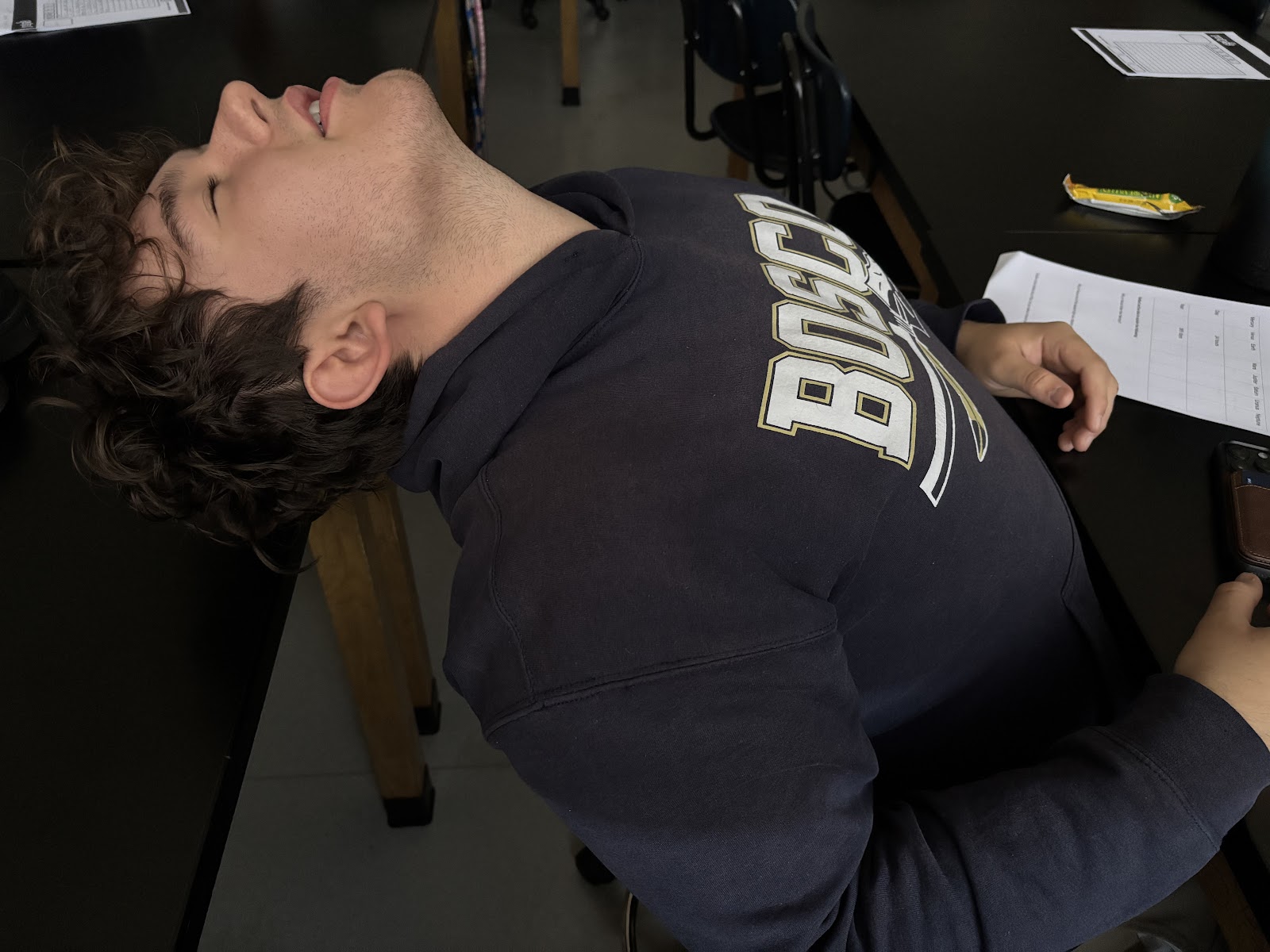
Having trouble trying to sleep? Trying to balance too many things at once? Learn how to balance your sleep schedule before it leaves long-lasting effects on your health.

Photo by Cuahutemoc Solorzano

Sleep. Everyone needs it! But not everyone gets the suggested amount of sleep. According to Dr. Francesca Po, St. John Bosco’s Coordinator of Youth Ministry, an extremely low percentage of people only need six hours of sleep—most need around eight to nine hours.

The first four hours of sleep are spent ‘powering down’ while the other four are the actual time your brain is resting. Not getting enough sleep will cause individuals to have less patience the next day and be prone to irritability, according to Dr. Po.

Sleep is important and a lack of it could have long-lasting effects. Fortunately, there are ways to fix a bad sleep schedule.

Technology with blue screens, bright light and audio can keep people awake because they’re being stimulated by them, according to Dr. Po. Try to avoid using technology 30 minutes before going to sleep so the transition from being awake to sleeping is easier.

A lack of sleep may also leave lasting health effects. Sleep regulates the hormones and chemicals in the human body; thus, a lack of sleep will lead to an imbalance of hormones and chemicals in the body, according to Mr. Solorza.

There are three important hormones when it comes to sleep: cortisol, GABA (gamma-aminobutyric acid) and melatonin, according to Mr. Solorza.

“Cortisol helps to wake us up and should decline by nighttime to help us rest. GABA is a neurotransmitter that relaxes us and is usually low in count with sleep deprivation. [Melatonin] is the hormone that helps us relax and fall asleep,” said Mr. Solorza.

An imbalance of hormones makes athletes more injury-prone and causes students to lose the ability to focus and think critically. Individuals deprived of adequate sleep will have little to no emotional stability because their hormones can’t regulate their body, according to Mr. Solorza.

Some students are deprived of sleep because they’re busy juggling extracurriculars, school and college at the same time. Trying to manage all of these things without sleep will increase stress. In order to manage a multitude of responsibilities, a student will need sleep or else they’re more likely to perform poorly.

Jayden Garcia, a junior at SJB and a participant in theater and the Bio-Medical Pathway, shared his experience trying to juggle many responsibilities.

“My sleep schedule is all over the place. Sometimes, I manage to get a good amount of sleep, but I tend to stay up quite late, especially when I have a lot of homework,” said Jayden.

Essays, projects, tournaments—whatever a student might be part of will often lead them to prioritize certain responsibilities over others. But they should prioritize their health.

“Once, I pulled an all-nighter to complete a project and the next day, I found it difficult to concentrate in class,” said Jayden. “Socializing with my friends also felt strange, as if I was not present.”

Poor sleep will have a domino effect on a student’s performance. If they’re unable to focus, then their assignments will decrease in quality. This applies to anything a student may be part of: clubs, performing arts and so on.

Stress and being unable to go to sleep go hand-in-hand. An individual unable to sleep may find it difficult because they are stressed and a student that isn’t getting enough sleep will experience increased stress.

“Stress makes it more difficult to sleep. If I am really worried about something, I have even more trouble going to sleep, which makes me more anxious,” said Jayden.

There are ways to create time for a healthy sleep schedule, though it requires more grit than a usual student might have. Julia Gisel, a student from St. Joseph’s High School with many responsibilities, shares her strategies.

“The way I normally balance all of these activities is by doing all of my homework right when it is assigned, making use of free time in class and [study hall],” said Julia. “When I come home from my various after-school activities, normally around seven to 8pm, I have dinner, then take time to do some of my hobbies and then go to sleep.”

Maintaining a consistent sleep schedule becomes difficult when technology is a core part of most individuals’ lives. It is used for communication, entertainment and so on. Since it takes next to nothing to use technology such as a phone, it becomes difficult to stop using it.

“I try not to go on my phone before I go to sleep,” said Julia. “It’s difficult. I do often find myself scrolling through TikTok to fall asleep, especially on weekends.”

Sleep is perhaps the most neglected part of the trinity of health, as stated earlier by Dr. Francesca Po. Responsibilities are important but sleep is more important to your overall health.

“Prioritize your sleep, as it will have an effect on most other elements of your life, like mental health, school and sports performance and relationships,” said Julia. “Even if it means not getting a homework assignment in on time or not being able to watch a show you were looking forward to, sleep is more important to your overall physical and mental health than anything else.”

Fortunately, Mr. Solorza knows some methods to form a healthy sleep schedule.

“We need to train ourselves to ‘wind down’ as our bedtime approaches. It helps to try and sleep around the same time each night. Finding a calm activity an hour or so before bed helps us calm down. [It’s extremely important to] avoid screen time. We are phone addicts, but the light from phones pauses our brain when it’s trying to transition into sleep mode,” said Mr. Solorza. “Avoiding sugary foods or caffeine drinks before bed and, my personal favorite, trying to calm the mind and avoid thinking of the challenges tomorrow will bring as you try to sleep.”

For an in-depth discussion of sleep and how it affects the body, consider visiting this link. To learn more about how sleep deprivation can affect the body, consider visiting this link.


Life Of A Brave: Varsity Basketball’s Unsung Hero, The Chris Komin Story

by Noah Arteaga

Christopher Komin’s progression throughout his four years as a member of Bosco Basketball’s junior varsity (JV) and varsity programs has elevated his performance as an athlete and teammate on Bosco’s roster. Now on college scouts’ radars, he looks to solidify his legacy with his teammates in Bosco history with back-to-back CIF State titles.

Photo courtesy of Hoophall West

The last two years, specifically, Chris has demonstrated remarkable growth and development on the court. Standing at 6’2″, he has evolved from a supportive team player into a pivotal contributor, showcasing his offensive prowess in some clutch performances. 

“Komin might be one of the biggest sleepers in America. The bouncy guard can shoot from range and is very good at picking his spots when he is aggressive on a team full of superstars,” said Sports Illustrated’s Heston Quan after the Braves competed in the 2024 Classic at Damien.

Chris grew up in Cypress, California, developing an obsession with basketball at a young age. His passion for the game began with Chris watching his older brother play and wanting to imitate him. 

Basketball led Chris towards St. John Bosco, where he instantly felt he had found a home for the next four years of his high school career.

“Upon meeting Coach Dunn and getting a tour of the school, I instantly felt a sense of family in the school. I knew I had found a home,” Chris said.

Chris’ basketball journey began starting on JV his freshman year, which continued into his sophomore season.

“It allowed me to really develop myself as a player and watch from a different perspective as the program built itself.”

Despite mostly playing JV as a sophomore, Chris played some varsity minutes. In six games and limited minutes, however, he averaged 2.5 points and 0.7 assists, according to MaxPreps. Splitting time with the JV and varsity squads allowed Chris to refine his skills and gain valuable on-court experience. 

Entering his junior year, Chris worked for the opportunity to insert himself into the rotation and impact games. With a fire lit under him, Chris upped his averages to 5.7 points, 1.2 assists and 1.4 steals. The Braves went on to win the CIF Division One State Championship that same season.

The 2024-2025 season, Chris’ senior year, has marked a significant turning point in his career. He increased his scoring output to 11.1 points while averaging 2.1 steals and 0.8 blocks, showing versatility on both ends of the court.. 

Photo by @chriskomin_ on Instagram

A standout moment for Chris this season came during the Section 7 Tournament in June 2024, where he delivered a stellar 27-point performance against Rainier Beach High School, sinking five of six three-point attempts, including a remarkable three-quarter court shot at halftime. 

Later that year, in December’s Classic at Damien in La Verne, California, Chris delivered more impressive performances that reinforced his pivotal role on the team.

The Classic at Damien is renowned for featuring top-tier high school basketball talent, with its Platinum Division highlighting the most elite teams. Bosco Basketball advanced through the tournament, showcasing resilience and skill.

In the semifinal matchup against La Mirada High School, Komin contributed 14 points, including two three-pointers and a notable dunk that energized his team. His performance was instrumental in securing a 66-45 victory, propelling St. John Bosco into the championship game.

The final pitted them against top-ranked Eastvale Roosevelt High School. Despite the absence of standout junior point guard Brandon McCoy, Jr., Komin stepped up, scoring 17 points, with several shots made from NBA-range. 

The game was a defensive battle, with Roosevelt leading 17-15 at halftime. Despite Chris’ offensive contributions, the Braves fell short in overtime, losing 56-55. 

Overall, Chris’ contributions during the 2024 Classic at Damien solidified his reputation as an elite guard, showcasing his offensive skills, defensive prowess and poise under pressure. 

After decommitting from Point Loma, a Division II college, weeks before the Damien tournament, Chris’ recruitment has gained momentum, with several Division I programs expressing interest.

In January, at the 2025 Spalding Hoophall Classic, held at Springfield College’s Blake Arena in Massachusetts, St. John Bosco High School faced off against nationally ranked Paul VI Catholic High School on January 18, 2025. In another closely contested game, St. John Bosco was narrowly defeated with a final score of 60-57. 

Later that month, on January 30, 2025, Sports Illustrated listed Komin at number three amongst the top 25 unsigned high school basketball seniors in Southern California. That number has since jumped to second, with Alijah Arenas committing to USC. 

The publication praised his shooting accuracy, noting a 50% field goal percentage and 42% success rate from beyond the arc. 

Komin’s consistency has been evident throughout the season. Notable performances include scoring 15 points on 67% from the field in a victory over Mater Dei on February 1, 2025 at Intuit Dome.

With countless cameras and social media pointed towards St. John Bosco, the standard has never been higher for the Braves. The margin for error is slim, and the mentality of the team is to go back-to-back and make history. 

“I try not to focus on the cameras that much even though at the stages that we play at there are so many,” said Chris. “I try to stay focused and use all of this media to my advantage, because even though they may not be there to see me, if I play as well as I can then I know they [will take notice].”

Sharing the court with nationally ranked Elzie Harrington, Brandon McCoy and Christian Collins, Chris has elevated his play and immersed himself as a leader.

“My mentality entering my senior year was ultimately to try and perform on the court to the best of my abilities [and have the opportunity] to play basketball in college for free,” said Chris. “My goals have not changed entering the playoffs, but I want to continue being a leader and supportive teammate.’’

With St. John Bosco on a deep playoff run, the expectation to win it all now is embedded in every player and coach. After knocking off a competitive Sierra Canyon, the Braves dominated a defenseless Heritage Christian in a win of 69-39.

The unwavering amount of chemistry flowing through the Braves is a staple of their success, and they are looking to get one step closer to becoming back-to-back state champions. With a familiar opponent, MaxPreps’ fifth-ranked Roosevelt Mustangs, the St. John Bosco Braves face a difficult task on the way to a CIF Open Division title.

Chris’ journey reflects a player dedicated to continuous improvement, with a strong work ethic and a knack for delivering in crucial moments. Through his faith in himself and the St. John Bosco basketball program, he has solidified himself as a leader and tireless competitor. Approaching graduation, Chris Komin’s upward trajectory entails a promising future in collegiate basketball.

Life of a Brave: Exploring The Effects Of AI On How We Learn

by Josue Sanchez, co-Editor-in-Chief

Developments in the field of artificial intelligence (AI) technologies and chatbots, like OpenAI’s ChatGPT and DALL·E, have presented a wide array of opportunities (or temptations) for students, which begs the questions: how can we use AI well, and is there any value in it?

Photo by Josue Sanchez

It’s not a reach to say that most students across the country have at least heard of ChatGPT. The chatbot, released by AI research company OpenAI in November 2022, has presented a fundamental shift in the modern discussion around artificial intelligence technologies and programs.

The ramifications of these technologies extend into various facets of life. For example, the widely-known SAG-AFTRA protests in 2023 began because actors and script-writers for movies were concerned about their employers utilizing these technologies, pushing human experiences out of motion pictures.

AI tech has even entered the field of law, with the development of DoNotPay, an AI company that has developed a “robot lawyer,” which allegedly contests erroneous parking tickets for users.

Perhaps most notably, artificial intelligence programs have been affecting the realm of education. As these services are used more and more by students, teachers have resorted to detecting the use of AI-written work in student essays and projects. New websites, like GPTZero and QuillBot, as well as existing software like Turnitin, a commonly-used plagiarism checker, have allowed teachers to monitor student work.

There is an argument, however, that AI technologies are being mismanaged within schools. Is it possible for AI to be beneficial to the learning experience? Or rather, should it be removed from the field of education altogether?

Before addressing these questions, it is important to understand how these chatbots work. When any AI-powered program receives a prompt, whether it is for an image of a cat or an opening paragraph for an essay, it relies on a large collection of training data, typically made up of everything on the Internet. When a user types something into the chatbot, the program makes predictions about what each consecutive word should be, based on the information it has from across the Internet. 

This applies everywhere. Asking for an AI drawing of a cat would take information from images across the Internet and use these images to generate an “accurate” response to the prompt. While this is already controversial by itself, the ramifications it could cause in the world of schooling are much greater. Teachers have varying opinions on the use of AI in education.

One of these teachers is Ms. Megan Fennell, the current Social Studies Department Chair, as well as a social studies instructor for both sophomores and seniors. In her time at Bosco, she has seen the impact of AI technologies in education. Her classes generally focus on more in-class work rather than online essays and activities, meaning that she has not seen as much AI work when grading.

That being said, she still believes that AI makes the learning experience less impactful, as it can just “do” the work for students who don’t want to do much.

“I think it dumbs down people, especially since a lot of kids and even adults don’t know how to use AI properly,” said Ms. Fennell. “If you just let them go free range, it can be dangerous.”

Teachers have also learned to tell when students are using ChatGPT, even with rapid developments in the technology.

“I will know if you’re using AI, because I know what you’re capable of,” said Ms. Fennell. “I know your sentence structures. I know what you know, so it can be easy to detect.”

This view is shared by other instructors on campus. Mrs. Michelle Tracy, a current English teacher for freshmen, juniors and seniors, has also seen the rise of AI in schooling. Being in the English department, likely the department that is most affected by AI, she has had to take extra measures to ensure that work is truly student-written.

“With AI, you can completely generate something that’s not yours,” said Mrs. Tracy. “It’s added another dimension to the way we have to detect plagiarism in the classroom.”

She believes that it is much harder to ensure that a student is capturing any information from school, and that this is not just affecting the English department.

With that in mind, the issue is not clear-cut. Some believe that AI can also be used as a tool to help with learning and that it can provide some positive benefits to the learning environment. Many students believe that AI isn’t a tool for cheating, but rather a tool for learning, facilitating the process behind certain assignments.

“It gives me information or ideas for certain assignments, and I make sure to use it responsibly,” said a Bosco senior. “In some cases, I think of it as almost like a Google search but in a more efficient form.”

Others feel that it can serve as a good tool when thinking of ideas.

“I only use it to build ideas when brainstorming on an assignment,” another Bosco student said.

“I feel as though AI can be a double-edged sword,” said someone else. “Yes, the amount of time it can save you when it comes to reading and writer’s block is substantial. But, it is dangerous to the foundation of the younger generations’ reading comprehension, stamina and creativity.”

This belief is shared by teachers as well. Many teachers believe that there are indeed positive ways to use the technology—not to do the assignment, but to help with the process behind said assignment.

“I think it depends on how they want to use it,” said Ms. Fennell. “It has to be up to the teacher and the discretion on what exactly [a student] wants to use it for.”

This belief is also shared by other teachers. Mrs. Tracy, for example, believes in the positive ways that AI could be used to help students comprehend more material. 

“It could be a tool for them to actually use their editing skills or use their analytical skills,” said Ms. Tracy. “I think there are beneficial ways that they can be used.”

At the center of this discussion is the topic of appropriate usage. It’s not necessarily about using the AI, but rather how it is used. A student could use it to generate their entire essay on a book they have never read.

However, it’s important to acknowledge that there is a gray area: how about a student turning in their original college applications essay to ChatGPT and asking for improvements? How about asking it for ideas that a student can use to develop their own essay? How about a student asking ChatGPT for sources?

The answers to these questions are not clear. Therefore, it’s best to be mindful of the way that we use these technologies and really think critically about whether the technologies are doing the work, or just helping us with it.

AI has a lot of value for students, but it also carries a lot of risk. Our school, much like dozens of schools in the region, has the purpose of preparing all our students for their future careers and studies. In order to be prepared, it is important for students to actually learn things and to expect the unexpected in life. This is an important part of our lives, and ourselves.

The major question: is AI hampering our ability to learn and to face these challenges, or not? The answer to that question will be rooted less in the AI technologies themselves and much more in the habits of the human beings who use them.

Life of a Brave: 21 Questions With Spanish Teacher, Mr. Oscar Del Real

by Nels Nelsen

California State University, Long Beach graduate, former resident of Mexico and St. John Bosco’s new world language instructor, Mr. Oscar Del Real, answered questions about his experiences in education and in life.

Photo by Nels Nelsen

Q: How long have you been an educator? 

A: I have been a teacher for two years, but I was a teacher’s assistant for three years before that.

Q: Why did you come to teach at Bosco? 

A: I saw an ad at EDJOIN and decided to apply. I thought it was a good match for me since I am a Catholic myself.

Q: How long do you plan to stay teaching at Bosco? 

A: I hope I have the opportunity to teach here long-term and teach for many years.

Q: Where did you grow up? 

A: I grew up in a small town, or at least it was by the time, called Tepic, Mexico.

Q: Where did you go to high school? 

A: I did two years of high school in Mexico at a high school called CECYTEN and four years at Bell High School.

Q: What was your best subject overall when you were in school? 

A: I was good at math and Spanish. 

Q: Where did you go to college and what did you study? 

A: I graduated from Cal State Long Beach with a bachelor’s degree in Spanish.

Q: What made you want to teach a world language? 

A: I was an ESL student because I did not know how to speak English at all. I fell in love with the English language and I thought to myself that it was a great opportunity to teach my own language to others.

Q: Favorite Movies/TV shows? Why are they your favorite? 

A: My favorite TV show is That 70’s Show, Friends or How I Met Your Mother. I love them because they are comedy shows and also because those shows helped to learn the language.

Q: Do you have any hobbies?

A: I love to play video games, tennis and to read.

Q: Any Personal interests? 

A: I love games, hiking, exploring new places as wellas learning new hobbies and skills. 

Q: If you were stranded on an island, what three things would you bring and why?

A: I would bring a ball, so I could play and feel like the days pass faster. I would also bring a flare gun and a lighter.

Q: If you could eat dinner with anyone in history, dead or alive, who would it be, where would it be and why? 

A: Probably Nikola Tesla. He is a physicist that I admire a lot, although he was kind of cuckoo the last days of his life. We could have coffee in a coffee shop where we could have a long conversation. 

Q: What keeps you motivated every day? 

A: This is a hard question, and I think one thing that keeps me going is God and my students. I thank God for my life everyday and for the purpose that God has given me, which is to teach. 

Q: What countries have you been to?

A: I have only been to three countries: Mexico, USA and Canada.

Q: Where is your favorite place to be?

A: In an airplane. And it is not because I love to travel, but because I love to learn how to pilot airplanes.

Q: Do you like sports? If so, which sports?

A: I do like sports. I like tennis, boxing and mixed martial arts. 

Q: Favorite fictional character? Why? 

A: Iron-Man. I love how he is always worried for humanity and also how independent he is. 

Q: Favorite food? 

A: I love ramen. 

Q: What is your favorite memory? 

A: It is difficult to decide, but if I had to choose I would say that playing video games with my family and spending time with them.

Q: Any big plans for the future?

A:  I do not think I have any big plans for the future at the time. However, I look forward to whatever life puts in front of me.

Life of a Brave: ‘Senioritis,’ The Struggle Is Real 

by Cuahutemoc Solorzano

Many seniors are looking forward to their graduation that is still months away, and “senioritis” can strike at any moment. 

Photo by Cuahutemoc Solorzano

It’s their last semester of high school, and many seniors are already looking forward to their future lives beyond the halls of St. John Bosco. But they’ve got to keep their eyes on the prize. 

Senioritis is real, according to Dr. Francesca Po, Bosco’s Coordinator of Youth Ministry and Theology Instructor. 

“Even as a valedictorian and super organized person, I started becoming tardy to class, and it can definetly bring your grades down,” said Dr. Po.

Senioritis can affect anyone, even the most dedicated of students. But it’s not impossible to avoid senioritis. It requires a matter of prioritization and balance, according to Dr. Po. 

Dr. Po recognized that it is common for a student to be accepted into a college and feel as though they don’t need to try anymore. However, they should keep putting forth their best effort. Their priority should be maintaining their college acceptance, and they have to keep up the effort that earned them acceptance in the first place, lest their acceptance become terminated. 

“What is the future that you want? If you want to maintain the admissions that you got, then make sure that’s your focus and avoid a detrimental senioritis,” said Dr. Po.

The teachers of Bosco are there to help students avoid senioritis. Mr. Ruben Solorza, Bosco’s Astronomy, AP Psychology and AP Environmental Science Instructor, tries to ease his student’s path toward graduation.

“A lot of seniors are already looking toward the next point of their lives. I try to take that into consideration. [In Astronomy] we do a lot more projects, and I try to take the stress off of them,” said Mr. Solorza. “I think they’ve earned that right, and especially since Astronomy is an elective course, I want it to be more fun for them.”

Senior classes aren’t there to deter students and overwork them. In fact, it’s the opposite. Bosco’s Civics Instructor, Mr. Ryan Voortman, tries to keep his class engaging for those under senioritis who need a little extra to stay focused. 

“I’ve had to change the way that I teach them. I try to keep them engaged instead of seeing the same type of lesson plan day after day,” said Mr. Voortman. 

Though not all classes will be as interesting to everyone. This is where grit comes in. 

According to Dr. Po, grit is being able to have perseverance in your classes and day-to-day life. 

Senior student, Dominic Navarro, has personally battled with senioritis and came out on top.

“Senioritis causes you to have bad grades, and it can affect you in the long run – don’t procrastinate and don’t fall behind,” said Dominic. 

He realized that everything he is doing now is setting up the result of his future, and therefore, he isn’t letting senioritis get in the way of his aspirations. Though he also points out that all work and no relaxation is going to cause someone to burn out instead of achieving their goals. 

“You have a balance of things you do like hanging out with friends so you’re not burnt out of just doing school,” said Dominic. 

According to Dr. Po, having a pessimistic and defeatist mindset is more likely to lead to senioritis. A student’s perspective of their own future will affect how much effort they put toward their lives.

Juliana Primanto, senior from St. Joseph and member of Italian Honors Society, agrees with Dr. Po that mental health affects seniorits. 

“Scholarships and commitments are definitely factors that enable senioritis,” said Juliana. “I also think other factors such as a decline in mental health could influence a student’s motivation as well.”

The perspective a person has on their own life is a large factor within mental health. An individual’s approach to the physical and mental obstacles confronting them has a large impact on their success.

Life of a Brave: How To Prepare For Advent

by Nicholas Valenzuela

In the first weeks of Advent, it’s important to prepare for the coming of our savior. Here’s how.

Advent is an important time for Catholics. It’s a time of anticipation for the birth of Jesus Christ that begins on the fourth Sunday before Christmas and marks the beginning of the Christian Liturgical year. 

Because of how important this time is, many Christians may be wondering, “What should I do to prepare?” There are many things to do to prepare for the coming of Jesus Christ, and they aren’t that time-consuming—all you need to do is set aside some time for God.

The biggest and most impactful thing you can do is to pray. It doesn’t have to take long, just a minute or two. Praying is our way of talking and communicating with God. Praying doesn’t have to be in a church or somewhere specific—just a quiet place to communicate with God is enough. Whether it be before meals, when you wake and lie down or whenever you have time, prayer is something we should all strive to do more of.

Something else important to do during Advent is to go to Mass. Going on Sunday or whenever there is a service is great because it allows us to receive the Eucharist. One of the days that just happened was a holy day of obligation: the Immaculate Conception. 

It took place on the eighth of December this year and is one of the most important days of the liturgical year. It’s the day that Mary’s mother, Saint Ann, conceived the Virgin Mary. Because she was untainted by her original sin, Mary would be able to carry Jesus when she grew up. 

The Immaculate Conception is significant to the Catholic Church because it’s one of the most important days in history. It’s a vital day in the Church because of this and is a big step towards Jesus’s lineage on earth. 

Another way to prepare for the coming of Jesus Christ is to read the bible. Reading a few verses daily can help you connect with your faith and understand how to think and approach things in this important time.

Many people decorate their houses around this time of year—not just with a Christmas tree and stockings by the fireplace, but with a wreath, sometimes on the door, or with three purple and pink candles. Additionally, families often place a small nativity set by the fireplace or somewhere else in the house. 

If you plan on going to mass at least once in the coming weeks, I’d recommend going on Christmas morning, as it’s (other than Easter) the most important day of the Christian liturgical Year.

Life of a Brave: Every Mind Matters, Understanding Neurodivergence and Mental Health

by Cuahutemoc Solorzano and Nicholas Valenzuela

Understanding neurodiversity is vital to accepting those who are neurodivergent. But what is included within neurodiversity and what does being neurodivergent mean?

Image Provided by Ms. Cathy Roohan

School can be difficult due to students’ many challenges, such as time management, difficulties understanding subjects or dealing with the stress of extracurriculars. While many students regularly deal with these obstacles in school, neurodivergent students may have other challenges that they deal with on a daily basis.

Neurodivergence is difficult to label, rather, it could be called an umbrella term that includes many types of differences within the brain. These include Obsessive-Compulsive Disorder (OCD), Attention Deficit Hyperactivity Disorder (ADHD) and Autism Spectrum Disorder (ASD), to name a few.

“The definition of being neurodivergent has changed over the decades. It used to generally include those with [ASD] or Aspergers,” Ms. Roohan said. “In recent decades, it has become more inclusive. Now, it generally means a significant difference in the brain.” 

Dr. Francesca Po, Bosco’s Coordinator of Youth Ministry (CYM), notes that neurodivergence isn’t necessarily a disorder, but simply a difference in how the brain works.

“Neurodivergence in the educational field is just learning differences – it’s a little bit more [complicated] than that, but it’s when people learn in a different way,” Dr. Po said. “It’s not necessarily good or bad; it’s when the brain functions in a different way.”

In past decades, the perspective on neurodiversity was treated very differently than it is now. Neurodivergent individuals were treated as inferior and they were often segregated from the public.

“When I was in high school, you would have a special education class. Nowadays, people with learning differences are integrated – they’re not separated anymore. That’s a good step forward [in] removing that stigma,” said Dr. Po.

Neurodivergent students often struggle with certain challenges that neurotypical students do not typically struggle with. This can include difficulties focusing, cognitive flexibility (the ability to switch attention between different topics) or understanding certain concepts.

Mr. Miller, science instructor and neurodivergent individual himself, has personally dealt with similar struggles. In response, he’s decided to integrate it into his teaching.

“I became less rigid on deadlines because I understood that when a student has seven teachers and seven assignments and everything else going on in their life, students need [to make] adjustments and work within their parameters to get things done,” said Mr. Miller.

Mr. Miller understands how this can affect students because he’s dealt with it as well. His experience gives him knowledge of how other students feel because he’s been in the same place since he was a student.

“My biggest [challenge] with ADHD is that it wasn’t something that was known or accepted when I was a student. I had to find ways to compensate,” Mr. Miller said. “If you were to look at my notebooks in junior high or college, the borders are covered with doodles because if I didn’t do something while learning, I would become an irritant to those around me and get in trouble.”

This kind of repetitive behavior – Mr. Miller’s doodling, in this instance – is called stimming. It can include rocking in place or tapping their fingers. It’s generally a method to calm themselves or stay occupied. These behaviors help keep them occupied while doing things. 

Unfortunately, some stims, such as tapping against a desk or floor, can be loud, and it may be distracting or a source of annoyance for other students to deal with. But it can be very difficult to stop stimming because some neurodivergent individuals require sensory output like touch and sound.

A common misconception surrounding neurodiversity is that some neurodivergent individuals are incapable of learning or are unintelligent. This is largely untrue, as many of history’s great minds have been neurodivergent, according to counselor Ms. Cathy Roohan.

“For example, if you look at some of the geniuses of our history – Mozart or Einstein – those individuals are neurodivergent because of their extremely high intelligence – the significant difference in their brain,” said Ms. Roohan.

Neurodivergent brains develop differently to neurotypical brains. Often, the difference in development causes the neurodivergent individual to have difficulties understanding social cues and body language. 

Unfortunately, because of the developmental issues with neurodivergence, they may be the target of harassment. The main reason for the bullying and harassment is the lack of understanding from the bullies, who tend to be neurotypical.

Neurodivergent individuals may become a target of harassment due to their neurodivergence. According to Ms. Roohan, this can be avoided if individuals were to be aware of neurodiversity.

“Sometimes when we don’t understand something, we tend to have misconceptions about their neurodivergent behavior. But if we understand a person’s diverse mind, then we’re more likely to understand and help each other,” said Ms. Roohan. “A lot of the name calling and teasing and bullying is really because we don’t understand each other.”

The growing awareness surrounding neurodiversity has helped the life of neurodivergent individuals and made them feel accepted.

“At first, day-to-day life may seem strange, especially if you’re a little older and just finding out. It may seem odd at first, like you’re sticking out in a crowd, and I found it uncomfortable to talk to my friends, scared of if they would judge me or make fun of me, but now I feel normal because of the people I was able to talk to,” said Ms. Roohan.

Neurodivergence is a convoluted subject, and Ms. Roohan, who’s also the Learning Specialist at Bosco, is happy to share more about it. She’s located in the counseling office on the first floor of the 200 building.


« Older Entries