Category Archives: News/Op-Ed

News: The Downfall of Venezuela

by Lucas Agatep

veninflation1

Currently, it is cheaper in Venezuela to use the bolivar, the country’s inflated currency, than toilet paper. Photo by Rueters

Venezuela once was one of the richest and prospering countries in Latin America with one of the world’s largest oil deposits, but hyperinflation has sent the country into a downward spiral. 

From 2013 to 2018, with the election of new President Nicolas Maduro, the value of the Venezuelan bolivar has constantly decreased, with the potential to fall by one million percent by the end of this year, making common goods and food practically unaffordable for people to buy.

This hyperinflation was caused by dependence on the nation’s oil exports. Before Nicolas Maduro became president his predecessor Hugo Chavez made major changes that helped Venezuela become Latin America’s richest country, but his one flaw was not expanding to different sources for income, rely on their production and distribution of oil.

After Hugo Chavez’s death in 2013, the same year Nicolas Maduro was elected, oil prices started to plummet, and Venezuela’s economy rapidly fell. The crumbling economy caused civil unrest and riots against the Venezuelan government. 

Nicolas Maduro, Vladirnir Padrino Lopez

Venezuelan President Nicolas Maduro. Photo by Arlana Cubillos/AP

As thousands took to the streets to protest against the government, things started to get violent, leaving many injured and over a hundred dead. Though in recent months the amount of riots and protests have lowered political and economic problems are still on the rise. From political corruption to refugees, Venezuela’s problems keep stacking.

Last March, the Venezuelan government had a vote to remove the power of the country’s National Assembly and replace it with Maduro’s National Constituent Assembly, which has the power to completely rewrite Venezuela’s constitution.

At first, the established ruling government boycotted the vote to establish the new Maduro-led assembly. But in July, a vote resulted in the establishment of the National Constituent Assembly.

Many were outraged by the results and Venezuelans took to the streets again to riot the decision. Additionally, many foreign powers condemned the vote as corrupted. The United States imposed sanctions on the Venezuelan government to apply diplomatic pressure for opposition to the vote, but after Maduro’s assembly took power, many opposition leaders were arrested and removed from government.

Political strife isn’t the only problem they face.

venprotest

Protesters take to the street to protest President Maduro’s regime. Photo by Christian Vernon/Rueters

Over the years, more than one million Venezuelans have left the country to neighboring ones in look for food, medicine and work. Ever since hyperinflation caused prices to go up on everyday items, many Venezuelans have either been getting food out of the trash or from towns on the border of Venezuela.

Corridors have opened up to allow Venezuelans to come in and out of  Brazil, Colombia and Guyana for work or goods. Some Venezuelans even try to make their way to Peru through Colombia to look for work if they have the right paperwork.

But hatred toward these Venezuelans is growing for people that live in the border towns of these neighboring nations. Whether due to overcrowding, stores being nearly empty of their goods or from actual cases of crime committed by the Venezuelans, those seeking work and refuge from Meduro’s government face the threat of violence. 

In August, a Venezuelan migrant stabbed and severely injured a local in the Brazilian border town of Pacaraima. In response, locals destroyed a migrant camp and burned Venezuelan belongings, ultimately forcing them to cross the border back to Venezuela.

Recently, neighboring countries also created new policies to control and manage this migrant influx, making it harder for them to move around. 

But the problems still don’t end there. The Venezuelan opposition has led attacks against Maduro’s government.

In June 2017, several police officers took a helicopter and dropped grenades on to the Supreme Court building in a show of retaliation against Maduro.

In July of 2017, during a riot,  protesters planted a bomb. When motorcycle police got to the spot where it was planted, the bomb went off, killing none but severely injuring many.

Last month, an assassination attempt on Maduro was made during a military rally. The assassination attempt was done using a drone with explosives attached to it. The drone didn’t hit Maduro and no one was injured. However, ever since the assassination attempt, Maduro has yet to make a public announcement and has yet to be seen in public, only releasing government issued videos his government’s future solutions to economic inflation. 

So far the solutions have done little to nothing to help the Venezuelan situation. All Maduro’s government has done is remove five zeros off the bolivar and create a cryptocurrency that no ones uses.

It seems that Maduro is trying his best to deceive the Venezuelan people, but as of now the situation is getting more drastic by the day.


The Madden Shooting: Should We Be Debating Guns? Or Prescription Antidepressants?

by Joshua Blake

Something had finally snapped within David Katz for him to hurt so many.

We hear over the news time and time again about mass shootings taking place all over the country more often then we should.

We had the Las Vegas shooting in October of 2017 and the Parkland school shooting in February of 2018. These two mass shootings combined took the lives of 75 people, leaving many more injured as well.

The Jacksonville Landing – Hosted Madden ’19 Tournament

On Sunday, August 26th, another mass shooting took place at a Madden ’19 video game tournament in Jacksonville, Florida. According to the Washington Post, David “Bread” Katz was the alleged shooter, leaving three dead and 11 people injured, as well as shooting himself at the end. Katz was proven to be mentally ill and on antidepressants, which is said to be the leading reason for why he committed this heinous act.

David Katz had an extensive history of dealing with mental health issues. According to CNN, Katz was receiving psychiatric treatment at the young age of 12 years old. He was prescribed psychiatric medication and saw several different doctors. A 2006 court filing stated that a therapist said Katz had once experienced a “psychiatric crisis.”

Katz had many incidents relating back to his mental illness as well, causing domestic disputes and having the police called to his residence on multiple occasions. Something had finally snapped within David Katz for him to ultimately hurt so many. Katz is just one of the many victims of mental illness to lash out and commit such horrible acts.

This mass shooting sparked yet again another debate on whether or not to ban guns in America. You have both sides of the argument, the more left-leaning people saying that the mass shooting took place because guns are legal and can be easily be acquired on the street.

Then you have people who lean towards the right side saying it was because the building that housed the tournament was a gun-free zone, therefore nobody had guns in the building to stop the shooter before he killed 2 people and injured many others.

Whether or not the guns are the problem, there is a much bigger problem at hand that no one is really talking about. That problem is the use of antidepressants and other psychiatric drugs. Most of the time these, mass shooters are mentally ill and the antidepressants they use takes away all their distress, leaving them alone in an emotionless state.

David Katz was one of these mentally ill people and shown to be on these antidepressants. According to Kelly Brogan M.D., the use of these drugs promotes suicidal and homicidal tendencies.

Also, according to the Citizens Commission on Human Rights, 36 school shootings have been committed by those under the influence of antidepressant drugs. Therefore, these drugs have basically caused 172 injuries and 80 deaths and should not be given to any patient of any kind, due to the results we have had in the past.

This unfortunate event is just one of many recent mass shootings caused by antidepressants. These drugs completely wipe out all emotions from the user. Someone without empathy to see the value of a human life will not hesitate to kill anyone they see who they feel who has wronged them in any way.

We can stop these shootings from occurring, but we need to be aware of the cause of these terrible acts. We need to shift away our focus from debating on guns and start debating on antidepressants and how they have become more dangerous than any gun you could ever own.


News/Op-Ed: America Loses “The Maverick”

by Sean Singleton

John S. McCain III, longtime Arizona Senator and former American prisoner of war, passed away on August 25, 2018, a little over a year after being diagnosed with glioblastoma, an aggressive form of brain cancer.  Senator McCain served his country for 60 years in both the U.S. military and Congress.

When he was just 18 years old, he entered the U.S. Naval Academy, just one year before the start of the Vietnam War. After graduating fifth from the bottom of his class, McCain became a Naval Pilot and flew the A-4 Skyhawk in the Vietnam War. The A-4 was designed to go just below the speed of sound, equipped with bombs and missiles to assist troops in the ground operations.

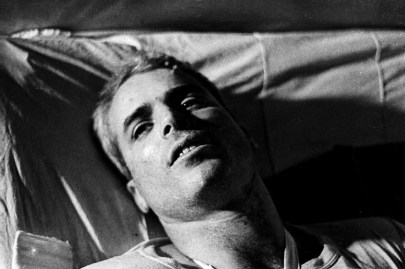
In an October 1967 bombing of North Vietnam’s capital of Hanoi called “Operation Rolling Thunder,” McCain’s plane was shot down, and he was seriously injured, fracturing both arms and breaking his leg. McCain was “rescued” by local North Vietnamese, beaten, and had his shoulder crushed and stabbed with a bayonet before being turned over to the North Vietnamese military and thrown into the “Hanoi Hilton,” North Vietnam’s main Prisoner of War (POW) camp.

In mid-1968 Admiral John S. McCain Jr., McCain’s father, was named commander of all U.S. Forces in the Vietnam theater. When the North Vietnamese military realized they’d captured the son of a U.S. admiral, they offered to release him for “medical reasons,” but also for propaganda.  The to-be senator refused.

This file picture taken in 1967 shows US Navy Airf

This 1967 photo shows McCain in bed at the “Hanoi Hilton,” where he was held as an American POW. Photo by AFP/Getty Images

Throughout his five and a half years as a prisoner, two of which he spent in solitary confinement, he was tortured, beaten and offered early release., McCain continued to refuse early release. McCain wanted to follow the U.S. Military Code of Conduct because he knew that if he walked out of the POW camp early, the North Vietnamese would use his release as propaganda towards the other American POWs in hopes of getting information.

On March 14, 1973, McCain was released.  His injuries, suffered during his time as a POW, affected him the rest of his life. He could barely lift his arms above his shoulders and had a noticeable limp.

After McCain’s service in the United States Navy, he decided to serve his country in a different way. In 1982, McCain ran for and won a seat in the U.S House of Representatives in his adopted state of Arizona and in 1987 ran for and won a seat in U.S. Senate representing the same state.  McCain served in the U.S. Senate for 31 years.

Many have called McCain an American Hero. They say this because even though he was being tortured, he refused early release, because he knew it was the wrong thing to do and he kept the POW’s hopes up and reassured them that they would all get out of the camp and see their families again.

McCain served 36 years in Congress.  He was known as “the Maverick” for not doing what was easy and not being blind to the party line. McCain perhaps most famously lived up to his legislative nickname when on July 28, 2017 he voted against the Republican-backed “skinny repeal” of Obamacare. Even during his Presidential run against then-candidate Obama, McCain chose not to support conspiracy theories surrounding the to-be president’s birthright as well as his religious affiliations. He did the right thing, always putting country ahead of party no matter what the backfire.

The senator is survived by his wife Cindy, their seven children, five grandchildren and, of course, by the citizens of the nation he so loved.

News: Unknown Child Victims Remain in Tragedy at New Mexico Compound

by RJ Johnson

It is rare to find eleven unknown children anywhere in the world. So when they are found in the middle of New Mexico starving and being trained to use guns, it raises plenty of red flags.

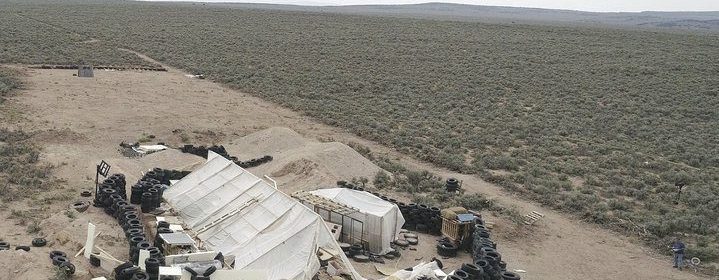
During an unsuccessful search for a missing 3-year-old boy named Abdul-Ghani, Authorities found the eleven other children inside of a compound located in Amalia, New Mexico. Searching for Abdul started nine months ago in Jonesboro, GA.

When the investigation began, the primary suspect for the kidnapping was Abdul-Ghani’s own father Siraj Ibn Wahhaj, as reported by New York Times. The two of them were last seen together traveling through Alabama with other children and adults.

The report of these two going missing by their mother was key for finding the rest of these children in the compound. Although the initial report was for Abdul, there was no sign of him being there with the other children.

This led police to believe that he was there weeks prior, and had been taken elsewhere by his father.

The children who officials did find ranged from ages 1 through 15, and were taken to the compound for weapon training in hopes of future violent acts being performed. Siraj Wahhaj is believed to be a Muslim extremist, giving police more insight on the reasoning behind the kidnapping and training.

Taos County Sheriff Jerry Hogrefe told the press in a statement that the environment of the compound is the “[The compound is] the saddest living conditions and poverty I have seen,” said Taos County Sherriff Jerry Hogrefe. “[The children] looked like third-world country refugees not only with no food or fresh water, but with no shoes, personal hygiene and basically dirty rags for clothing.”

With seeing the condition of the 11 children found, this only raises more concern for the last unaccounted child Abdul-Ghani.

Hakima Ramzi posted about her son Abdul disappearance on her Facebook page in January.

“He’s sick, he needs his medications,” she said, fighting back tears. “He needs everything. I don’t know if he’s alive, or he is, well, I don’t know his condition now.”

Hamika Ramzi has been the only person to come out and make a missing persons report. The remaining children have not had anyone come out and do the same. This raises suspicion as to where the children have come from.

Wahhaj is the only one out of five defendants in the group to be charged with 11 counts of child abuse stemming from neglect. The search for Abdul-Ghani is still on, further action will be taken once he is found. Allowing the Officials and Taos County Police to put the kidnappers behind bars.


News: Is Space Force the Future of Warfare or a Trump Administration Pipe Dream?

by Sean Singleton

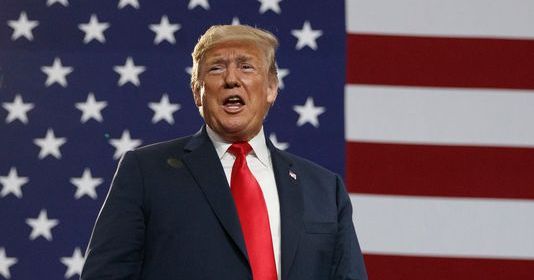
“The Space Force”: a future legacy or an unnecessary burden to the American taxpayer? President Donald Trump has been taking credit for a new Space Force without outlining the scope and cost of the proposed military branch.

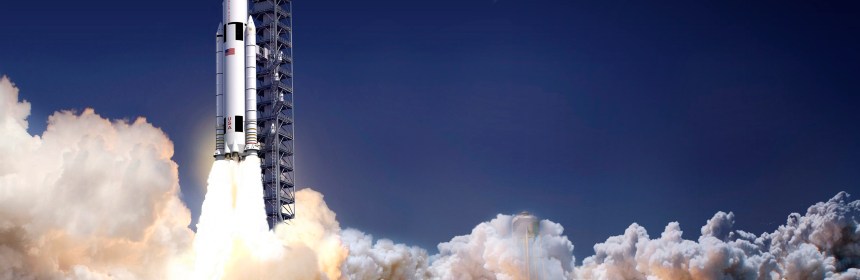
The United States Space Force could be an outer space military force composed of troops, with a space command headquarters on Earth. President Trump believes the next major war will take place in space, prompting him to feel the need to create this new branch.

President Trump and Vice President Mike Pence are not the first people to consider a Space Force. In fact, the concept has been tossed around for decades.

“In 1999, Senator Bob Smith entertained the idea, and the following year, another commission suggested making a Space Corps within the Air Force,” according to National Geographic.

Many of the components that Donald Trump and Mike Pence discussed have been implemented by other branches of our military, specifically the Air Force Space Command and the National Reconnaissance Office. More than 30,000 people work weekly in the Space Command, making the Air Force more than capable of handling space-related missions without a completely separate branch. 

“[We will] be creating the Space Force to prepare for the next battlefield where America’s best and bravest will be called to deter and defeat a new generation of threats to our people [and] to our nation,” according to the Trump Administration.

Although this may be true, the United States cannot legally bring weapons into space due to the Outer Space Treaty that President Lyndon B. Johnson signed along with Russia and the United Kingdom in 1967.

“These countries may not place nuclear weapons or other weapons of mass destruction in orbit or on celestial bodies or station them in outer space in any other manner,” according to the treaty.

This would be a major obstacle in the creation of the Space Force.

“The United States should focus on wars that we are currently in, like cyber warfare. [We] should focus on that because it is much more of a threat to our democracy and our way of life right now than a future science fiction warfare,” says Commander Scott Kelly, an astronaut who has been in space longer than any man in history and has spent 20 years working at NASA.

Though the future is never certain, Trump’s proposal for a Space Force without a clearly defined mission, roles and responsibilities could become a waste of money when we already have deficit problems in our country.

News: The Treacherous California Wildfires

by Kevin Aguilar

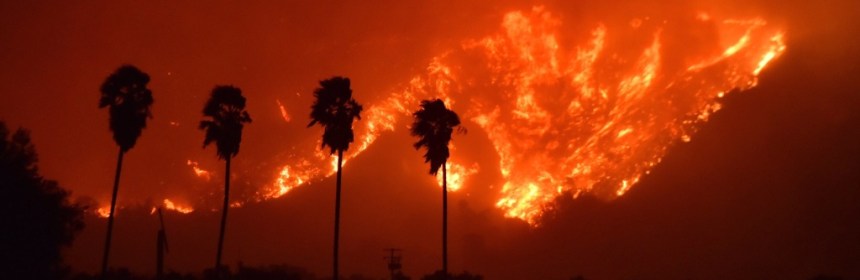
As of August 19th, 2018, 227,098 acres have been destroyed along with 1,079 residences, 22 commercial structures, and 63 outbuildings alongside a tragic 8 fatalities have occurred.

The air quality has drastically been worsened in Northern California as a result of the recent fires. The quality has also been worsened in a few neighboring states–Oregon, Washington, and Nevada to name a few. But what may have caused such a series of tragedies? The California fires in Northern California, most notably what is known as the “Carr fire” has had an enormous impact on Northern California. 

The start of the wildfires began on July 23rd, 2018 at approximately 1:15 P.M, and the temperature in the area soared above 100 Degrees as the cause of the fire was believed to have started after a vehicle suffered a mechanical failure according to officials. The fire started at Highway 299 and Carr Powerhouse Road, located around Whiskeytown. What began as just a mechanical failure turned into what is currently the 6th largest California fire in history.

“Wildfires across the state have killed eight people and scorched 200,000 acres by the end of July,” according to the Los Angeles Times. 

Many residents of the cities of Redding, Shasta Lake, Summit City, Douglas City, Igo, Ono and French Gulch have been evacuated as a result of the fire spreading 1,500 acres within the course of a day. French Gulch however has gone through a fire in the past. This fire took place in August of 2004 and 103 structures and 1,345 acres were burned and affected. Over 30,000 residence lost their homes and place of business or work that same day.

Two firefighters were killed in action during the first day of the current fire. The first death was caused by one being crushed by a tree and the other dealt with the firefighter being trapped in the wildfire. By July 28th, 2018 the confirmed death toll rises to 5.

“More than a dozen people have been reported missing,” said county Sheriff Tom Bosenko. By August 1st, 2018, 121,049 acres would be destroyed and the overall death toll rose to 6.

“[This fire] is being magnified and made so much worse by the bad environmental laws which aren’t allowing massive amounts of readily-available water to be properly utilized. It is being diverted into the Pacific Ocean. We must also clear trees to stop this fire from spreading!” said President Donald Trump in a tweet responding to the fires in California.

Trump is claiming that all water in California is not being used efficiently and needs to be directed toward putting out this wildfire. However, the fire department of California claim that there is actually enough water for the fires throughout California. President Trump also claims that removing trees will help reduce wildfires. This tweet would then inspire interior secretary Ryan Zinke to respond to this issue.

“It doesn’t matter whether you believe in climate change [or not], what is most important is how we manage our forest,”  Zinke said.

A tire from the RV of the couple’s vehicle popped, which then led to the rims scraping against the asphalt, creating sparks that would ignite nearby dry bushes, grass, and trees.

After a course of 3 weeks the fire has destroyed many homes and individual companies, along with causing grief for the families of the those who have lost loved one’s in fighting these wildfires. 


Donald Trump: Year in Review (2017)

by Mark McDermott

President Trump stunned the world with his election victory one year ago – somehow, through noise-making and some legitimate ideas, Trump found votes in the crucial states. But where does the nation stand now on the key issues we face? As with Trump himself, these is good news and bad news.

Bad news first. Trump’s Twitter election campaigns was in some ways genius, keeping him in the news and relevant. But to do this he essentially provided his presidency with a ball and chain in the form of Congress. Most of his own party in Congress wants to stay away from him, naturally prompting insulting Twitter barrages. It has crippled some of the foundations of his campaign. 

The travel ban shows this perfectly. On paper, the revised travel ban is within the president’s powers – as the Supreme Court ruled – restricting travel of those from certain countries from entering the United States; under another president, this might have been accepted. The problem comes from Trump’s campaign speeches, where he called for ending the entry of Muslims. The campaign form of the idea is not legal, feasible, or acceptable, and thus when the actual and correct form of the order is signed, it faces serious opposition because it is framed in the context of the comments that attracted attention in the election.

Health care and tax reform have also not been passed, although the partisan wrangling in Congress would have occurred with or without Trump. Even so, the president has done a poor job of mediating between the two sides because he perceived as radioactive by the Democrats and a time bomb by the Republicans; he does little to alleviate their fears.

Roy Moore’s loss of a Republican Senate seat in Alabama shows conscientious voting, but also represents a major defeat for Trump and the Republican party. Not only will Trump now have to face the political consequences of endorsing such a flawed candidate as Moore, but the narrow Republican Senate majority is weakened further. This will only worsen the deadlock, and unless Republicans can somehow make a major breakthrough in 2018, the key issues facing America will not be effectively addressed by either party because of the presidential veto or congressional stalemate.

And then Russia. It is certainly disappointing that Trump didn’t vet his national security advisor more thoroughly, but in fairness, he fired him rather quickly. Needless to say, none of this looks good for the President. Even so, as the investigations continue, Trump hardly looks guiltier than he looked the day before. None of this negates the humiliation of having the head of state subject to strong internal inquiries and even the threat of foreign interference is disturbing. Even more disturbing, however, is the disregard of the media for any semblance of journalistic standards in verifying stories published, which undermines the foundations of democracy even more severely than some Russian advertisements.

All of these negatives must be viewed in context of the 2016 election. Where would we be if Hillary Clinton had been president? Health care and tax reform wouldn’t be moving too well with the partisan divide regardless – Congress, not Trump, is to blame for the stagnation of the most important issues. Ms. Clinton has controversies of her own with Russia and the Clinton Foundation that are coming to light. And Trump’s tenure has brought several improvements.

One of the greatest improvements is the American stance towards North Korea. President Obama was not forceful enough against the Kim regime to prevent its progression towards an ICBM capable of striking the United States, a capability Kim recently demonstrated. Trump, however, in addition to the strong military presence and clear presentation of U.S. strength, has gathered stronger support from China in sanctioning North Korea than ever before, the key element to achieve a peaceful solution.

Trump has also done much work for stability in the Middle East. Iraqi security forces are destroying the last vestiges of the Islamic State. Trump also greatly aided the stability of Syria through a missile strike on Syrian chemical weapons facilities in April after Assad once again used nerve gas on his own people. This clearly demonstrated the position of the U.S. against Assad’s war crimes, in stark contrast to the “red line” against chemical weapons that Obama humiliatingly failed to enforce against Assad. These actions, in spite of the difficulties caused by the president’s words, are reassuring to our allies and show renewed global strength.

The president’s plans to move the U.S. embassy in Israel to Jerusalem sparked significant uproar recently, but are only the first step in Trump’s efforts for peace in the Middle East. Palestinian protests are now beginning to subside, and the policy finds broad support in our ally, Israel. It is possible that Trump will use this Israeli support as a bargaining peace to gain concessions for the Palestinians in peace negotiations. The actual movement of the capital is still years in the future, so the Palestinians and global critics should wait to see how Trump plans to use this in his negotiations for a peace that has eluded previous administrations for decades.

Domestically, Trump handled three devastating category-four hurricanes striking within weeks of each other. The petty squabbling between the mayor of San Juan and the President was mainly media noise, and it is very difficult and time-consuming to bring billions of dollars of aid to an island, but once again Trump’s Twitter noise hides the facts. The affected areas are now rebuilding with substantial federal aid.

The economic future also looks bright, although how much of it can be attributed to any one person is debatable. The stock market is surging to new highs, and hundreds of thousands of jobs have been produced every month, with investors confident in the economic future under Trump as unemployment remains at 17-year lows, in stark contrast with the billing that his “finger on the nuclear button” would lead to global chaos. The deregulation Trump is pursuing to boost the economy is encouraging expansion, and in spite any other issues with the tax bill, the planned reduction of the corporate tax rate is long overdue to make the U.S. competitive internationally. 

Ultimately, Trump is upholding many of his campaign promises in a tumultuous first year in office. He promised a travel ban, and delivered it. He promised an aggressive foreign policy, and has delivered no less. He promised to move the Israeli capital, and is planning to do so. He promised to shake up the Washington order, and has shattered it, especially within his own party. 

What is the net effect of this? It is difficult to tell, and there are no clear historical parallels. In the media, the presidency appears to be floundering under the weight of its own political baggage; but so did his campaign. The economy is surging, and any so-called “loss of credibility” abroad is primarily in the liberal nations of Europe which remain dependent the United States regardless, especially with the rising Russian threat. Instead, alliances with Israel and South Korea are strengthening, and even China seems to be warming up to U.S. interests around North Korea. 

The overall picture from Trump’s actions would seem to place the U.S. in a slightly better place than it would have been with Ms. Clinton, especially as the failure to resolve the primary domestic concerns – heath care and tax reform – are Congress’s responsibility. Trump’s gains abroad are diminished by his Twitter noise, Russian uncertainty, and the political damage of the Moore scandal, but foreign policy gains such as Chinese cooperation and increasing stability in the Middle East outweigh the damage by a good measure. 

The lesson is this: in a republic, we could have nominated almost anyone to be president, and we choose two people with a lot of negative, even criminal baggage on both sides. Trump is doing what he was elected to do, because Clinton was too weak a candidate to overcome him in the framework of the electoral college. Those mistakes are past, and now cannot be changed. Let’s deal with what we have in the present, and try to change some of the issues that matter most for America – health care and the economy. And Mr. President, for your presidency and for your country: logout of Twitter.

The Lesson for Equality Winter Olympics (2017)

by RJ Johnson

The first Winter Olympics event dates back to the period of January 25th, 1924 – February 5th, 1924. The event was hosted in Mont Blanc in Chamonix and in Haute-Savoie, France. This was the ice cold kind of atmosphere that got the snowball rolling. 

These games consisted of 247 men and 11 women from 16 different nations. At the time, there were only 18 events to compete in, such as ski jump, bobsledding, and hockey. 

Throughout the years, many different ethnic groups began taking part in these Winter Olympic games, whereas initially the athletes were predominately white.

2018 truly marks a special year for the Winter Olympics. More than ever this year, the games are strongly pushing diversity and acceptance. With 10 African-Americans and 11 Asian-Americans competing for the United States of America this year, the world is increasingly becoming more aware of the diversity present in modern America.

Jordan Greenway has overcome a 98-year-old racial obstacle this year, becoming the first African American to suit up for the USA Hockey team. Also, Asian-Americans Alex and Maia Shibutani became the first ever ice dancers of Asian descent to win an Olympic medal for the U.S. 

In the desperate times that the United States is facing when it comes to several different racial issues, accomplishments like these are huge eye-openers for us all as a society.

These accomplishments by these “minorities” are a constant reminder of all the things we could possibly overcome if we decide to unify as one, relaying the ever powerful message of unity and equality for all. 

The Nigerian women’s bobsledding team also emerged this year as the first African country to compete in the sport. As snow is certainly not common in Nigeria, these women had to go above and beyond to practice for these Winter Olympics, using makeshift sleds and courses to practice back home. Even though they placed last in the race, it still showed a lot of heart and initiative to get out there. 

“It’s good to see the world finally catching up,” says Aja Evans, a track and field star representing America from Chicago. 

Not only have many racial barriers been broken in this year’s Winter Olympics, but a tremendous amount of acceptance has been shown as well. The acceptance of the LGBT community in this year’s Winter Olympics has been huge. 

Pyeongchang’s Olympics have seen more publicly open homosexual athletes than ever before. The most noticeable of these openly gay athletes was Canada’s Eric Radford, as he became the first openly gay Olympian to claim gold at a Winter Games event.

Pyeongchang took a totally different approach than Russia did in the last Winter Olympics. Russia made it clear that they had no acceptance for homosexuality whilst hosting in 2014. This tone was set by Sochi’s mayor Anatoly Pakhomov, as he openly stated that there were no gay people in his city, trying to protect Russia’s pride and integrity. 

There have been plenty of instances of acceptance and, sadly, disapproval of the gay community domestically and internationally, as the Winter Olympics have shown. The same goes for the discrimination and hate faced by minority groups fighting for equality alongside them.

At the end of the day, we should all accept each other, and set our own pride aside to be able to understand. Understanding is one of the most important parts of acceptance. 

Let’s let the minority become the majority. 


Recent Entries »