Monthly Archives: October 2024

Life of a Brave: What Is Work Ethic? There Are Plenty Supports On Campus To Help You Improve Yours

by Cuahutemoc Solorzano

Halfway through semester one and with final grades getting closer, students should be prepared with work ethic being a large part of having academic success. But what is work ethic, and what are some ways to improve it?

Photo by Michael Bartelt, The Brave News Faculty Advisor

Work ethic is an extremely important skill to have in school, yet not everyone inherently has a good one, according to Elizabeth Hunt, the Dean of Academics, World Languages Instructor, Sophomore Class Moderator and Key Club Moderator for St. John Bosco High School.

But to form a good work ethic, you need to know what work ethic is. According to Ms. Hunt, work ethic is the integrity and perseverance within someone that enables them to do your work to the best of your ability.

This doesn’t mean work ethic can’t be learned. Integrity and perseverance are skills, and like all skills, it requires practice.

“Work ethic is something that you can learn,” Ms. Hunt said. “It’s not always something that’s innate in us.”

According to Ms. Hunt, work ethic also requires a positive perspective to cultivate it. Though, this can be difficult when you’re faced with multiple deadlines all at once. 

“It’s very easy to get overwhelmed [when] you know everything you have to do,” said Ms. Hunt. “You need to break it down [and] set deadlines for yourself ahead of time so you can approach it little by little.”

There are a variety of ways to approach this. Ms. Hunt suggests using a calendar or reminders on your phone. Everyone is different and they should use whatever method works for them.

Another avenue to form a growth mindset and good work ethic is peer tutoring.

Kelly Blakeman, SJB’s Mathematics Department Chair, Mathematics Instructor, and Math Honors Society Moderator shares how the math peer tutoring program at SJB can help grow a good work ethic.

“I have a few students who come in for [peer tutoring] just as a space to work and do their homework, and if they have a question they’ll ask the peer tutors for help,” said Ms. Blakeman.

An environment without distractions allows students to focus solely on their work, with peer tutoring programs at SJB providing this space for students.

Peer tutoring also helps new students entering high school to adjust to Bosco, meet new people ranging from freshmen to seniors and cultivate their work ethic early on.

“[Peer Tutoring] encourages newer students to come in and [learn] from experienced students closer [to their] age,” said Ms. Blakeman.

A senior tutor here at SJB, Gerald Leyva, who is a part of the Spanish and Math Honors Society as well as the Onori Society, shares how he’s seen peer tutoring help students improve their work ethic. 

“I feel peer tutoring can be helpful to keep people on top of their work,” Gerald said. “In my experience, a lot of students have been able to learn better time management skills, tips on how to get their work done in a more efficient manner and other tactics to not fall behind.”

Peer tutoring can help students form a good work ethic, and there are many other advantages that come with peer tutoring that help students further create a good work ethic. 

Freshman student, Rowan Brown, shares exactly how peer tutoring has helped him consistently have a good work ethic. 

“Going to peer tutoring, if you have a hard time with procrastination, can really help. It also allows you to be in a space without all these distractions.” Said Rowan. 

Having a good work ethic is vital to the growth of the mind since it alleviates stress and anxiety from deadlines.

“It’s just hard to keep yourself emotionally stable when the [work] is overwhelming you,” said Rowan. “Sometimes I can get emotionally overwhelmed, especially if I have a lot of [work] to do. Procrastination is a really big [cause] of that.”

Senior student, Kashim-As’Ad Kashim, or As’Ad, shares how his growth in work ethic due to peer tutoring has helped him in his academics.

“I [had] a grade D in Algebra 2 during junior year, and by the end of the semester one, [I] ended with a grade B [because] of peer tutoring and I was doing my work before the [deadline].” Said As’Ad.

Work ethic can be learned and is essential to reduce stress from school assignments, with peer tutoring being able to help instill work ethic into struggling students, according to Ms. Hunt.

“Work ethic is a set of values that push you to do the job to the best of your ability,” Ms. Hunt said. “Somebody who has a good work ethic is going to have less stress, less anxiety and is probably going to [ascend] as opposed to somebody who is doing the bare minimum.”

St. John Bosco contains many peer tutoring programs. Mr. Michael Bartelt is the Onori Society Faculty Advisor; Ms. Kelly Blakeman is the Math Honor Society Moderator; and Ms. Cindy Rayas is the Spanish Honors Society Moderator. You can find their contact information in SJB’s directory for inquiries regarding academic support.

The schedule for peer tutoring is also included in the “Week Ahead” email sent to parents and students each weekend.



A+E: Kodachrome Put Photography At The Center Of A Compelling “Dramedy”

by Andy Ortiz, Managing Editor

The Theater Company of St. John Bosco High School presented their first play of the year, a mysterious and emotional journey of memories captured in photographs, Kodachrome.

Photo by Megan Nash, Director of Marketing and Communications

Bosco’s production of Kodachrome, originally written by Adam Szymkowicz, was directed by the Director of Theater Production, Mr. Martin Lang. Kodachrome is a comedy about nostalgia and romance, a deep and mature story. 

In the director’s note, Mr. Lang explains how this story was a large departure from what is usually seen by the Bosco Theater Company and the challenges that it presented the team.

“This story is a very mature work and presented a challenge for our young people because many of the emotions and feelings that they are being asked to portray they have not yet experienced in their own lives,” wrote Mr. Lang.

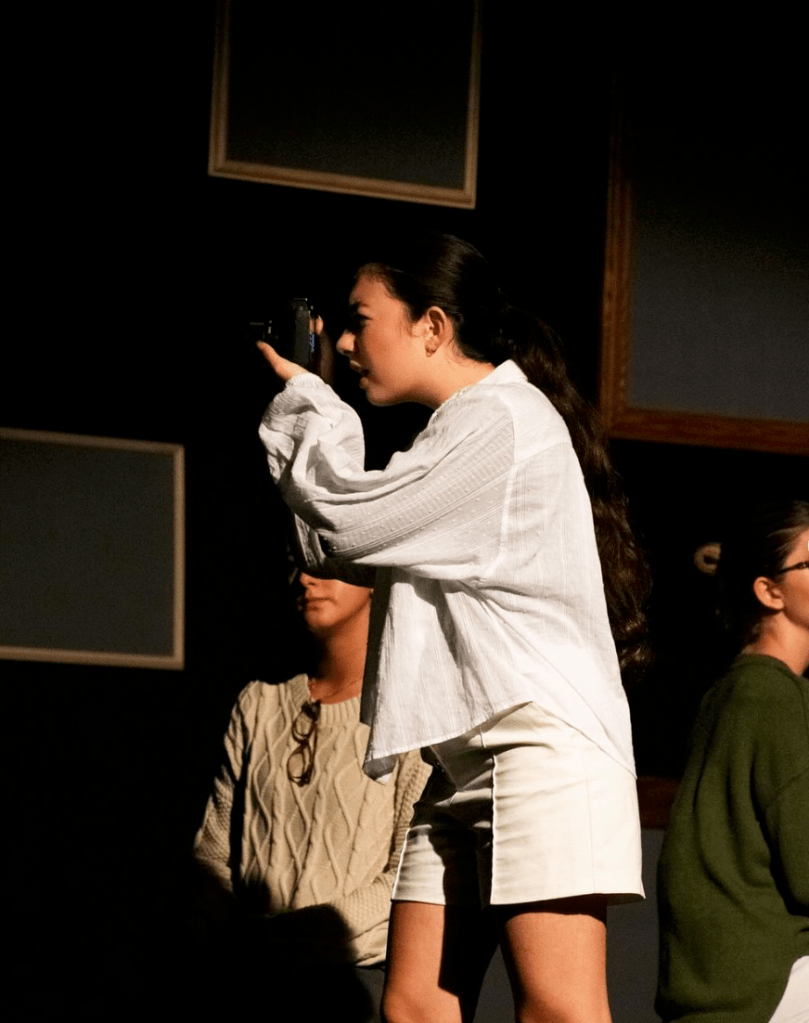
The story follows Suzanne, The Photographer, played by St. Joseph’s senior Daniela Campos, who narrates the lives and romances of the people in the town of Colchester, as she struggles to say her own goodbyes to her husband Charlie, The Hardware Store Owner, played by Bosco senior Noah Wayner.

The general motif and theme around the production was very unique. The play revolved around The Photographer’s hobby of taking photos. As such, the camera was used regularly in the story, both throughout the play itself and even before starts. 

At the beginning of the production, The Photographer took photos of some of the audience members, and even a photo of the entire audience toward the end. This did such a great job of incorporating the audience into the story and making them truly immersed in what’s being told.

The Photographer, however, truly excels in acting in her role. Some may remember Daniela Campos from her previous roles as Susan in Attack! Of The Killer Man From the Sun! or Bielke in Fiddler on the Roof. Things are different this time around, as she was acting now as the main character and narrator, speaking the most amount of lines in the entire show.

Photo by @sj.theatrearts via Instagram

“Being the lead role has been more challenging for me than past roles,” said Daniela. “I have so much dialogue in the show and I’m onstage for every scene, not to mention my character endures a lot mentally throughout the show, so at times it can be very tiring.”

Despite the tough hills to climb, Daniela pulled through and gave an awesome performance. She made for a great “tour guide” and did well introducing and explaining everyone and everything in the story. She also nailed the emotional moments, creating a fun character to listen to but also embodying a persona that the audience could resonate with on a deeper level.

“It’s been a real growing experience for me as an actor,” said Daniela.

Daniela wasn’t the only stand out performer. Earl, The Gravedigger, played by Bosco sophomore Jacob Alexander Perez, was another great character. 

This was Jacob’s first acting role with St. Joseph’s and St. John Bosco, and he did not disappoint. He played a very humorous role and certainly didn’t fail to make the audience laugh with his personality. The way he interacted with different characters was fun to watch.

However, when the emotion needed to be put on, he fabulously pulled off a seriousness that greatly complimented his whimsical side.

“Tapping into my emotional side for the first time was a bit challenging, but I was able to pull it off,” said Jacob.

One more wonderful performance was by St. Joseph’s freshman Jamie Valdoria in her role of The Young Woman. She played a young woman who jumps into an engagement with her boyfriend and freaks out throughout the process. 

Jamie successfully portrayed this anxiety ridden personality really well and makes her character a very funny whenever she’s on stage.

“Everyone has been working so hard the past few weeks to put on such a great show. The overall feeling has been very welcoming and supportive,” said Jamie.

The stage design for this production was intriguing. The sides were covered with picture frames with digital screens in them and in the center was a projector. 

Throughout the play, whenever The Photographer took photos of the characters, those images showed up on the stage. Additionally, the images changed to reflect the environment the characters were in, which was a really creative way to add to the motif of the camera.

Overall, Bosco’s production of Kodachrome was very funny, but also very deep beneath the surface. This emotional story couldn’t have been truly brought to life without the work of the performers and everyone else at the Bosco Theater Company.

Life of a Brave: Hispanic Heritage Month Continues To Shape Bosco Student Life

by Josue Sanchez, co-Editor-in-Chief

Hispanic Heritage Month, which began last month on the 15th, reflects centuries of history in South and Central America—history that continues to be told through the experiences of St. John Bosco students in the present day.

The celebration started in September to commemorate the independence of various Central and South American countries. The first day, September 15th, remembers the signing of the Act of Independence of Central America in 1821, which led to the declaration of Guatemala, Honduras, El Salvador, Nicaragua and Costa Rica as independent countries.

The following day remembers Mexican independence leader Miguel Hidalgo, who on September 16, 1810 launched the Mexican independence movement.

Other significant events take place throughout the month as well, like the Chilean celebrations of independence that start on September 18th, or perhaps most recognizable to most Americans, Columbus Day, known as “The Day of the Race” to Hispanics.

While this historical significance is important to acknowledge, it is also very important to see how these historical events and celebrations have changed local communities.

This has been seen in a variety of ways at Bosco. Mr. Eduardo “Lalo” Díaz, a current social studies instructor for Bosco juniors, joined the school last year. Coming from Mexico City, his background has made him see the impact that Hispanic culture and contributions have made to the United States.

“The U.S. educational system hasn’t recognized us or given us our place in the history or development of our country,” said Mr. Díaz. “Celebrating our contributions to the development of our country, our city and the state of California is important so that we broaden the love that our people have for México.”

Mr. Díaz believes that Hispanic-American students—not just at Bosco, but elsewhere—live within two juxtaposed environments. At home, they might exclusively speak Spanish, which is something they might not do while at school. In his view, we should all be proud of our backgrounds—and should maintain and keep these cultures in mind, lest they be forgotten.

“We want to keep these traditions,” said Mr. Díaz.

As a teacher of US history, he also believes in the importance of recognizing Hispanic contributions to this nation.

“By teaching [students] United States history, I must include events that show us [Latinos] as people who have contributed to American development,” said Mr. Díaz. “The United States didn’t get to where it has without the help of many cultures.”

He believes that it is important for everyone to know about the influence of cultures present within the United States, as it is important to keep these cultures alive.

Ms. Cindy Rayas has also seen the significance of Hispanic Heritage Month at Bosco. As the World Languages Department Chair, the Moderator of the Spanish Honors Society and a Spanish teacher for sophomores and juniors, she interacts with a large portion of Bosco’s Hispanic students.

She notes the ways that Hispanic culture has made many proud here at Bosco. Many of the other cultures, she believes, are diverse, with their own selection of cultures and traditions.

“[Hispanic] culture is rich in many aspects. It makes me feel proud, as well as the language. Each country has its own traditions,” Ms. Rayas said.

She also recognizes the connection that Hispanic cultures have with religion—something central to students’ educations at Bosco. Oftentimes, these ideas are completely intertwined with each other.

As a Spanish teacher, she has also noticed specific trends amongst each of her classes. She emphasizes the importance of learning Spanish culture alongside the Spanish language.

“The students who speak Spanish at home have a more ingrained culture,” said Ms. Rayas. “I tell them: everything is connected, especially when it comes to language.”

She notes that it is very important for Hispanic students to respect their own culture and to not feel like they cannot embrace their Hispanic heritage because they don’t speak Spanish as much as they would hope.

“If they don’t respect their culture or language, others won’t respect us,” said Ms. Rayas. “Therefore, it is important to tell them to respect their culture and to respect who they are.”

In future years, Ms. Rayas plans to help with special events relating to the celebration of Hispanic culture, including a potential celebration for Our Lady of Guadalupe, as well as various potlucks. These, she hopes, will lead to the promotion of Hispanic culture on campus, encouraging students to be proud of their cultures.

“[I want them] to feel proud of who they are and of where their parents came from. We were born here in the United States, but we must remember that our beginnings come from Latin America,” said Ms. Rayas. “We must always carry that with pride.”

Sports: Echoes Of Spirit In Homecoming Week, Don’t Let Culture Fade

by Jet Walls

Imagine standing with your St. John Bosco brothers and St. Joseph sisters under the Friday night lights, singing, dancing and cheering on your Braves going to battle on the field.

Photo by Jet Walls

The culture of Bosco Football games has evolved significantly throughout the years. Though the game day experience is in many ways unmatched – from the tailgating to the state-of-the-art Panish Family Stadium – the Tribe student section used to be more fervent in its support.

It used to be the place to be on a Friday night: a game defending our home stadium against an opponent in a clash of titans on the field.

Alumnus and theology instructor, Mr. JP Garcia-Esparza, reflects fondly on to his experience as a student coming to games on campus. 

Mr. Garcia-Esparza’s favorite game day memory with his Bosco brothers and St. Joseph’s sisters was during his freshman year when the team beat the “Team in Red” at home. The student section rushed the field to celebrate their win with the team and even joined them in prayer on the field. 

Back then students would get way more hyped for game day. Some even showed up in paint and costumes. 

“The student section is a representation of our school,” said Mr. Garcia-Esparza

The student sections need to be bigger, louder and more enthusiastic. We need all the students to come support the boys on the field. The Bosco Football players urge the students to come out and support them at games. They love to see their classmates in the stands supporting them with passion.

“It’s great to have the support of fellow students, but once the game begins, everything seems to become tunnel vision and the outside noise isn’t so loud coming from a defensive view point. Once a big play is made defensively and you can hear the crowd and student section react loudly, it’s definitely a turning point and momentum changer for sure,” said senior linebacker Cole Clifton. “The Tribe experience is one of a kind in big games, and the support is always there and needed during big moments.”

However, at times, Brave and Jester students have taken for granted the great product on the field and how our community has a unique opportunity to galvanize itself around that greatness.

“[The student section] can be at times underwhelming,” said St. Joseph’s senior cheerleader Jolynn Hallum.

Jolynn wants all her Jester’s sisters and Bosco brothers to come to the game and just go for it when cheering and hyping up the rest of the crowd. Your actions in the stands can even help motivate the cheerleaders in hyping up the rest of the stadium.

“Sometimes [cheering] is harder if it’s a low energy crowd,” Jolynn said.

If you can make an upcoming game, you are highly encouraged to come out to support your brothers with great energy, as they chase their aspirations of winning a third national championship for Bosco and pursuing their individual goals of earning college scholarships.

“You can never count out the heart of a Brave, ” Mr. Garcia-Esparza said.

The Bosco Braves take on the Santa Margarita Eagles tonight at 7pm for the Homecoming game at Panish Family Stadium.

Life of a Brave: 21 Questions With New Science Teacher, Mr. Albert Soliguen

by Jesus Biag, co-Editor-in-Chief

St. John Bosco High School welcomes new biology and environmental science instructor, Mr. Albert Soliguen, who wants to utilize his wisdom and experience to help Bosco Braves realize their potentials.

Photo by Jesus Biag

Q: Where did you grow up?

A: I primarily grew up in the city of Long Beach and Garden Grove.

Q: What high school and college did you graduate from, and what was your field of study?

A: I graduated from Garden Grove High School and from California State University, Fullerton with my Bachelor’s and Master’s Degrees of Science in Kinesiology. I also got my single subject teaching credential in biology from National University.

Q: What inspired you to become a teacher?

A: I believe what mostly inspired me to become a teacher is my own experiences as a student in the classroom. I didn’t particularly have the best student experience, but I had great mentors and teachers who supported me and highlighted my potential which transformed me into the person I am today. Ultimately, this is what drove me to pay it forward to those in need, just as the people who have been there for me.

Q: What did you do before teaching at Bosco? Did you teach somewhere else, or do something completely different?

A: Before teaching at Bosco, I was a longtime coach for the sport of volleyball for over 10 years. I worked for Santa Ana College for over eight years with Public Safety in Health and Wellness with several different fire department agencies across Southern California.

Q: What makes Bosco different from any other school you’ve taught at before?

A: What separates Bosco from other schools is the culture, students and staff. The students are what make this campus truly alive and vibrant. The level of prestige in the classroom and the amount of knowledge, kindness and care from the staff is incomparable.

Q: What do you love the most about being a teacher?

A: What I love most about teaching is the relationships you build with students, parents and the community over time. To see their growth personally and professionally is rewarding and gratifying.

Q: How is your classroom experience different from other teachers in the Science Department?

A: I believe my classroom is different from other science teachers because I share my own experiences to students that are related to the content. I always make an effort to bring some relevance of the content to students to make it more relatable to their lives.

Q: When you aren’t teaching and lesson planning, what do you like to do in your free time?

A: During my free time, I like to spend it with my wife and my two-year-old daughter.

Q: What is your favorite book, movie and TV show?

A: My favorite book is Dune; my favorite movie is The Crow (1994); and my TV show that I currently like is Culinary Class Wars on Netflix.

Q: Where is the most interesting place you’ve traveled?

A: The most interesting place I’ve traveled is the Philippines.

Q: What is your favorite genre of music?

A: My favorite genre of music is Hip-Hop.

Q: What are your favorite sports and sports teams?

A: My favorite sports are football, basketball and volleyball. My favorite teams are all from the Bay Area: the San Francisco 49ers and the Golden State Warriors.

Q: When you were in school, what activities did you participate in?

A: When I was in school, I was a part of Hip-Hop club and I played basketball and volleyball.

Q: Do you have any pets? If so, what kind and what are their names?

A: I have one dog that I rescued that is a Border Terrier. His name is Koda.

Q: What’s your go-to comfort food or favorite meal to cook?

A: My favorite comfort food is sushi. My favorite meals to cook are BBQ and steak.

Q: How did your family and culture mold the person you are today?

A: My family and culture is very important to me because they have been the biggest support group in all the things I’ve done. They have been there with me through the highs and lows, and the one thing that has never changed was their love and support.

Q: What’s your favorite thing about your Filipino culture?

A: My favorite thing about Filipino culture is the food. Our culture is very generous, kind and hospitable.

Q: What’s something on your bucket list that you haven’t done yet?

A: One thing on my bucket list that I haven’t done yet is to hike the Pacific Crest Trail.

Q: Do you have a favorite quote or motto that you live by?

A: My favorite quote is “You never know the value of a moment until it becomes a memory.”

Q: What’s the best piece of advice you’ve ever received?

A: The best piece of advice that I have been given was in the form of another quote: “Fear is the thief of dreams.” With that being said, it was important for me to embrace the unknown, the failures and discomfort, because in most cases, it will end up being the right choice.

Q: Knowing that, what do you think is the biggest piece of advice you could give to your students?

A: My advice to other students is to find the good in every moment, stay present and trust the process. Everything happens for a reason, but those reasons are meant to take you somewhere and to help you grow.

Lampoon: Bosco To Use Hand Sanitizer That Kills Only 98.99% Of Germs

by Augustus Rodriguez, Lampoon Editor

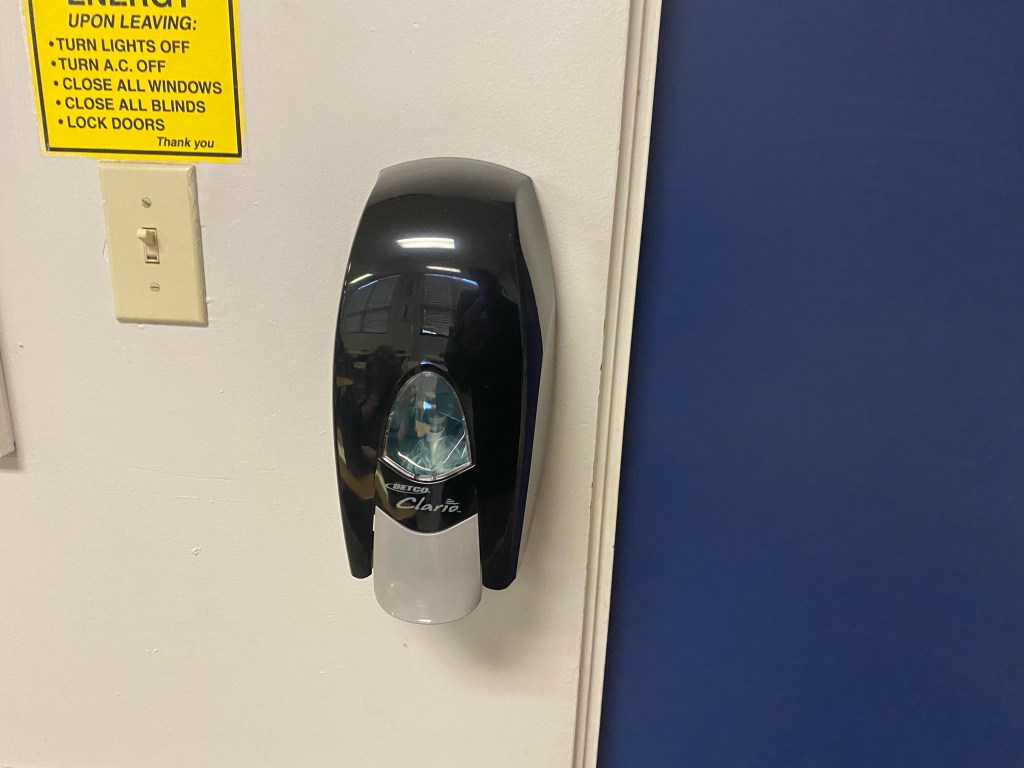
As the flu season begins, St. John Bosco High School has begun to install more hand sanitizer stations containing hand sanitizer that will only kill 98.99% of all germs, instead of hand sanitizer that kills 99.99% of all germs.

Photo by Augustus Rodriguez

St. John Bosco High has received a $50,000 grant for the lackluster sanitizer from an organization called the Guild of Non-Heinous Actions (GNHA). The grant was given to the school on the condition that it doesn’t use sanitizer that kills more than 98.99% of germ. 

Bosco Principal Mr. Antonelli expressed his gratitude for this grant.

“To be honest, I was a bit skeptical that the GNHA wanted to give us this money only for hand sanitizer stations,” said Mr. Antonelli. “But, a grant is a grant!” 

The Guild of Non-Heinous Actions is a mysterious group that seems to focus on doing exclusively good actions in the community. Their new program, called “Schoolwide Helpers,” will help schools around the world, starting with Bosco.

The main group consists of a variety of members, led by Dr. Dictator. The group also includes members Mon-Knee, Red Delicious, Phu Punch, Rib-bit, Thee Manual and Mr. Finger.

The Guild of Non-Heinous Actions used to include notable Bosco villain Mr. McGueber, but the group later kicked him out for being evil. 

“The GNHA has been on a humongous decline ever since they kicked me out of their little club they had,” said Mr. McGueber. “St. John Bosco is my territory. I am the one who installed a doomsday device in the Thunderdome.”

Despite Mr. McGueber’s constant complaints, Bosco has already figured out where to put these hand sanitizer dispensers.

“We will put 26 of our 97 hand sanitizer dispensers in the Thunderdome – all in random spots – like in the middle of the basketball court,” said Mr. Antonelli. “We will place them wherever we feel like one should be.”

Many students are weirded out by the difference subtle difference in the new sanitizer, which led them to speculate how big the difference really is.

“I personally believe it smells way better than any other hand sanitizer,” said senior Nelson Maciendo.

Some students conjured up some unique ideas on what the difference is.

“I think you can blow it up like a balloon and use it as a yoga ball,” said senior Ilan Dubon.

While students have been guessing on what the difference is the head of the Guild of Non-Heinous Actions, Dr. Dictator, stated a simple answer. 

“There is no difference in either product; the chemicals are the same,” said Dr. Dictator. “It’s just our product—we get to call it whatever we want and you can’t stop us.” 

Some students also are suspicious about where they even got the money in the first place.

“It came from my bank account, since I am just so rich,” said the Treasurer of The Guild of Non-Heinous Actions, Mon-Knee.

Mr. McGueber had some choice words for this supposed grant.

“I don’t even know why you need that many hand sanitizer spots. There are plenty of restrooms with sinks. It’s not like these restrooms need high maintenance,” said Mr. McGueber. “Just go in and wash your hands with soap and water. It’s basic hygiene,” said Mr. McGueber

Dr. Dictator is very confident that this grant will change the school.

“This grant is one of the best and first grants [the GNHA] have ever done,” said Dr. Dictator 

“I don’t know what Mr. McGueber is complaining about, it’s not like he lives in the school,” he said.  “This why he was kicked out of our group. He is not even good at being evil! How does one even do that?”

Mr. McGueber coincidentally was around the area when Dr. Dictator said that and wasn’t very happy. He is also mad about the guild’s membership requirements, believing his expulsion from the group was unfair. 

“I was kicked out of the group as fast as Schoology kicks you out during an important test,” said Mr. McGueber.

Despite the backlash from Mr. McGueber, St. John Bosco is still going through with the grant and is expected to install these hand sanitizer stations over the next couple of weeks.

Sports: Frontier Selects LA/Bosco Hockey Drops The Puck On Inaugural Season

by Simon Wei

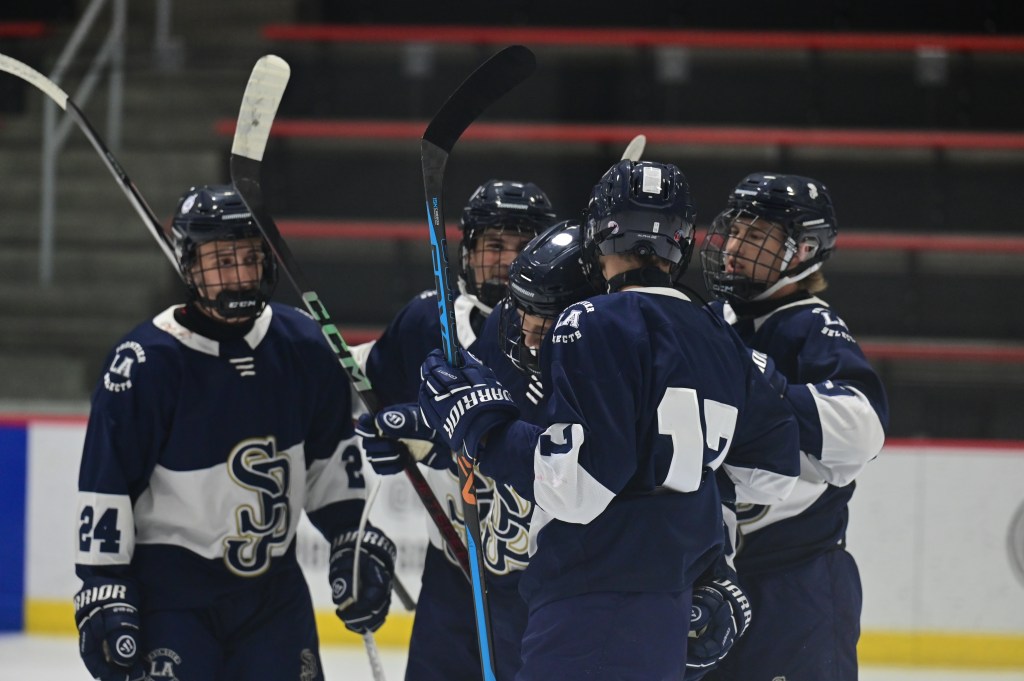
The Frontier Select LA/St. John Bosco hockey team is kicking off their debut season under the guidance of a familiar face, Head Coach Tomas Kapusta. They have demonstrated potential in a short time with their hard work and team chemistry, as they aim not only to compete in the league but also to create a lasting legacy.

“As a first-year [with the Frontier Selects LA/Bosco] team, we want to be the best we can be, showing everyone the right pathway to becoming a prep school team,” said Coach Kapusta. “We are still working on strengthening the team.”

The team started off their season strong with two wins in the IMD High School League, one of which was a tough overtime victory that really set the tone for the games ahead. They’re feeling confident after these successes but are also aware that there’s more work to do.

In a recent tournament at the Sin City Showdown, Frontier Selects LA/Bosco managed to secure two wins, but also suffered two close losses that emphasized the importance of staying focused in crucial moments. 

“So far, we’ve played good games, but there’s still a lot of room for improvement,” said Coach Kapusta. “Every game is a learning experience, and the boys are starting to understand what it takes to win consistently at this level.”

Coach Kapusta has been instrumental in guiding the players through this developmental phase.

“The players are beginning to understand their roles on the team,” said Coach Kapusta. “The team is not just composed of players who score goals, but also players who fulfill specific roles. That’s the only way to be a successful hockey team.”

A major obstacle the team is dealing with involves creating a bond among players who have different backgrounds and skill levels. Coach Kapusta has highlighted the significance of teamwork and effective communication to ensure that every player understands their role and how they contribute to the team’s success.

“We have players at different levels of development, and the only way we’ll be successful is by working together and respecting each other’s contributions,” said Coach Kapusta. “[It’s] important that we create the right atmosphere on and off the ice, and [that’s] something we’re working on every day.”

The team’s primary goal for the future is to secure a spot in the 2025 USA National High School Championship tournament scheduled for March in Irvine. Frontier Selects LA/Bosco is currently familiarizing themselves with the competition and assessing their position, but both players and coaches are hopeful about their goals to compete at the highest level in the playoffs.

“The goal is to make it to the National Championship, and we’re going to do everything we can to get there,” said Coach Kapusta.

Senior left-wing Lucas Cilan echoed his head coach’s determination.

“We want to show everyone that we belong here and that we have what it takes to compete at the highest level,” Lucas said.

Apart from their performance on the hockey rink, the team is also dedicated to thriving academically. They strive to find a balance between their studies and sports responsibilities, which is a crucial aspect of the program. 

“We’re building something special here,” said Coach Kapusta. “We’re focusing on the community, the school and ensuring all students succeed academically so they can focus on hockey.”

Throughout the progression of the season, Frontier Selects LA/Bosco is anticipated to develop and advance as a team. Their goal of aiming for a National Championship in their inaugural season and their dedication to establishing a program that can leave a lasting legacy at Bosco indicate that this new team is ready to represent Brave Nation with pride.

Life of a Brave: From Struggle To Strength, As’ad Kashim Is A True Brave

by Noah Arteaga

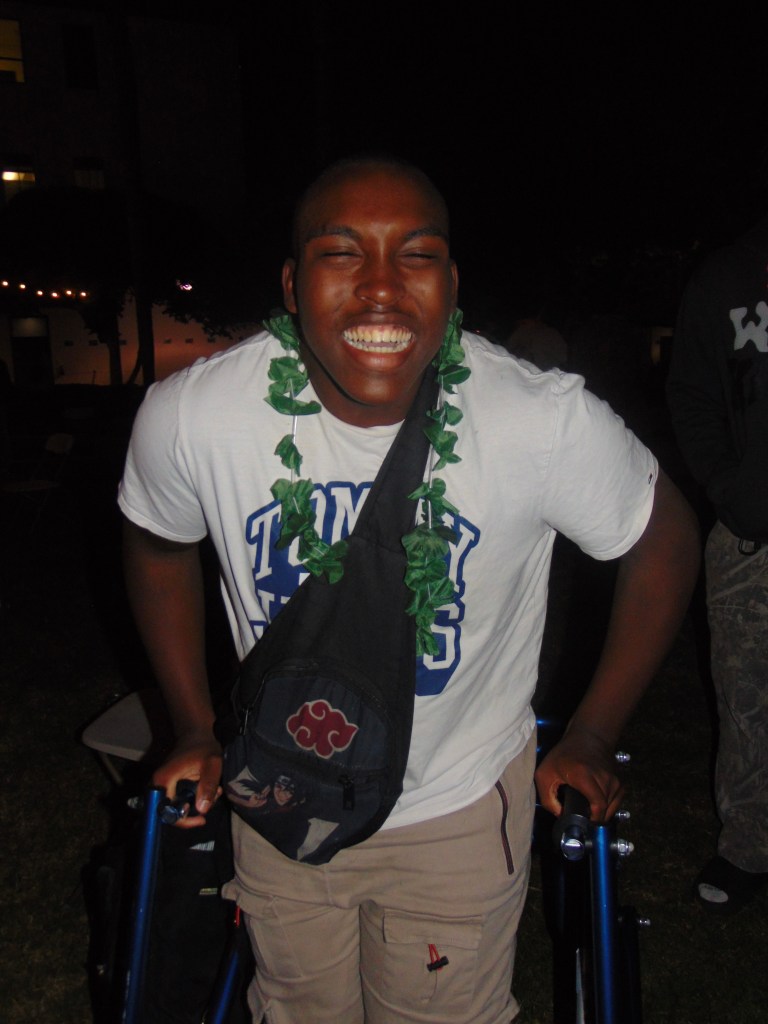
From the beginning of his freshman year until now, students and administrators have walked past As’ad Kashim without knowing exactly the adversity he has overcome in his life. He believes that his story embodies what it means to truly be a Brave at St. John Bosco High School.

Photo by Kijani Dumas

As’ad was born in Nigeria in 2006 to a close-knit family. His mother worked as a public relations officer, while his father was a member of the Nigerian Navy. Alongside his older sister, As’ad grew up surrounded by love and support.

As’ad’s life was at risk from the moment he was born. Born prematurely, he spent his first days in an incubator due to underdeveloped organs. Additionally, his skin was so thin that his internal organs were visible. 

After leaving the incubator, As’ad suffered from oxygen deprivation, which caused problems that would hinder his movement. At one point, doctors feared he wouldn’t survive. As’ad believes that he was able to stay alive because of the love of his family, particularly his sister. 

She cried out for him, wanting her little brother to come home. Eventually, As’ad was able to find a stable pulse and develop organs strong enough to support themselves on their own.

As’ad was officially diagnosed with cerebral palsy when he was two years old. His condition was difficult to detect during infancy, but as As’ad grew older, his family began to understand the physical challenges he would face.

When As’ad was four, his family moved to India for better access to medical care and physical therapy. Despite his condition, As’ad’s parents were determined that he receive a top-tier education alongside other kids.

They enrolled him in a regular school because they wanted him to be viewed no differently from other children. 

In school, however, As’ad was constantly overlooked by teachers who thought he couldn’t keep up. To prove them wrong, he memorized a small booklet and recited it aloud in class, showing his ability to comprehend and speak fluently.

During this time, As’ad struggled with physical therapy because of the limited flexibility in his legs. Noting his struggles, his mother proposed a deal: he could see his other family relatives when he could walk efficiently with his walker. 

Motivated by this challenge, As’ad became proficient with his walker—which he uses to this day.

Before moving to the United States, As’ad’s family took a brief vacation to Dubai. His favorite memory from this trip was playing in the sea for the first time with his uncle. During the trip, he and his family paid a visit to Mecca, a spiritual experience for As’ad, who practices Islam. While there, he prayed for better days, hoping that life would improve for him and his family.

Medical tests during this time revealed that As’ad’s knee was shattered, so he was scheduled to undergo surgery. Due to visa delays, however, he could not stay in Mecca for further treatment.

His mother then spoke to a family friend, who helped convince the family to move to the United States for better medical care.

A little before his tenth birthday, As’ad visited California with his family for a month to explore the possibility of living in the U.S. permanently. A year later, they decided to make the move to Los Angeles.

Through his aunt, they connected with a hospital specializing in cerebral palsy treatment. The Luskin Orthopaedic Institute for Children (LuskinOIC) became a staple in As’ad’s journey through adversity.

It was there that As’ad met his first surgeon, Dr. Anthony Scaduto, the President and CEO of LuskinOIC. Feeling extremely nervous as the doctor entered the room, As’ad greeted him with a formal good morning. It was a gesture that impressed Dr. Scaduto, who had never received such a greeting from someone As’ad’s age.

As’ad shared his desire to walk, and Dr. Scaduto assured him that although it was possible, it would require a long journey. He then asked if As’ad would be ready to take that journey.

As’ad, with immense faith, confidently responded, “Yes, I am prepared. I’m going to do whatever it takes.”

In May, a month after their initial meeting, As’ad underwent surgery. The procedure focused on correcting the growth in his knees to prevent further complications. The surgery, which lasted 6-8 hours, marked a turning point in As’ad’s life. 

“Although I was extremely nervous for the operation, I knew I was going to wake up from the surgery as someone new,” said As’ad. “It was a feeling [I had] never felt before—being so afraid, [yet so] excited for the future ahead of me.” 

For three days, As’ad couldn’t move, and special therapy was required to help him adjust to moving again. Nurses and therapists used a sheet to transfer him between his bed and his wheelchair, helping him become accustomed to the pain and regain mobility. These movements happened multiple times a day to ensure As’ad adapted.

When As’ad was cleared from the hospital, he took a year-long break before starting school again. He dedicated that break to intensive physical therapy sessions.

Once it was time to enroll, As’ad and his family had difficultly finding a school for him to attend. Many schools denied him based on his physical handicaps. One school that accepted his enrollment, however, was Marcus Garvey School in Los Angeles.

Entering school as a young teenager, As’ad felt a wave of sadness overcome him when he watched kids play basketball from a distance. Eventually, kids included him in their activities and made him feel like one of the guys. 

“[Although] some people out there have some type of animosity against you, there are bound to be people out there willing to help and support you regardless of your situation,” As’ad said. 

After moving into his new school and house, it was time for As’ad’s second surgery. This second surgery was a more robust procedure than his first. But this time around, As’ad felt little to no pain at all.

A quick recovery allowed As’ad to travel back and forth from America to Nigeria to get his visa. 

After recovering, getting his visa and finishing middle school, As’ad was set on attending one high school: St. John Bosco.

As’ad toured Bosco during the pandemic where he fell in love with the school watching the basketball team studying together. Seeing players and coaches working together painted a picture that he felt epitomized the Bosco brotherhood.

During his freshman year, As’ad felt the changes of transitioning to high school. 

“It was extremely difficult. Even though I trained, the distance I had to cover was a lot. I even used an electric scooter. [Regardless,] I was still ten minutes late to my classes,” As’ad said.

At first, the adjustment was rough. His family would have to be with him throughout the day to make sure he was supported in getting from class to class. 

An incident where As’ad fell to the ground playing Jenga made him feel supported—not by his family, but by his Bosco brothers. Instead of being ridiculed and made fun of, like As’ad anticipated, his peers lifted him and still kept including him in games they played at lunch. 

By his junior year, As’ad was fully acclimated to life in high school. A feeling to reach new heights in his life was introduced by CIF finalist in the 400m, senior Kendal Handy. One day, while doing his daily walk on the track, he jokingly called Kendal out to race him. Kendal, being the competitor that he is, didn’t try to sugar coat the situation and said he was going to beat As’ad.

As’ad ran with his walker and was able to find a new drive within himself, eventually being able to beat Kendal.

“It made me realize the different personalities at Bosco. Everyone made me want to better myself into who I am,” As’ad said. “[I felt good] when I beat Kendal, regardless [of whether or not] he tried. The different backgrounds everyone at Bosco [comes] from [has] motivated me to be stronger.” 

Now entering his senior year, As’ad’s aspirations for himself have never been higher. As’ad used to think of himself as a dreamer, but he’s finally realized through his drive and determination that he’s an achiever.

Asad’s current goals are to walk across the stage at graduation without his walker and to attend either USC or UCLA next fall.

“What I’m most grateful for in my time at Bosco, and by far what I’ll miss the most, is the environment. So many different [people,] from teachers to students, all did their best to show me [how] to be the best version of myself,” As’ad said.

As’ad never felt like he was alone at St. John Bosco and genuinely believes he has found a home in Bellflower. He knows the kind-hearted people at Bosco only want him to succeed and feels they’re responsible for the joy he’s felt over the past few years. 

Through all the highs and lows, and the never-ending wave of adversity, Kashim As’ad Kashim—the achiever—knows what it truly means to be a Bosco Brave.

Sports: Lone Senior Alex Leon Helps Coach Mac Lead Strong Core Of Young Runners

by Macade Maxwell and Owen Stelzer, co-Sports Editors

The St. John Bosco’s historically strong cross country team embarks on another season with high hopes for maintaining the program’s culture of excellence. 

Photo by @Bosco_XC_TF via X, formerly known as Twitter

As the Cross Country season gets underway, veteran Head Coach Tim McIntosh and his team have made significant strides this year through hard work, dedication and a strong core of young runners. 

“Like always, our goal is to win league. Last year we finished third in Trinity League so we hope to perform better this season,” said Coach McIntosh. 

The team has already competed in four competitive events: the Seahawks CC Relay in Redondo, the Cumming/Latham Invitational in San Diego where they finished in fourth and fifth, the Woodbridge Invitational in Irvine where they finished in first place and their most recent the Trinity League Preview race where they placed first again. 

The team has already proved themselves to be contenders for CIF later in the season, and after a successful showing at the Trinity League Preview, Coach Mac’s squad showed that they are true competitors for a league title. 

Alongside Coach McIntosh is assistant Coach Ruben Solorza, a Bosco alumnus and Cross Country CIF Champion back in 2012. 

“They are starting to develop a ‘game day’ mentality where I trust them to go out and get the job done,” said Coach Solorza. “They are realizing how far their hard work has gotten them, and I’m excited to see what they do as the postseason comes closer.” 

At the heart of the team is senior captain Alex Leon. His leadership and experience provides guidance for the younger runners on the squad. 

“I’m a varsity returner and being the only senior on the team, I have a big role and have to be a leader,” said Alex. “I want to finish my last year off strong and leave an impact for this program.” 

The Braves still have ways to go as there are six potential remaining events, with the next Clovis Invitational coming up on October 11th in Fresno.

“We want people to know that we have a strong core of runners and have what it takes to compete with the best,” said sophomore Edward Medina. 

Expect this young team to make some noise later in the season, as they strive to achieve their goal of winning it all this year in Trinity League and CIF.