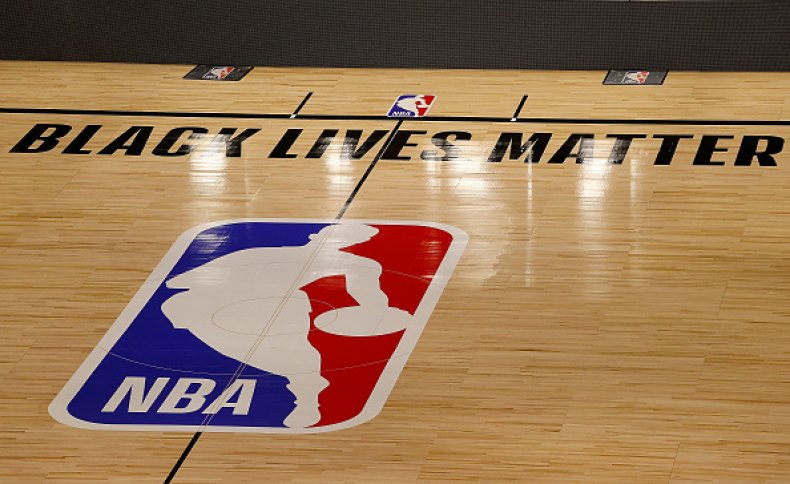
For the past year, the United States has been in the midst of an ongoing battle with racism, discrimination and bigotry. In the past few years, there has been no shortage of celebrities and athletes coming out, voicing their opinions and using their platforms as a bully pulpit to aide in ending racism and making the United States of America a better place.
For the past year, the United States has been in an ongoing battle of ending racism, with many different celebrities and athletes attempting to help this cause and really make America a better place.
As the Derek Chauvin trial has come to a close and resulted in what was perceived as justice for George Floyd, many big athletes came out and spoke on what the guilty verdicts really meant for their communities and the United States as a whole.
While many celebrated the decision, many also came out and took the chance to talk about how this is just the beginning in something much greater. However, some also said that the verdict should not even be celebrated, because it should be expected.
But, for America, this is the perfect place to be, as this gives the chance for kids who look up to sports stars, like Lebron James and Serena Williams, to feel as if they are heard and their concerns are recognized. Both James and Williams have trail blazed a path for the next generation to follow so they don’t have to fight and deal with racism at an older age.
Moreover, James and Williams, likely inspired by the activism of former NFL quarterback Colin Kaepernick, have also paved the way for other athletes, regardless of their sport, league or level of play, to use their platforms for the greater good of society.
Yet, not just the athletes take part in voicing their opinions. Other people, like the owners of sports teams and league commissioners, have come out and made sure that they promote social justice in many shapes and forms.
In the past and the present, the owners, commissioners and players associations across all the major sports leagues agreed to make warmup shirts featuring social justice statements on them, creating flexibility in game schedules in case of cancellations due to social justice issues and allowing room for political dialogue without any pushback from the leagues themselves.
The athletes in our current world have an increased role in society, as they provide both sports entertainment as well as acting as a voice for activism in the United States. Of course, there are many dissenting points of view on this issue, as some believe that athletes should not have this much say in socio-political debates and shouldn’t use their platforms for societal change.
At the end of the day, athletes are concerned citizens too, and their activism shall continue as long as they are given approval by their respective leagues, coaches and team owners.
On April 19, 2021, the 42nd Vice President of the United States, Walter “Fritz” Mondale, passed away peacefully at his home in Minneapolis, Minnesota from natural causes. Serving under Jimmy Carter, the 39th President of the United States, Mondale transformed the office of the Vice Presidency, which was previously seen as an undesirable position in Government.
American Democratic presidential candidate Walter Mondale, campaigns in Illinois, September 11, 1984. (Photo by Robert R McElroy/Getty Images)
According to numerous reports, former Vice President Mondale was aware of his declining health and inevitable death; sending memos to staff members as a form of goodbye while also informing them that he was at peace. Additionally, only one day before he passed away in his sleep, Mondale talked to President Joe Biden, Vice President Kamala Harris, Minnesota Governor Tim Walz and 42nd President Bill Clinton on the phone, saying goodbye as he and his family were expecting the inevitable.
Prior to his death, Mondale held the unique distinction of being the oldest living former Vice President. Upon his death, such a title became held by former Vice President Dick Cheney, who is 80 years old. Ironically, former President Jimmy Carter, whom Mondale served as Vice President, is the oldest living former president at 96 years old. Upon hearing of his former Vice President’s death, Carter released a statement expressing grief, love and respect for Mondale.
In a political state of affairs that can best be described as polarized, Walter Mondale serves as an example of an elder statesman who was a respected member of the political establishment in the United States. Not only was Mondale nationally respected by Democrats for his trailblazing career, he garnered the respect of traditional conservatives, who were drawn to his outreach, his willingness to reach across the aisle and negotiate when it came to legislation, as well as his overall transformation of the role of the Vice Presidency.
The life of Walter Mondale is one that can best be described as illustrious. A devoted public servant, Mondale served the United States in many different capacities. From May 4, 1960 to December 30, 1964, Mondale was the 23rd Attorney General of Minnesota. From December 30, 1964 to December 30, 1976, Mondale served as a United States Senator from Minnesota. From January 20, 1977 to January 20, 1981, he served as the 42nd Vice President of the United States.
In 1984, Mondale ran a bold campaign against Incumbent President Ronald Reagan, tapping Representative Geraldine Ferraro of New York as his running mate, making her the first woman to appear on a federal presidential election ticket in American history. Despite Mondale being well respected across all sides of the political spectrum and making a running mate selection that was well ahead of his time, the potential of a Mondale-Ferraro Administration failed to gain significant traction, as Mondale was defeated by popular Incumbent Ronald Reagan in a landslide, winning only one state, his home state of Minnesota, and the District of Columbia.
Despite the landslide election loss that put a stain on Mondale’s illustrious career in public service, his impact as Vice President of the United States is one in which has redefined the office of Vice President and has allowed modern-day President’s to put significantly more value on the office of the Vice Presidency. Rather than the Vice Presidency being a crapshoot in which one acted merely as a symbolic figurehead, Mondale changed the Vice Presidency into an office that allowed future Vice Presidents to assume a wide range of responsibilities and duties, which aided future Vice Presidents such as Al Gore, Dick Cheney and Joe Biden in having lasting impacts on their respective administrations despite not being the primary shot callers.
After his election loss in 1984, Mondale continued to be on the radar in the legal and political scene. Once he was back in Minnesota, Mondale joined the Dorsey and Whitney law firm, as well as the National Democratic Institute for International Affairs. In 1993, after having not held public office since 1981, Mondale was called to serve his country once again by 42nd President Bill Clinton, whom he served as the 24th United States Ambassador to Japan from September 21, 1993 to December 15, 1996.
After that, Mondale still wasn’t finished, returning back home to Minnesota to serve as a part-time teacher at the University of Minnesota, Hubert H. Humphrey School of Public Affairs. Right up to his death, Mondale remained active behind the scenes in the Democratic Party, offering a ringing endorsement of current President Joe Biden and shedding some optimism in a time that seems increasingly grim.
In Minnesota, Mondale was particularly influential to current Senator Amy Klobuchar, who also ran for the Democratic Nomination, leading a gritty campaign as she vied for the presidency, though she ultimately came up short despite proving many naysayers wrong. Klobuchar, who was a college intern for Mondale in 1980 during his final year as Vice President, learned that Mondale was a truly great man, who was overwhelmingly honest. Klobuchar also learned from Mondale the ability to apply oneself to a job, even if it wasn’t the job that was envisioned – as was for Klobuchar, who was taking down serial numbers of furniture instead of working on briefings like she wanted. Klobuchar credits the lessons she learned from Mondale as a reason why she is currently a Senator for Minnesota.
Whether many realize it or not, Walter “Fritz” Mondale, the 42nd Vice President of the United States who served only one term in office, is one of the most consequential figures in American history. While he may best be remembered as the man who got trounced by Ronald Reagan in the 1984 Presidential Elections, what he is really known for in Washington, D.C, Minnesota and beyond was for being a man who was perhaps much too ahead of his time. From crafting housing legislation to having unprecedented influence and transforming the office of the Vice Presidency all the way to tapping a little-known female United States Representative to be his running mate in a consequential election, “Fritz” was as good as they come.
In times that are so polarized, Walter Mondale serves as a throwback example to the prototype establishment politician who was decent, honest, hardworking and respected all across the political spectrum. When time seemed to move quick in Washington, D.C., “Fritz” moved at his own pace, always one with the present, tackling issues as they may have come. Mondale may have been a trailblazer who was ahead of his time politically, but he was always in harmony with the present, never too sure to count his chickens before they hatched. Right up until he felt the inevitability of death, he was at peace, enjoying the moment and the present just as he did throughout his illustrious life of public service. The tao – the ideology of being one with the present – is Walter Mondale, and his life of public service and the legacy he left behind shall serve as a vessel for an America divided.
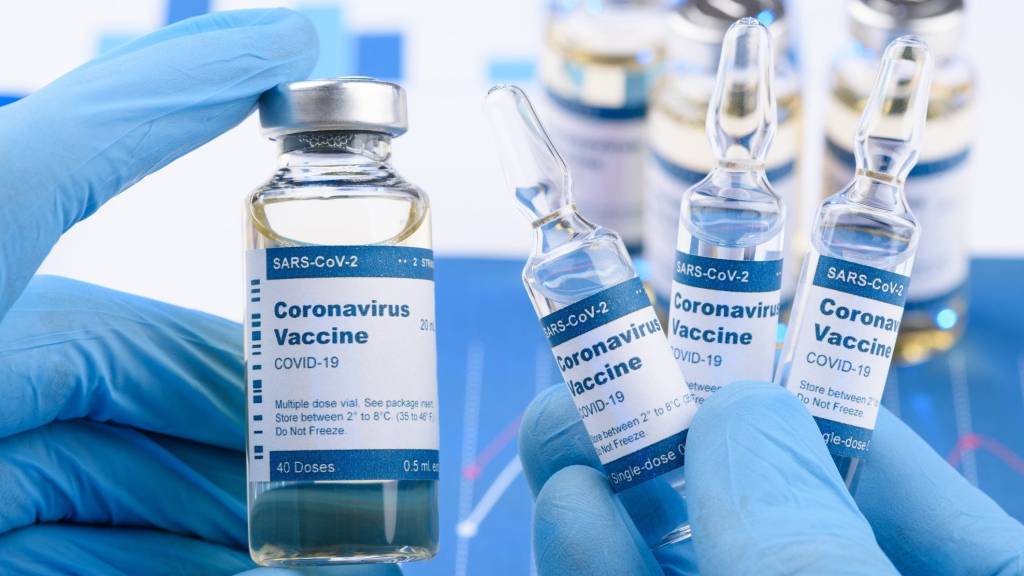
As the state of California opens up COVID-19 vaccinations to all people 16 and older, many more young adults are being vaccinated everyday, which is having a positive effect on the state’s COVID-19 cases.
Beginning on April 15th, all California residents over the age of 16 are now available to receive the COVID-19 vaccine. Adults and young adults all over the state are lining up to receive the vaccine in large numbers. The young adults who are 16 or 17 years of age are eligible to schedule, with their parent or guardian’s consent, a local vaccine which is to be Pfizer only.
With these vaccines being rolled out to millions, the state has seen a positive result in COVID-19 cases and is on par with the targeted date of a June 15tth reopening. Over 24 millions doses have been administered in California with many more being done everyday.
Many students have received the vaccine due to athletic concerns and one Bosco student who has obtained his is junior Joshua Joson.
“I received my Pfizer vaccine last thursday on April 15th, and will receive my second shot in the middle of may, it took about an hour all together, and I felt no pain or sickness afterwards,” Said Joson.
After being given the vaccine, patients will be asked to wait for a certain amount of time in order to make sure that there have not been any reactions to the vaccine. Now due to this wave of vaccines, California has seen for the first time in a long time a positive trend in cases in the state.
The Bosco students being vaccinated are now able to practice their sports in confidence without the worry of being affected by the virus.
“Being a student athlete, getting the vaccine has taken some stress off of my shoulders knowing that I don’t have to worry about contracting the virus and missing time of school and my sport,” Joson said.
The vaccine being opened to people over the age of 16 helps high school students be able to participate in all the highschool activities that they are usually offered. There will be a higher output of high school sports because of the vaccination being administered to more and more high school students everyday.
There are many different sites in the state that are offering the vaccine, but each individual may have a different level of difficulty in getting their vaccine. Due to priorities over different jobs and students, some people may have to wait longer in order to get an appointment to become vaccinated.
Anyone who receives a Pfizer vaccine will have to receive a second shot in order to become fully vaccinated. Though there have been many positives with the COVID-19 situation in california, one negative has been the Johnson and Johnson vaccine being halted. Though the vaccine is being halted, the state’s health officials said that this halt will not have any effect on the distribution timeline.
Almost one third of adults in California are vaccinated with 50% of adults all over the U.S. receiving at least one dose of the vaccine. These high rates of vaccination are having an extremely positive effect on the country and state in terms of case numbers.
California has seen the lowest 7 day average of COVID-19 cases in the state as of April 18th since May of last year. The cases, deaths and hospitalizations due to COVID-19 have all substantially lowered since the rollout of the vaccine.
With California set to fully reopen on June 15th including a positive trend in terms of COVID-19 cases, the state is finally seeing some positive outcomes since the beginning of the pandemic. Hope is here!
After recent news of a potential recall election of Governor Gavin Newson, many people are left wondering how successful and how common is the process of recalling a governor in the state of California.
Although different states have different criteria on when a recall is allowed, there are only 18 states that allow citizens to recall their governors, including Alaska, Arizona, California, Colorado, Georgia, Idaho, Kansas, Louisiana, Michigan, Minnesota, Montana, Nevada, New Jersey, North Dakota, Oregon, Rhode Island, Washington, and Wisconsin. In California, laws to recall a governor are extremely lenient, meaning that they are subject to be recalled at any time, for even a small inconvenience.
In addition, California has one of the lowest percent rates of population accepted on a petition. Just twelve percent of the population has to sign a petition to start a recall election. If this number is reached, and signatures are validated, a recall election happens. Meaning that anyone can run for governor once re-election occurs, as Arnold Schwarzenegger famously did successfully in 2003, after Governor Gray Davis was recalled in the midst of his term. If the opponent gets more votes than the current governor in the recall election, the incumbent governor will be replaced.
A petition created in February 2020 has reached about 2 million signatures of the 1,495,709 signatures needed for the recall process of Governor Newsom to begin. These signatures have to be verified, which will happen at the end of the month, and if the required amount of signatures are validated, a recall election will be set into motion.
According to Probolsky Research, 46.7 percent said they would vote no if casting a ballot today on Newsom being recalled from office, compared to 40 percent who said they would vote yes. If these numbers hold up, Newsom will not be recalled. This is a common trend among all polls, although percentages are different, the outcome stays the same.
Although the signatures can be verified at the end of this month, the earliest the recall election would happen would be around early November, since the state of California gives its citizens the option to withdraw their signatures on the ballot for a short period of time. If many people withdraw their signatures, and the number becomes lower than the required amount, the recall election will be cancelled. Newsom’s term is set to end in November of 2022, which means that if the recall is successful, Newsom would be the second governor to be recalled in the last 18 years.
If the recall is successful, the panel for potential governors is composed of mostly Republican candidates, which makes sense, considering that Governor Newsom is a Democrat. The idea behind, that the Democratic party does not want to select any candidates that would possibly split the vote between Newsom and the another candidate, causing Democrats to give up the spot. Results on whether or not there will be an election should be clear at the end of the month.
One year after COVID-19 began to spread in the United States, many wonder how COVID-19’s second consecutive presence during spring break would affect the country now that vaccines are beginning to go into people’s arms.
The numbers don’t lie, as of late March 2021 coronavirus numbers are at an all time low in all states. But this isn’t for any reason, as with the now available vaccines out, almost twenty two percent of the country has been fully vaccinated.
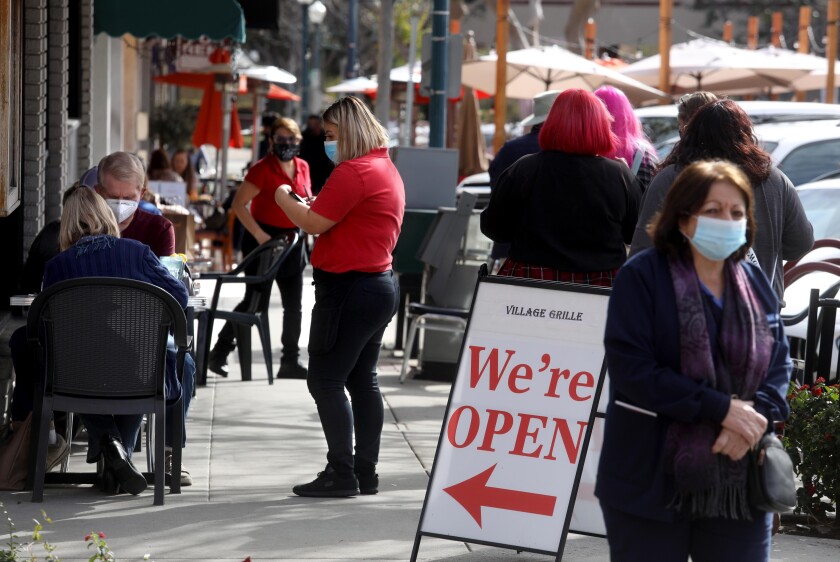
Many schools look to return to on campus learning but spring break might affect reopenings due to the potential of rising cases. Some Bosco students offered to share what they did during spring break to prevent another outbreak.
“Yeah, honestly with everything closed you can’t really do much to begin with, but thankfully since we live in California we have many social distanced options like the beach which is where I spent most my time fishing and having fun,” said junior Jesse Paderez.
But, now that spring break is over it gives us a chance to take a look at how it affected COVID-19 cases. From numbers being at an all time low, there are now hospitals in many states like Florida and California that got hit with a new spike of people testing positive.
At the start of April, 702,000 new positive tests come out due to traveling for spring break vacations. Many warnings were put out suggesting not to travel, but many did not listen.
Florida, more specifically Miami, took action early and shut down many of their popular spring break spots but this did not affect much as Florida was hit the hardest of all states in positive cases after Spring Break.
California, now being one of the states with a dipping positivity test rate, is not as reopened as Florida to begin with, but even with the small spike in numbers, Governor Gavin Newsom came out and released a statement saying that by June, California looks to be fully opened with protocols like masks and hand sanitizing still in place.
“I’m super excited for the reopening, obviously we didn’t really have last summer so I am pumped especially for baseball too because we can have a full summer of playing and not have to really worry about what will happen in the future,” said junior Jake Ellison.
Spring Break had much less of an affect from a COVID-19 standpoint this year compared to last year, and part of that is due to the new vaccine availability, which are a major reason for recent success in keeping case numbers, hospitalizations and deaths low and declining. Yet, there were also many people took the pandemic much more seriously this year than last year, which was another contributing factor to the lower numbers we are seeing from the CDC.
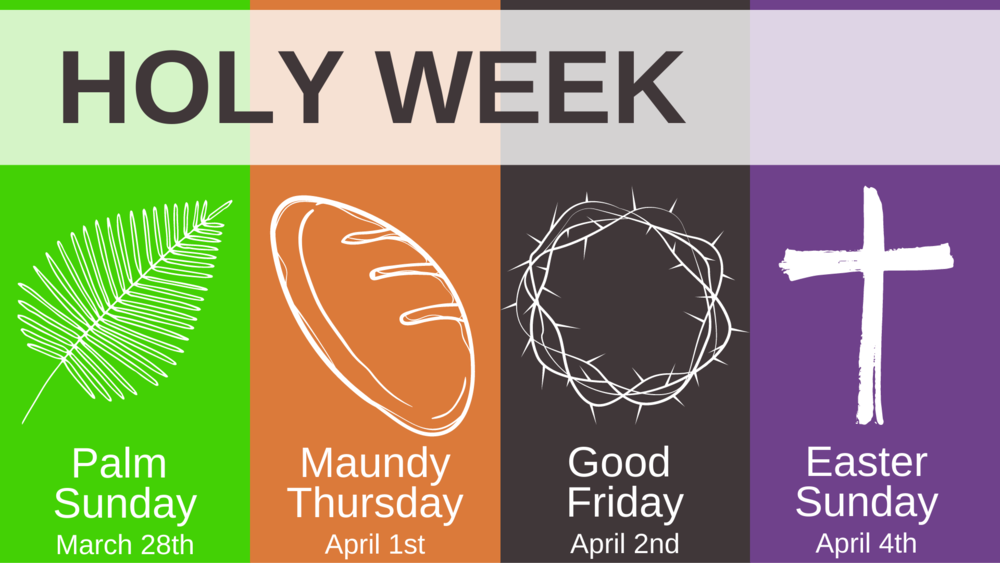
Spring break is more than just a few days of vacation. During Easter break, Christian’s celebrate Holy Week, as they remember the life of Jesus. This year, Holy Week starts on Sunday March 28 and ends Sunday April 4.
In Christian tradition, Holy Week begins on Palm Sunday and carries on through Maundy Thursday, Good Friday, and Holy Saturday. It is a time for Christians to reflect on Jesus’ journey to the Cross, concluding with an empty tomb in Calvary.
What makes this week holy? During this week, Christians are asked to reflect on the meaning of Jesus’ death. It starts with Palm Sunday when Jesus entered the city of Jerusalem. The week then leads us through the Last Supper, His crucifixion, and ends on Easter Sunday with His resurrection.
Palm Sunday:
The first day of Holy Week and the Sunday before Easter, commemorating Jesus Christ’s triumphal entry into Jerusalem. This day is celebrated around the world with palms and twigs from the day of. The palms are important because when Jesus was entering Jerusalem, they greeted him with waving palms and palms on the floor, creating a rug because of his long journey.
Maundy Thursday:
Maundy Thursday is also known as Holy Thursday and Sheer Thursday, among other names. It is a Christian holy day that commemorates events known as the Washing of the Feet and the Last Supper. Churches celebrate this day with a reenactment of the Last Supper and the Washing of the Feet.
Good Friday:
Good Friday, the Friday before Easter is the day on which Christians annually observe the commemoration of the Crucifixion of Jesus Christ. From the early days of Christianity, Good Friday was observed as a day of sorrow, penance, and fasting. Churches celebrate this day with a reenactment of the stages of Jesus’ death. These stages are called The Stations of the Cross.
Easter Sunday:
This Sunday marks the end of Holy Week and Lent. Easter Sunday is one of the most festive events among Christians worldwide. It commemorates Jesus Christ’s resurrection. Churches have a celebration during this day. It is said by many, that the most important day in the Christian calendar that Christians should attend church is on Easter Sunday.
Jesus came to earth to save humanity by dying on the cross on Good Friday and resurrected on Easter Sunday. He opened the gates of heaven making a way for our sin to be forgiven and usher us into the presence of God. Holy Week is a sacred opportunity to study the foundation of Christianity.
In the end, Holy Week works as a way for Christians to reflect on their actions, to live in a way the pain that Jesus felt in his last days and how Christians can put his teachings into action and prophesize his gospel.
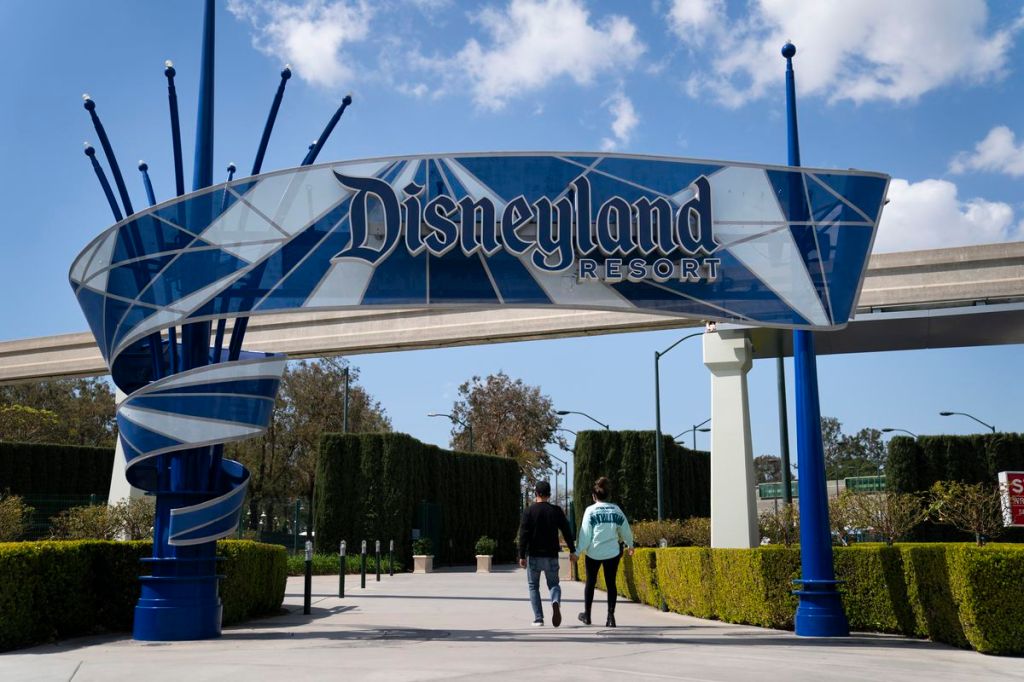
The happiest place on Earth is finally seeing happier days ahead, as Disneyland will finally reopen after a full year of being shut down. The entire park will finally be open to the public and ready for families to make memories that they will cherish for a lifetime. With the reopening, there are a few new add-ons in place with many excited visitors ready for the return.
As the world moves closer and closer to normalcy each passing day, Californians and people around the world are anticipating the reopening of Disneyland Resort. Like many others, there are Bosco Braves who are anticipating Disneyland’s reopening and cannot wait to be able to go for some fun. While Disneyland is definitely a family friendly place, it also provided teenagers everywhere a chance to go out with friends, let loose and share memories. Bosco junior Julian Orozco has long anticipated Disneyland’s return.
“I am very excited for Disneyland to reopen. I honestly just missed going out with my friends, and Disney was just our go-to spot to hang out,” said Julian.
Disney’s new efforts to open the theme park will take place on April 30, 2021 and will include Disneyland Park, as well as Disney California Adventure Park. Prior to your arrival, there are some things all park visitors will need to know.
There will be required face masks or face shields while at the theme parks. All visitors must stay, at minimum, six feet apart. Furthermore, only residents of California will be eligible to attend the park, and finally, you must download the Disney app because you need a reservation to attend the theme park due to its limited capacity as a result of COVID-19 protocols. With these given restrictions, many question how the actual rides will affect these rules.
“Honestly, I think the masks and social distancing won’t affect the theme park too much. Obviously, it’s going to stink that you have to wear a mask the whole day, but it might be a good thing because usually on rides you’re all squished together and now that there’s social distancing you can enjoy the ride without worrying about being in anyone’s business,” said senior Aaron Reyes.
When you do arrive at Disneyland, you will be greeted with various stations that will consist of verifying your reservation, temperature screenings and ultimately making your way towards fun, staying socially distanced to wherever you want to go. Despite the hassle, however, many believe the procedure is worth it.
“I miss the memories me and my friends made, and when it closed, there was really nothing to do on the weekends anymore. When the full park reopens, I will for sure be in the front of the line,” said Julian.
Additionally, there will be no “Fast Passes” distributed nor Disney MaxPass services, due to the COVID-19 restrictions. This will be subject to change as California seeks to lower COVID-19 positivity rates with the distribution of vaccines. Furthermore, various attractions that cause big crowds to form, such as firework shows and parades, will be delayed to a later date, while some stores and restaurants will be limited in capacity to keep the theme park open.
Despite the changes and protocols being much different than usual, Disneyland’s reopening provides a beacon of hope as California slowly returns to normalcy.
Below are dates to be aware of for those hoping to return to the happiest place on earth as soon as possible:
Now Open – Downtown Disney District
April 29, 2021 – Disney’s Grand Californian Hotel & Spa
April 30, 2021 – Disneyland Park and Disney California Adventure Park
The Disneyland Hotel and Disney’s Paradise Pier Hotel will reopen at a later date.
The first case of P.1., a new Coronavirus variant, which is also known as the “Brazilian” variant, has been confirmed in San Bernardino, California by the California Department of Health. The new variants of COVID-19 are creating growing uncertainty amongst people everywhere, specifically in regards to whether the new vaccinations are protective against new variants.
On March 13th, the California Department of Health alerted the county that there was a positive testing for the P.1. variant that was found on March 2nd. The man who had contracted the new variant is in his mid 40’s and has since been isolating at home.
This is not the only appearance of the P.1 variant inside the United States, however, as it has also been seen in the states of Arizona and Massachusetts. The variant was first detected inside four travelers coming from Brazil, who were tested at the Haneda Airport in Japan. However, it was first reported in the United States at the end of January.
Although the variant currently seems as if it is not any worse than the original coronavirus variant, it is more contagious and dangerous in the sense that if it’s being spread, it can spread faster than the original COVID-19, potentially boosting up numbers in California just as they begin to go down. According to the CDC, the emergence of this P.1. variant may raise concerns for potential of an increase in transmissibility or propensity for SARS-CoV-2 reinfection of individuals due to the 2 mutations that the variant possesses.
The variant was detected in some samples from the Amazonas state in Brazil back in mid-December. The researchers said that they detected the variant in 42% of the samples that they were able to test. It has also now been confirmed in some recent tests in Japan from people who were visiting the Manaus inside the Amazonas. Though the exact date of the variant appearance is not known, through the genome-surveillance samples inside the Manaus between March to November, there had been no signs of the variant.
Reasons for why the variant is dangerous is firstly because of its spike mutation that makes it more infectious. Another mutation that is inside the variant is the N501Y, which is also known as “Nelly” and has been speedily spreading across the UK. The variant is possibly more than 50% more transmissible than other past variants that have made their way around the world. This is the main cause for concern for scientists and other global health officials.
Not only is it more transmissible, it also has a variant called the “escape mutation”, which according to lab experiments in South Africa, found that this mutation has helped the coronavirus escape from different protective antibodies that were in place due to earlier infections. This means that it makes it possible for someone who had already been infected with an earlier version of the coronavirus variant to become re-infected with the new variant.
Though this mutation does allow it to re-infect individuals already having been infected with earlier variants, there is no evidence to suggest that the already currently available vaccines will not work against this variant and other variants with the same or similar mutations. There will be updates to vaccines as times goes on, more variants are detected and more information is found.
As of now there has yet to be a more mass spread of the variant inside the U.S., with the only real outbreak happening in Brazil and single cases found in other countries around the world.
Since the COVID-19 pandemic has struck communities around the world, the various effects of the shutdown and restrictions on crime have been overlooked. The results paint a complex picture dependent on region and crime severity.
As a whole, since the beginning of the COVID-19 pandemic, crime has decreased due to peer groups seldom meeting in order to stay safe from the virus. However, it appears that minor offenders have been put in situations where crime against intimate partners such as battery, violence and homicide is likely.
In European countries, intentional homicide is down almost 25%. However, this is only true when a country is in lockdown, and almost immediately when these restrictions are relaxed, the rates of homicide move right back up to the normal amounts, which is, of course, very interesting.
Out of the countries that were studied, countries in Latin America saw a much smaller change in the rate of violent crimes.
The difference between the European and Latin American countries’ violent crime rates could be due to the different amount of restrictions that respective governments imposed, pre-existing socioeconomic conditions and a different pattern in the type of these crimes in the two, as Latin American homicide was mainly due to organized crime where European homicide was more closely related to more personal reasons.
According to the United Nations Office of Drugs and Crime (UNODC), the property crime rate has been down about 50% since the start of the pandemic. Although it is something to be proud of, the longer term effects of Covid may have the opposite effect that the initial hit had.
As COVID-19 continues to affect societies worldwide, the increase in unemployment could have a continued larger impact on groups that cannot afford to be out of work. If unemployment continues to be a problem for vulnerable groups, then that could produce a rise in property crime or other crime rates.
Restrictive measures due to COVID-19 also help draw back on opportunities for people to commit street crime. On top of that, stay-at-home orders would reduce criminals breaking into private homes. Social distancing measures and the closure of meeting places will also reduce interpersonal violence and public crimes.
There are two theories for how people will react. One is the opportunity theory, which is basically that since people have less of an opportunity to commit crime, they will subsequently commit less crime. The other theory is that strain theory, where the socioeconomic strains on people will push them to commit crime, which may be much more prevalent – and relevant – during the pandemic shutdowns.
Whether the Opportunity Theory or the Strain Theory are more prominent depends on outside factors, such as what the restrictions are, the support that governments give to their people to overcome the challenges of such a difficult time and pre-existing situations that could push a person toward either theory.
A significant part of the overall reduction of crime is related to the drop of minor crimes that were committed as groups. These crimes were typically done by younger offenders, so the temporary removal of the often forced peer groups that younger people were put into would naturally due to pandemic shutdowns and restrictions removed many individuals from convening as groups and committing crimes as they’d usually do pre-COVID
In the two hotspots of homicide in the United States, Philadelphia and Chicago, homicide rates have either stagnated or increased since the start of COVID-19. However, interpersonal violence has increased because of the government mandated home confinements. Thus, for already violent places, the pandemic could keep violent crime stagnated at best and be harmful at its worst.
However, due to vaccine rollouts, life may be going back to normal sooner rather than later. Whatever effect going back to normal means on crime rates remains to be seen.
As California enters the red tier, reopening is staring to occur, beginning with major league baseball teams opening at limited capacity and theme parks also opening at 15% capacity.
Beginning on April 1st, state officials will start to allow civilians to attend major league baseball games and theme parks, such as Disneyland, at a limited capacity. Due to the fact that California has entered the red tier, in the coronavirus threat level tier list, theme parks are able to allow 15% capacity to people inside the state. Only people inside the state are going to be allowed to buy tickets to these theme parks.
Though it isn’t only theme parks and baseball games that are going to allow more people to attend, there are other places in California that are reopening as well including different restaurants, retail stores and malls.
Now once the red tier has been reached and holds steady for two weeks, gyms will be able to reach 10% capacity and museums will be able to be at 25% capacity. Indoor dining will become an option as well though as seen in San Francisco, they may wait out on the opening of indoor dining until the orange tier is reached.
Another place that will be reopening in the near future is movie theaters. As plans roll out for how reopening will work, movie theaters in Los Angeles and the rest of California will begin to reopen at a limited capacity allowing movies that were delayed to finally be able to release now to the public through movie theaters. Though there is already an option for some movie theaters for people to rent out the theater to watch a past film with a limited amount of people.
Though California is reopening there are going to be places that are more cautious than others, especially certain restaurants. Some restaurants will be more keen on reopening faster and immediately once the restrictions are lifted while others may wait and make sure that the numbers don’t spike right away so that when they reopen they know they are reopening for good.
Even though Disneyland will begin to reopen, there will still be vaccinations being distributed inside the toy story lot serving as a very large point of distribution for Southern California. As of mid February Disneyland had already distributed over 100,000 vaccinations proving to be a very efficient site for California residents.
Though stadiums will be reopening it will only be at 15% capacity in California and will have to wear masks at all times and the only people allowed to attend these games will be in state residents. In Disneyland and other theme parks there will be absolutely no indoor dining and a mask mandate will be enforced, with even the indoor rides having certain restrictions in place.
As California lowers tiers and enters the least restrictive tier of the yellow tier there will still only be 35% capacity allowed with the restrictions of only in-state residents able to attend still being in place. Even as there are other stadiums around the U.S. reopening including The Texas Rangers who are going to be reopening at 100% capacity for their first home game on April 5th.
Although it seems California is far off from reopening, places including MLB parks to full capacity as the state has just entered the red tier and still needs to show that it is stable in the red tier for even those restrictions to loosen.








 The Brave News