Monthly Archives: March 2021

Sports: After Having Last Season Cancelled Due To COVID-19, Bosco Braves Baseball Is Back

by Aydn Morris

The Bosco Braves varsity baseball team is looking forward to starting their season on the right track in their opener against Dana Hills High School today at home at 3pm.
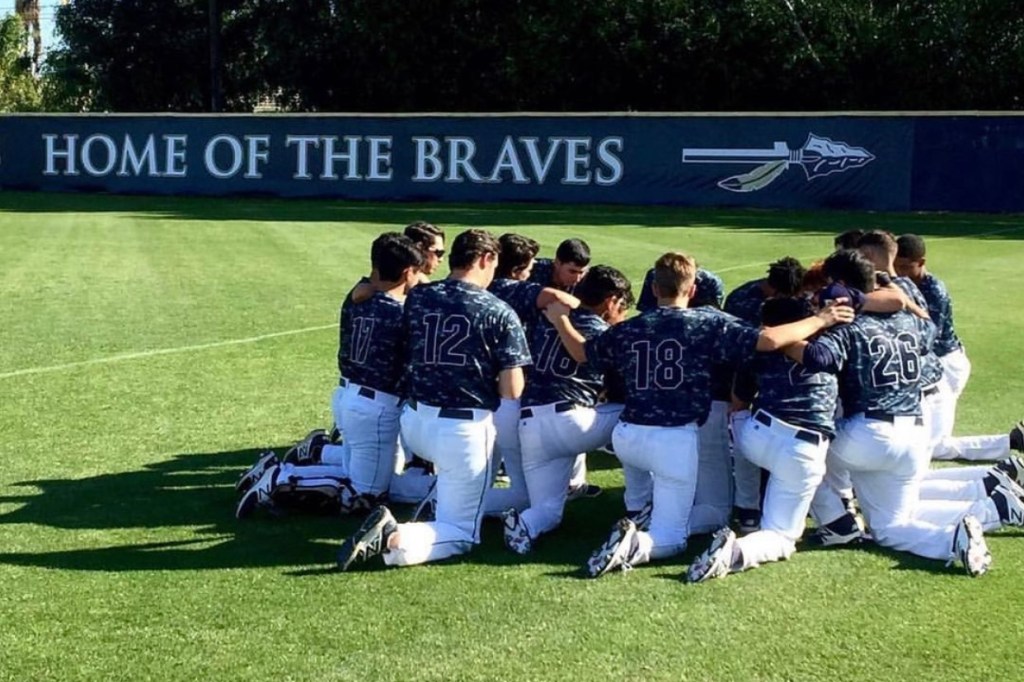
Bosco Baseball is more than ready to start their season after las season was cut short due to the ongoing pandemic. Even though they didn’t play, last season still had an effect on the Braves, with many of the players not being able to showcase their talents to college scouts. Since then, the Braves have been counting down the minutes until the first pitch this afternoon. 

The previous season should have the Braves fired up with finally having the opportunity to truly showcase their talents. The team is junior-heavy with 12 out of 25 players being juniors, while also having some committed seniors, such as Caleb Brandon, who is a transfer from Millikan High School committed to USC, Anthony Thomas, committed to Colorado Christian, and Dylan Lina who previously won a gold medal for Team USA at an international tournament in Mexico.

The Braves will once again be led by varsity head coach Don Barbara, who played college baseball at Long Beach State and in the minor leagues for eight years. Despite nearly over two decades of coaching experience, this year has been unlike any other for the manager.

“What is so different about this season is the scheduling, because the team usually comes back to start playing in August, but they only got to play in March,” said Coach Barbara.

One of the team captains, current Bosco senior Aaron Reyes, is committed to play baseball at the United States Air Force Academy. Reyes is confident heading into the season, and acknowledged who they have lost and who they will have heading into Friday.

“Last season the team only had eight preseason games and the team was doing really well until our last game against Servite, in which the three game series was cut short due to the lockdown. We lost many seniors, such as Albert Rios who is playing baseball at Stanford University, Jacob Morales, who was a fearless captain, Luis Gutierrez Jr. and many more seniors who were leaders and kept the team together,” said Aaron.

Last year’s cancelled season due to COVID-19 will have an effect on the college scholarships as well. There is a new restriction currently in place in which college scouts are currently unavailable attend the games. Luckily the restriction is set to be lifted soon as pro and college scouts will be allowed to attend games starting March 31st.

Not having college scouts attend the games may effect the scholarship offers and have a bit of a hit on morale, but everyone on the team is going to get out there on the field with the same mindset, which is to be their very best.

With that said, the expectations remain the same as Bosco looks to win the Trinity League Championship this year and put up another Trinity League team banner high in the gym rafters. The Trinity League will continue to be one of the most competitive leagues for high school baseball in the country, so it won’t be a walk in the (ball)park by any means. 

Sports: Bosco Cross Country Season Comes To A Close As Seniors Reminisce

by Joseph Theisen

In the midst of a pandemic, St. John Bosco looked forward to an impressive final season for many seniors, and a bright future for the underclassmen. While abnormal, the season was memorable for seniors and upperclassmen alike.

Bosco Cross Country has recently wrapped up its season, being the final one for many notable seniors and Coach Mac could not be any prouder. Coach Mac has addressed the differences between what a regular season used to be and how the most recent season was during the pandemic. The restrictions have reminded him of the type of competition he had when he himself was a runner.

“The races are like they were twenty years ago, where you run dual meets. We’re allowed to run against only one team at a time in our league.  That’s how it was years ago, and what we’ve been doing in the past twenty years is called cluster meets, which is everybody in the league runs against everybody, all at once, and then you score it separately, but it’s kinda cool,” said Coach Mac.

While the rules of the new season were different for the runners themselves, Coach Mac clearly had experience with dual meets, which is a large reason why he was able to adapt to it so easily from a coaching standpoint. Additionally, it also gave Coach Mac and his runners a bit of a break, as it allowed them to focus on one team at time rather than multiple at once.

Although the new format is exciting, and the team has been working hard to be able to compete, the pandemic has caused challenges.  Not only is the safety of the players at risk, but their families as well. This hits close to home for Coach Mac, as he was hesitant to visit his own mother, who was at risk. To stay safe, the team took all necessary precautions and wore masks during practice.

“The kids have been exceptional, they’re everyday with the mask…it’s a different world, and I think the kids adapted to it very well.  A lot of the kids said it was a big lift to be able to just go to practice, just for two hours they got out of the house,” said Coach Mac.

Seniors like Bosco’s own Angel Vilchis finished the final race of their high school career. Angel was optimistic about the future of the team, and grateful for the time he was able to share with the people he had run with for the past four years. It ended up being a lot better than expected, as the months of practice leading up to the season were full of uncertainty and runners themselves didn’t even know if they would be able to compete.

“I think competition was different in that we viewed each race as a privilege because of how much we had trained the past 6-7 months without knowing if it was for anything. We had two freshmen come in, Andrew Perez and Aidan Aldana, put up some of the best freshman times we’ve seen in like five years. Our lead guys were consistent too and were able to get their best times because of it,” said Vilchis.

Despite being unsure whether they would be able to replicate their successes of previous seasons due to losing three of their five starting runners, the Cross Country time had a great season behind the stellar performances of the underclassmen. Needless to say, they were able to meet the moment fully.

Considering the fact that Vilchis most likely will not run in college, this final season was that much more important to him. The cross country team finished the season with an impressive 4-1 record with its only loss being losing a close one to JSerra. Coach Mac is already looking at the bright side as he is preparing for the spring track season being right around the corner and new athletes are currently being encouraged to join.

“Track starts in four weeks, if you’re not doing anything, get out, and come out to track,” Coach Mac pleaded.

Hopefully, Coach Mac and the track team are able to replicate the successes of the Cross Country team. If they are able to do so, it would provide outgoing track seniors to share some final memories with their teammates at Bosco.

Around Bosco: All Students Given Option to Return to Full-Time, In-Person Learning

by Joaquin Medrano, Managing Editor, and Omar Cerezo

After a year of COVID-19 protocols and shutdowns, Bosco is ready to welcome most students back to the classroom next week along with an expansion of continued participation in extracurriculars and the reintroduction of student life events, as L.A county shifted into the “red tier” last week.

Los Angeles County has been in the purple (widespread) tier since March 2020. Recently, many people were shocked to find out that L.A County was moving towards the red (substantial) tier during the third week of March 2021. The progress towards a lower-tier brings new regulations, which has impacted schools in a positive way, as it has allowed schools like Bosco to begin operating at a 75% capacity.

Currently, Bosco is planning to bring most of the student body back to campus, while still offering an online option. This is an effort to accommodate every family and allow them to choose what works best for their schedule and health. Mr. Adan Jaramillo, the newly appointed Interim Principal, has been hard at work, as administration and faculty prepare to welcome back all students next Monday.

“We are having two grades, freshmen and seniors, come back on Monday, and on Tuesday, we start with everyone else,”  said Mr. Jaramillo. “It is only for the students who selected to on-campus learning back in August and obviously we will still offer the online component because that is an integral part, especially in a global pandemic.”

According to Mr. Jaramillo, one of Bosco’s priorities right now is to bring something to look forward to in the next few weeks for each class. Similar to the Senior Watch Party held during the first football game of the season, Bosco is trying to bring events unique to each class that they can enjoy after a year of no activities on campus. Regarding extracurricular activities, Bosco is trying to maximize the high school experience and give students the opportunity to return to their after school activities no matter what they are.

Vice Principal Mr. Edgar Salmingo, Jr. recognized that as of now, with COVID restrictions becoming looser, there is no need for any extracurricular activities to work strictly online.

“It is my understanding that every sport and other extracurriculars are going back with competitions. I know other competitions will be unveiled shortly, but with guidelines being a little less restrictive, it has allowed for some resemblance for how games used to be played, with some limitations,” said Mr. Salmingo.

The new tier will also affect how class schedules will look for the upcoming weeks. Instead of being in cohorts, students will be allowed to visit all four of their teachers throughout the day if they opted in for physical on-campus learning. Bosco senior and band president Travien Sears learned on campus during the last phase of reopening last quarter, where he saw one teacher twice a week per cohort regulations.

“I loved being part of the cohort system. Many precautions were taken that made us ,the students, feel safe, and now going back to see – physically – people we normally can only take a look at in a ZOOM meeting makes me really excited to be active and see different teachers and classmates in the same place,” said Travien. 

That social aspect is a big part of students making the choice to return, and teachers, like Mr. Vince Vigil, are happy to see their students in all their different periods and interact with them on a daily basis as well.

“I really look forward to actually coming back to campus, to engage and accompany those students who need to have a physical presence at school,” said Mr. Vigil.

However, teachers are not the only ones excited to see their students back in the classroom, as many students themselves cannot wait to be back in the halls of St. John Bosco High School, ready to learn and interact with their peers. Sophomore Ethan Ambriz realized during online learning how much physical learning is taken for granted.

“I honestly like online learning, but nothing compares to seeing people face-to-face instead of through a screen,” said Ethan. “I’m extremely excited to go back and hang out with my friends during lunch as well as paying attention more in class because there are a lot of distractions at home.”

Another question that raises levels of concern around students, teachers and parents is the possibility of a sudden change – starting a school year online and making a quick transition back to in-person – which could affect the performance of students. Mr. Mario Cordero, Bosco’s AP U.S. History and Psychology teacher, is considering whether there are any serious repercussions for such a sudden change.

“From what I’ve been gathering in my studies of psychology, relationships matter and relationships are strong indicators for a lot of beneficial things in people’s life,” said Mr. Cordero. “I think it has been a real challenge for students to find those relationships, and those three, four hours after school that they get outside of their devices can help them get away from that fixation.”

With a reopening of the campus for full-time school and extracurriculars, students will finally be able to start falling back on their Bosco brothers and mentors again, and for the seniors, many end-of-the-year activities, such as graduation, grad night, prom, as well as sporting events, have a chance of coming back as the pandemic situation continues to improve. That would be a nice reward at the end of a weird year.

Currently, planning the next school year is another challenge that administration and teachers have to face, as guidelines shift fairly quickly. Needless to say, Bosco is always looking for ways to bring life into what has been one of the unprecedented times in current history. So far, they are doing the best they can possibly do and more.

News/Op-Ed: While COVID-19 Vaccination Rollouts Have Brought Optimism, New Spreads Of Variants Cause Further Uncertainty

by Andrew Fierro

The first case of P.1., a new Coronavirus variant, which is also known as the “Brazilian” variant, has been confirmed in San Bernardino, California by the California Department of Health. The new variants of COVID-19 are creating growing uncertainty amongst people everywhere, specifically in regards to whether the new vaccinations are protective against new variants.

On March 13th, the California Department of Health alerted the county that there was a positive testing for the P.1. variant that was found on March 2nd. The man who had contracted the new variant is in his mid 40’s and has since been isolating at home. 

This is not the only appearance of the P.1 variant inside the United States, however, as it has also been seen in the states of Arizona and Massachusetts. The variant was first detected inside four travelers coming from Brazil, who were tested at the Haneda Airport in Japan. However, it was first reported in the United States at the end of January.

Although the variant currently seems as if it is not any worse than the original coronavirus variant, it is more contagious and dangerous in the sense that if it’s being spread, it can spread faster than the original COVID-19, potentially boosting up numbers in California just as they begin to go down. According to the CDC, the emergence of this P.1. variant may raise concerns for potential of an increase in transmissibility or propensity for SARS-CoV-2 reinfection of individuals due to the 2 mutations that the variant possesses. 

The variant was detected in some samples from the Amazonas state in Brazil back in mid-December. The researchers said that they detected the variant in 42% of the samples that they were able to test. It has also now been confirmed in some recent tests in Japan from people who were visiting the Manaus inside the Amazonas. Though the exact date of the variant appearance is not known, through the genome-surveillance samples inside the Manaus between March to November, there had been no signs of the variant. 

Reasons for why the variant is dangerous is firstly because of its spike mutation that makes it more infectious. Another mutation that is inside the variant is the N501Y, which is also known as “Nelly” and has been speedily spreading across the UK. The variant is possibly more than 50% more transmissible than other past variants that have made their way around the world. This is the main cause for concern for scientists and other global health officials.

Not only is it more transmissible, it also has a variant called the “escape mutation”, which according to lab experiments in South Africa, found that this mutation has helped the coronavirus escape from different protective antibodies that were in place due to earlier infections. This means that it makes it possible for someone who had already been infected with an earlier version of the coronavirus variant to become re-infected with the new variant.

Though this mutation does allow it to re-infect individuals already having been infected with earlier variants, there is no evidence to suggest that the already currently available vaccines will not work against this variant and other variants with the same or similar mutations. There will be updates to vaccines as times goes on, more variants are detected and more information is found. 

As of now there has yet to be a more mass spread of the variant inside the U.S., with the only real outbreak happening in Brazil and single cases found in other countries around the world.

Around Bosco: Mixed Emotions About The Quarter System Spark Debates On The Future of Bosco Bell Schedule

by Ryan Tavera

As the Bosco community transitions into the final quarter of the school year, both students and faculty alike weighed in on surveys to share their thoughts on how the quarter system has positively and negatively affected education during online learning. 

Academics - St. John Bosco High School

One thing many teachers have had to adjust to is the eight-week period as opposed to the previous 16 weeks per semester. Teachers have had to adjust while planning out their lessons or assignments in order to fit them into the shorter schedule. Mr. Flaherty, for instance, has resorted to projects rather than tests and quizzes. 

“One thing I have fallen back on, especially during remote learning, is doing a lot of project based lessons, rather than a quiz or a test my students will work on bigger projects that might take longer but overall the assessment of their learning becomes a little more obvious,” said Mr. Flaherty.

On the other hand some teachers are still trying to find that balance when assigning projects, classwork or tests, which is no easy task especially when behind a screen. 

“You don’t really know if it’s too much; it’s hard to get a sense of that. You’re trying to teach the same things but you don’t know whether it’s too much or how much everyone can handle,” said Ms. Tracy.

From a student’s perspective, the overall workload is varied depending on the student and classes. Some feel the workload has been the easiest it’s ever been and others feel it significantly amps up at certain points during the semester.  

Nicholas Galeana, a Junior in the Computer Science Pathway, feels the workload in his classes has been fairy balanced and manageable. 

“My teachers gave me a fair amount of work, nothing too much to stress me. I definitely think it is getting easier to adjust to because we have been online for a while now,” said Nicholas. 

Other students have found the workload to be difficult and even overwhelming at times, especially those who participate in extracurricular activities outside of school.

“When we first started, I found myself struggling at times during the quarter especially when I missed a few days for a wrestling tournament. It seemed almost impossible to catch up again since I had missed a couple of days” said senior and Varsity wrestler Jasper Centeno. 

Another issue that has sparked some controversy among the Bosco community is the idea of continuity between classes. While seeing the same teachers everyday has its pluses it does not come without a few drawbacks.

“It’s a plus seeing the guys everyday cause there’s some continuity and it’s a challenge because to be dynamic it takes a lot of energy,” said Mr. Cordero.

However, with the removal of a tumbling schedule from previous years it means students aren’t able to rotate between classes and have to wait until the next quarter in order to be in that class again. 

“The challenge for some students might be the continuity or the lack of continuity for certain subjects. History for example, we left off in the 1900’s the Gilded Age at Christmas so I haven’t seen those guys for about three months. So that lack of continuity is definitely something that I think that gets broken up a little bit,” said Mr. Cordero 

This issue becomes especially apparent in certain subjects such as a language class since there is such a long period of time until students take the class again. 

As the Bosco community transitions into its last quarter of the year fatigue and certain challenges such as lack of a break have been apparent in the community. 

“I think going from third to fourth quarter you definitely sense that everyone is kinda tired and trying to get that energy up to start all over again is a little more challenging,” said Ms. Tracy.

While most students and teachers share this experience of feeling burnt out after the last quarter. Others feel differently and support the fast transition from third to fourth quarter. 

“I think having an extended break can cause some issues because you kind of lose that momentum,” said Mr. Flaherty. 

Ultimately it is hard to get a firm grasp on the communities feelings about the quarter system especially during online learning. 

Only time will tell how the Bosco community welcomes the quarter system when in person learning is resumed. Until then students and teachers are doing their best to adapt to the new circumstances.

News/Op-Ed: The COVID-19 Pandemic Has Had A Drastic Effect On Crime Rates Around The World

by Jackson Smith

Since the COVID-19 pandemic has struck communities around the world, the various effects of the shutdown and restrictions on crime have been overlooked. The results paint a complex picture dependent on region and crime severity. 

As a whole, since the beginning of the COVID-19 pandemic, crime has decreased due to peer groups seldom meeting in order to stay safe from the virus. However, it appears that minor offenders have been put in situations where crime against intimate partners such as battery, violence and homicide is likely. 

In European countries, intentional homicide is down almost 25%. However, this is only true when a country is in lockdown, and almost immediately when these restrictions are relaxed, the rates of homicide move right back up to the normal amounts, which is, of course, very interesting. 

Out of the countries that were studied, countries in Latin America saw a much smaller change in the rate of violent crimes. 

The difference between the European and Latin American countries’ violent crime rates could be due to the different amount of restrictions that respective governments imposed, pre-existing socioeconomic conditions and a different pattern in the type of these crimes in the two, as Latin American homicide was mainly due to organized crime where European homicide was more closely related to more personal reasons. 

According to the United Nations Office of Drugs and Crime (UNODC), the property crime rate has been down about 50% since the start of the pandemic. Although it is something to be proud of, the longer term effects of Covid may have the opposite effect that the initial hit had. 

As COVID-19 continues to affect societies worldwide, the increase in unemployment could have a continued larger impact on groups that cannot afford to be out of work. If unemployment continues to be a problem for vulnerable groups, then that could produce a rise in property crime or other crime rates.

Restrictive measures due to COVID-19 also help draw back on opportunities for people to commit street crime. On top of that, stay-at-home orders would reduce criminals breaking into private homes. Social distancing measures and the closure of meeting places will also reduce interpersonal violence and public crimes.

There are two theories for how people will react. One is the opportunity theory, which is basically that since people have less of an opportunity to commit crime, they will subsequently commit less crime. The other theory is that strain theory, where the socioeconomic strains on people will push them to commit crime, which may be much more prevalent – and relevant – during the pandemic shutdowns. 

Whether the Opportunity Theory or the Strain Theory are more prominent depends on outside factors, such as what the restrictions are, the support that governments give to their people to overcome the challenges of such a difficult time and pre-existing situations that could push a person toward either theory.

A significant part of the overall reduction of crime is related to the drop of minor crimes that were committed as groups. These crimes were typically done by younger offenders, so the temporary removal of the often forced peer groups that younger people were put into would naturally due to pandemic shutdowns and restrictions removed many individuals from convening as groups and committing crimes as they’d usually do pre-COVID

In the two hotspots of homicide in the United States, Philadelphia and Chicago, homicide rates have either stagnated or increased since the start of COVID-19. However, interpersonal violence has increased because of the government mandated home confinements. Thus, for already violent places, the pandemic could keep violent crime stagnated at best and be harmful at its worst. 

However, due to vaccine rollouts, life may be going back to normal sooner rather than later. Whatever effect going back to normal means on crime rates remains to be seen. 

SPORTS: Braves Return to Field To Defend Their Throne

by Diego Santizo, Sports Editor

After a long delay due to the COVID-19 pandemic, Bosco Football is back, as the Braves are set to take on Sierra Canyon at Panish Family Stadium tomorrow. Despite some new names and younger players leading the team this year, the Braves are still overwhelmingly favored to defend their championship throne.

Aug 25, 2017; Ft Lauderdale, FL, USA; St. John Bosco Braves teammates take to the field prior to the game against the St. Thomas Aquinas Raiders at Brian Piccolo Stadium. Mandatory Credit: Jasen Vinlove-USA TODAY Sports

The last time St. John Bosco played in an official game wearing its school uniforms, it was while beating De La Salle High School in the 2019 state championship that also crowned the Braves the undisputed National Champions. Prior to the COVID-19 shutdown, St. John Bosco were originally scheduled to kick off their season with an opening game against the same Northern California powerhouse De La Salle, but that game was canceled as the pandemic forced the state to shove football back several times.

St. John Bosco will now instead host reigning CIF-SS Division 2 champion Sierra Canyon this Saturday on their home turf looking to show the world they haven’t missed a beat. Last Saturday, St. John Bosco and Damien High School got together at Damien for a scrimmage before both team’s upcoming season openers. 

While they spent the first half hour working on special teams and scrimmaged just two quarters, it was worth it for both teams to finally feel what it’s like to trade paint again. It won’t be a full season, but for St. John Bosco High School Head Coach Jason Negro, it’s something to celebrate.

“It was just exhilaration and excitement and I was just so happy for all of the student athletes in California to have an opportunity to get back on to the playing field and to do something they loved,” said Negro in an interview with Spectrum News. “That’s something to really shout about and I’m looking forward to coming out of that tunnel and watching these kids compete.” 

St. John Bosco won the Division 1 CIF Southern Section championship in 2019 against Mater Dei, and even though they lost a lot of great seniors from that team, there is enough talent in the pipeline to win a Trinity League title this spring. Bosco sophomore Pierce Clarkson and junior Katin Houser are competing to win the starting quarterback job. Both are Division 1 recruits and both will play this spring. 

Clarkson and Houser will be protected by the best offensive line in California led by USC-signee Max Gibbs, UNLV-signee Anton Ambuehl and 2022 four star recruit Earnest Greene. Junior running back Rayshon Luke looked great in St. John Bosco’s scrimmage against Damien last weekend. Tight ends senior Adam Awaida and sophomore Matayo Uiagalelei, as well as senior receiver Jode McDuffie, will be the primary pass catchers this spring for the Braves.

On defense, St. John Bosco brings back a great group of linemen in Uiagalelei and juniors Jairus Satele and Nathan Burrell. Seniors Andrew Simpson, a Kansas signee and Benny Lockhart are the team’s top returning linebackers.

There are no CIF Southern Section playoffs or championships during the COVID-shortened season. Teams can play as many as six games and will finish the weekend of April 16-17, but every team is looking to make the best of the next six weeks playing the sport they love after being away from it for nearly a year and a half.

Senior students from Bosco and St. Joseph’s are invited to a special watch party on Bosco’s campus for Saturday’s Football game against Sierra Canyon. Although there cannot be a physical attendance at the stadium a couple hundred feet away,  students can be together on the campus safely. St. John Bosco asks that everyone attending follow the appropriate guidelines. 

The event is only for SJ and SJB students and parking is $10, but the event is free for the Class of 2021. It is encouraged for students to carpool safely to the event. 

The Braves have a lot of big names at linebacker and in the secondary – but they’re young. Can their freshmen and sophomores on defense rise to the occasion and lead St. John Bosco to a Trinity League title?

Sports: The City of Stars Continues To Grow As Both L.A. Area MLB Teams Make Splashes In Free Agency

by Aeden Alexander

Now that we are almost half way through Spring Training, it’s a perfect time to look at how both the Angels and Dodgers made improvements to their teams and how well they’ll play out.

For starters, the LA Dodgers shocked the world with the major signing of last year’s Cy Young Winner Trevor Bauer. Considering LA’s already loaded rotation which includes the likes of Clayton Kershaw and Walker Buehler, this only added more firepower despite the price the Dodgers payed for Bauer.

In just a few innings of work this spring, Trevor Bauer has shown no signs of slowing down from last years Cy Young campaign as all of his pitches seem to be almost even better than last year. The doubters have been at an all time high, claiming Bauer was only good last season because of the division he played in, which left him matched up against lower skilled players.

This season, though, it will be the ultimate test for him and his Dodger teammates as they have to deal with a young San Diego Padres team that was already good but had one of the greatest offseasons in major league history, picking up former Cy Young winner Blake Snell and star pitcher Yu Darvish, amongst other moves.

The defending champs are indeed looking to go back to back this year and a major player who helped them win was Justin Turner. After seeing how much money it would take for him to re-sign, many fans believed that he was long gone as he was a free agent. However, LA managed to pull off re-signing Turner on top of signing Bauer in hopes his impact will be as major as it was in the previous years.

For the Los Angeles Angels of Anaheim, they are in a different boat, to say the least. Even though their recent struggles with pitching might not have been completely fixed, they did a good job this past free agency with bringing in guys who can keep the runs let in to a lower rate.

The big question that’s been traveling around the league is how Shohei Ohtani’s arm is. Obviously, Ohtani had a horrible 2020 season on the mound and the Angels are looking for a strong year from him leading the rotation as he continues recovering from injuries. So far this spring he has had one start, where he showed good feel for all his pitches as well as good velocity.

For the rest of the starting rotation, the Angels didn’t do much besides adding right hand pitcher Alex Cobb. As for the bullpen, where the Halos especially struggled last year, they have added more consistent guys who might not be big names but control the mound at a high level.

The Halos also have many top prospects that they plan to bring up to help the rotation and get the core of the team started. While he had a terrible season last year, outfielder Jo Adell, one of the top prospects in baseball, could bounce back all around this season and create a suddenly solid offense alongside Mike Trout, David Fletcher, Anthony Rendon and Justin Upton.

Jose Iglesias was added to the lineup to replace shortstop Andrelton Simmons, who had been with the Halos for the past five years and was the staple of their infield for a long time. Being one of the best defensive shortstops in the league, it was tough for fans to see Simmons walk, but so far in Spring Training, Iglesias has shown continuous signs of improvement at the shortstop position offensively following a sneaky good 2020 campaign.

The Angels seek a playoff berth after what has seemed to be an endless playoff drought. With the new additions the Angels have made, there is a wide ranging hope that the Angels can clinch a wildcard spot or, in a surprise, win the AL West division, which will ultimately be a huge step forward from previous years in which the team has failed to capitalize off the presence of Mike Trout.

News/Op-Ed: California Begins to Re-Open As Cases Significantly Drop

by Andrew Fierro

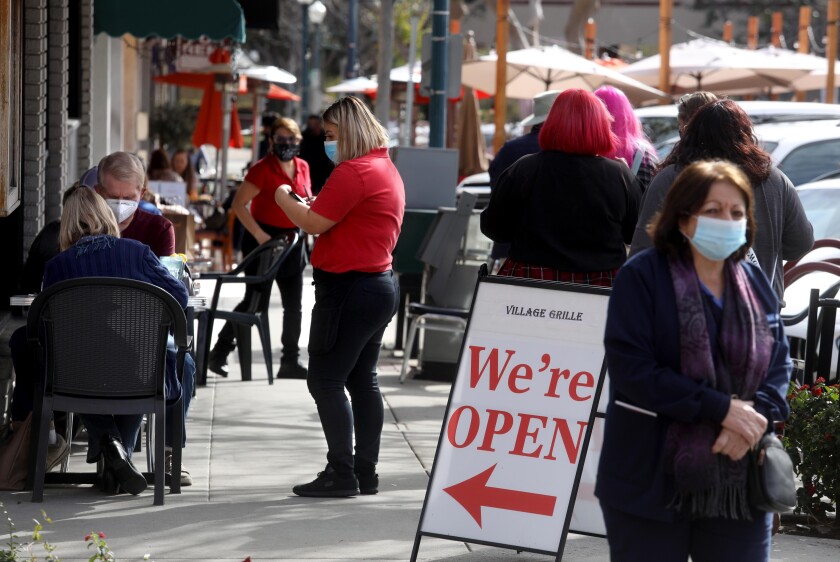
As California enters the red tier, reopening is staring to occur, beginning with major league baseball teams opening at limited capacity and theme parks also opening at 15% capacity. 

How quickly will L.A. restaurants, gyms, schools reopen? - Los Angeles Times

Beginning on April 1st, state officials will start to allow civilians to attend major league baseball games and theme parks, such as Disneyland, at a limited capacity. Due to the fact that California has entered the red tier, in the coronavirus threat level tier list, theme parks are able to allow 15% capacity to people inside the state. Only people inside the state are going to be allowed to buy tickets to these theme parks. 

Though it isn’t only theme parks and baseball games that are going to allow more people to attend, there are other places in California that are reopening as well including different restaurants, retail stores and malls. 

Now once the red tier has been reached and holds steady for two weeks, gyms will be able to reach 10% capacity and museums will be able to be at 25% capacity. Indoor dining will become an option as well though as seen in San Francisco, they may wait out on the opening of indoor dining  until the orange tier is reached. 

Another place that will be reopening in the near future is movie theaters. As plans roll out for how reopening will work, movie theaters in Los Angeles and the rest of California will begin to reopen at a limited capacity allowing movies that were delayed to finally be able to release now to the public through movie theaters. Though there is already an option for some movie theaters for people to rent out the theater to watch a past film with a limited amount of people.

Though California is reopening there are going to be places that are more cautious than others, especially certain restaurants. Some restaurants will be more keen on reopening faster and immediately once the restrictions are lifted while others may wait and make sure that the numbers don’t spike right away so that when they reopen they know they are reopening for good. 

Even though Disneyland will begin to reopen, there will still be vaccinations being distributed inside the toy story lot serving as a very large point of distribution for Southern California. As of mid February Disneyland had already distributed over 100,000 vaccinations proving to be a very efficient site for California residents. 

Though stadiums will be reopening it will only be at 15% capacity in California and will have to wear masks at all times and the only people allowed to attend these games will be in state residents. In Disneyland and other theme parks there will be absolutely no indoor dining and a mask mandate will be enforced, with even the indoor rides having certain restrictions in place.

As California lowers tiers and enters the least restrictive tier of the yellow tier there will still only be 35% capacity allowed with the restrictions of only in-state residents able to attend still being in place. Even as there are other stadiums around the U.S. reopening including The Texas Rangers who are going to be reopening at 100% capacity for their first home game on April 5th.

Although it seems California is far off from reopening, places including MLB parks to full capacity as the state has just entered the red tier and still needs to show that it is stable in the red tier for even those restrictions to loosen.

News/Op-Ed: Congress Passes President Biden’s First Signature Piece of Legislation, The American Rescue Plan

by Joshua Hernandez, Editor-In-Chief

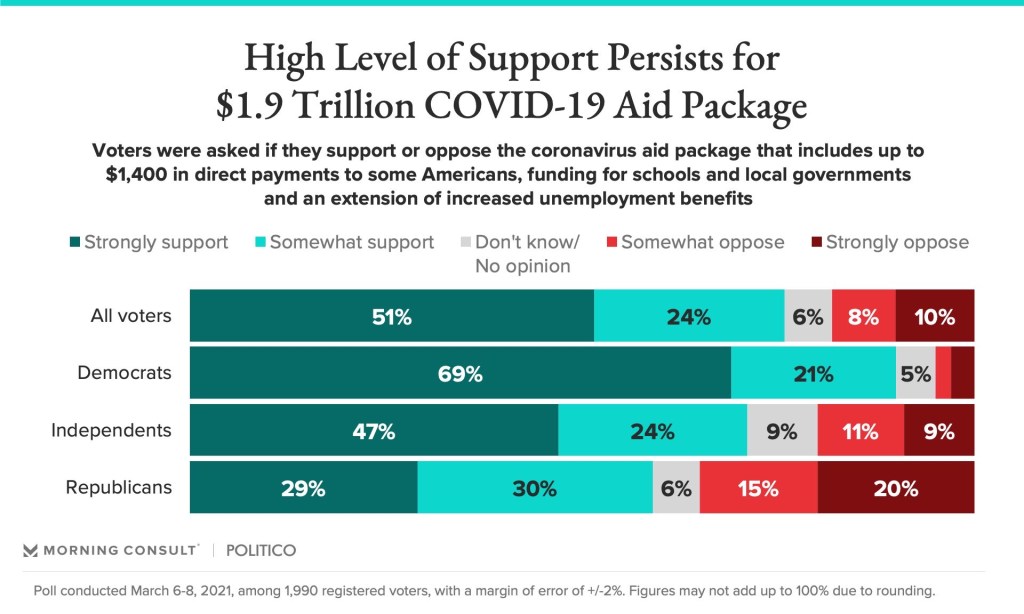
The first major piece of legislation for the Biden administration comes with a hefty price tag of $1.9 Trillion and has garnered bipartisan public support and minimal praise from Republicans in Congress. Despite opposition to the American Rescue Plan, the bill features heavy COVID-19 relief that would provide stability for American workers and families.

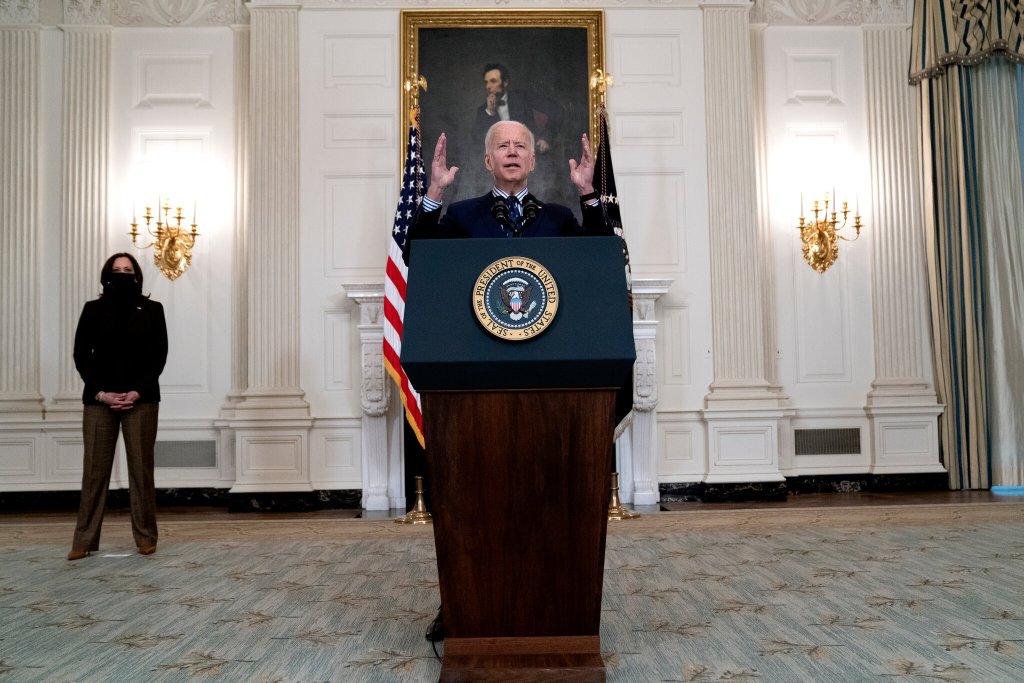
President Joe Biden speaking about the American Rescue Plan. Imagine via the New York Times.

On Saturday, March 6th, the Senate passed the American Rescue Plan in a razor thin party line vote of 50-49. While the Biden administration’s first landmark piece of legislation has received bipartisan public support according to various polls, Senate Republicans were vocal about their opposition to the legislation, hence the close vote. 

Senator Dan Sullivan (R-AK) was the lone Senator to not vote, as he was attending to family matters back home. However, even if Senator Sullivan would have presumably voted against the American Rescue Plan, it would’ve passed anyway since Democratic Vice President Kamala Harris would’ve held the tie breaking vote. 

Despite looming threats from Senator Joe Manchin (D-WV) and Senator Krysten Sinema (D-AZ), who planned to vote against the bill had changes not been made to the original bill passed by the House of Representatives, Democrats were able to work with the two Senators to make changes to the bill and secure the votes of the “blue dog” moderates in Manchin and Sinema. 

POLL VIA POLITICO.

The American Rescue Plan officially passed the House of Representatives again today after a new vote, due to the bill being changed from its original form. In and of itself, the American Rescue Plan includes $1,400 stimulus check payments to individuals making up to $75,000 per year and a massive $350 billion in aid to both state and local governments across the country. Moreover, the Plan allocates $14 billion in funds for vaccine distributions, another huge point of advocacy for President Biden since the start of his presidency. 

The Plan also includes $300 in weekly unemployment benefits that will run through September of this year. In the original bill passed by the House of Representatives, the weekly unemployment benefits would have been $400, however, the aforementioned opposition by Senator Joe Manchin forced Democrats to amend the figure. Finally, the Plan includes a child allowance of up to $3,600 for every family across the nation.

A notable change in the new version of the American Rescue Plan is the elimination of a provision that would have gradually increased the federal minimum wage to $15 an hour. It was removed after a controversial decision by the Senate Parliamentarian and vocal bipartisan opposition. 

According to various White House sources, there is a growing belief within the Biden Administration that the American Rescue Plan would cut child poverty in half, making it one of the most ambitious efforts to cut poverty in the past few decades. In addition to including increases in subsidies for child care, the bill features a broadening of eligibility under the Affordable Care Act and a wide expansion of rental assistance and food stamps.

Other overlooked aspects of the bill are that it would allocate a whopping $12 billion to nutrition assistance programs and money that would aid in reopening businesses nationwide; $45 billion in rental, utility, and mortgage assistance, $30 billion for transit agencies; millions of dollars more for small business and live venues; and large federal subsidies and protections for individuals to keep the health care they received from their places of employment if they had lost their jobs during the pandemic. 

According to White House Press Secretary Jen Psaki, once President Biden signs the American Rescue Plan into law, Americans nationwide should expect their stimulus checks towards the end of this month.

Recent Entries »