Sports: Baseball Plays First Game On Newly Renovated Field With Makeover Still Underway

by Nels Nelsen

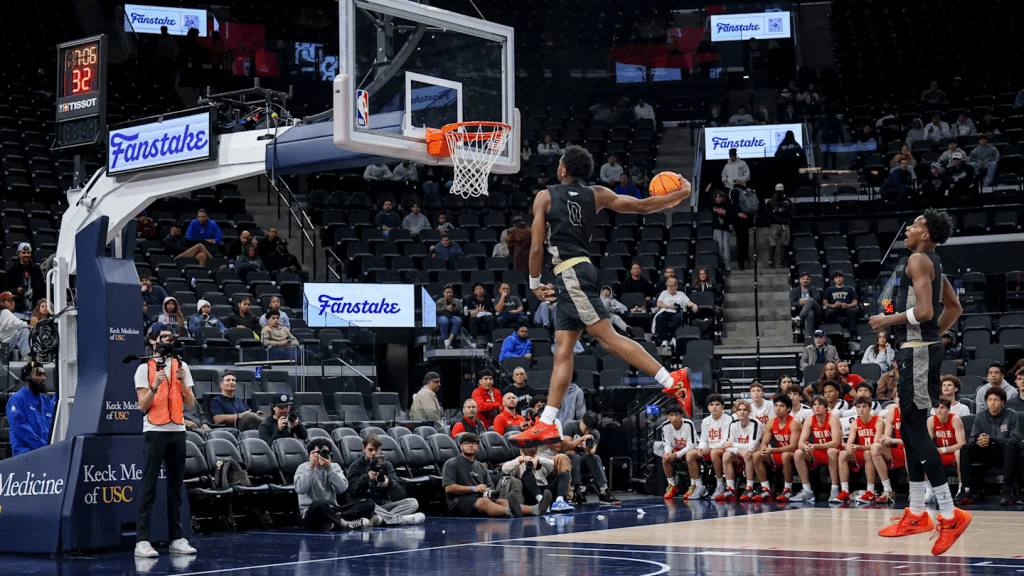
Renovation and construction on the St. John Bosco baseball field are underway and near completion, as Bosco Baseball hosted their first official home game this season.

Photo by Nels Nelsen

The baseball field construction project began back in June 2024 on the Monday after the CIF State playoffs with the turf field being worked on first. By the first week of November 2024, the turf field was finished and the baseball team was able to practice on the new field for the first time.

Bosco’s Athletic Director, Vince Brown, has only been at Bosco for two years, but has been an athletic director for 23 years having prior experience at Orange Lutheran High School.

“The first phase was doing the field.” said Mr. Brown “The second phase is doing the dugouts and bullpens, and then hopefully – this summer – we will put in a new scoreboard.”

With a lot of work still to be done, rescheduling was necessary for the first six weeks of the season. The first official home opener was intended to be set for February 18th, but was pushed back to April 1st. Fortunately, the field was ready in time for the home opener against Trinity League opponent Orange Lutheran. 

This game was a great way to break in the new field, as the Braves made a statement with a thrilling 2-1 comeback and walk-off win. 

Not only is the field being rebuilt, but there will be the addition of new dugouts, a brand new team clubhouse, training areas and brand new fencing. The goal of the renovation is to make a transition from an older look to one of the most top-notch high school facilities in California. 

Having the new facilities will not only bring in more student-athletes, but also help families make decisions on where to send their children. New facilities, in general, also uphold the prestige and reputation of any institution like St. John Bosco.

Current players from the baseball team seem to be hopeful and excited about the construction project as well.

“Being a pitcher [I am] most excited about getting our dugouts done and our new bullpens going in. I think [it will] be really helpful in our development,” senior Trevor Heishman said.

Trevor believes the development of the baseball program will be improved because there will be a better space to enhance the training experience for the players especially.

Once the construction project is done, the baseball facilities on campus will be better than many others. They could potentially be better than some of the local college facilities, according to Trevor.

“I believe [we have] had some success in the past, but with the new buildings going up, I think that we will have more consistent success,” said Trevor.

Overall, the construction project has received nothing but praise, and it looks like the project will offer the best baseball experience for our Braves once it is finished.

News/Op-Ed: The History Behind Israeli and Palestinian Conflict

by Josue Sanchez, co-Editor-in-Chief

The recent ceasefire in the regionas well as its collapsehas been a result of tensions simmering for several decades. How did these tensions begin, and how have they changed over time?

Edited photo. Original by Mohammed Salem at Reuters

The escalation in the Israel-Palestine conflict that began in October 2023 has been a significant affair in the realm of recent global events. Since October 7th of that year – when Hamas, the main Palestinian nationalist group operating in the Gaza Strip, sent a barrage of attacks against Israel – about 72,000 people have been reported missing or dead due to the conflict, with the vast majority on the Palestinian side.

Most recently, on January 19th, Israeli Prime Minister Benjamin Netanyahu agreed to a ceasefire between Israel and Hamas, mediated by the nations of Qatar, Egypt and the United States.

This ceasefire lasted approximately two months before, on March 18th, Israel resumed ground and air campaigns against the military forces in the Gaza Strip, escalating the conflict further.

This recent situation—as well as the broader conflict—can be understood best by diving into the history of the region, and how these conflicts have evolved over time.

The conflict over the region begins with culture—the nation of Israel is a predominantly Jewish state, which has claimed the region as its own for several decades, citing its historic links to the land under Jewish belief.

For centuries before that, however, there had been a large Arab majority in the area. This region had been mainly Arab, even through its occupation by the Ottoman Empire in the early twentieth century. By 1915, both populations had some representation in the area.

The situation escalated, however, upon the arrival of the First World War in Europe and the Levant. The Ottoman Empire now found itself as an enemy of the Entente powers, including the United Kingdom. As such, the territory was occupied by the UK. In order to gain support during the war, the UK decided to issue the Balfour Declaration in 1917, which guaranteed the creation of a Jewish state in what was then known as Palestine.

This began tensions amongst the people who already lived there; however, the UK still promised that there would be an appropriate solution for both peoples.

After the end of the war, the territory was consolidated into the British Mandate for Palestine—the territory would be run by the United Kingdom, whilst adding parts of the Balfour Declaration.

Nearly 30 years after the Balfour Declaration, after the end of the Second World War, the status of the region was reorganized once more. Following the atrocities carried out by the Nazi German government against European Jews, many Jewish refugees had since migrated to Mandatory Palestine, leading to the resurgence of a Zionist movement—one advocating for the creation of an actual nation-state for the Jewish population.

In 1947, the United Nations (UN) drafted a plan to divide the nation. The plan would create both Jewish and Arab states, each having approximately half the land in the region. By 1948, the State of Israel was established, and conflict immediately began with the Arab-Israeli War that year.

By 1949, the newly founded state was able to control and defend its claimed territory.

From that point, the two peoples became pawns in the Cold War that emerged after 1945 between the United States and the Soviet Union. Specifically, the Six Day War in 1967 allowed the US-backed State of Israel to expand its territory, and the later Yom Kippur War put it in conflict with other neighboring Soviet-backed Arab states.

Throughout this time, the state also occupied formerly Arab (now Palestinian) territories. The two main tracts of land, the Gaza Strip in the west and the West Bank in the east, have been surrounded by the State of Israel.

The nation was also allegedly encroaching on Palestinian land within these tracts, which would be illegal under the 1947 decision by the UN.

During all of these conflicts, the Palestinian Liberation Organization (PLO) was founded, seeking to achieve the creation of a Palestinian state in the region. It used both diplomatic and military plans in order to achieve this goal. Hamas was also formed in the 1980s, as another military organization with a similar goal.

Conflict reached a high point in 1987, when a popular uprising sprung up against Israel, specifically in Palestinian territories. This happened after the increased occupation of Palestinian territories by Israeli forces and lasted six years. Organizations like Hamas, as well as various smaller groups, were heavily involved in the conflict, which was called the First Intifada (coming from Arabic “انتفاضة,” meaning “uprising.”)

The situation changed during the 1990s. Three years into the decade, the Oslo Accords were agreed upon, establishing a process of peace between the two sides and ending the First Intifada.

The Accords also agreed upon the creation of the Palestinian Authority, a government body that would control Palestinian territories for five years, after which official discussions would once again be held to decide the situation.

However, the Accords did not result in any long-lasting peace between the two sides, and the troubles continued. In 2000, the Second Intifada began, once again worsening tensions between both sides. The Intifada would continue on for five years before peace was made between Israel and the Palestinian factions.

By 2007, Hamas would occupy the entirety of the Gaza Strip, wresting it from the Palestinian Authority which managed the West Bank.

The situation has remained tumultuous since then, with numerous peace deals proposed, yet never enacted. It is inaccurate to say that the conflict has a simple solution, and it is likely that we will see the impact of these recent escalations, as well as the larger conflict, for years to come.

Sports: New-Look Bosco Volleyball Hopes For A CIF Playoff Bid

by Jesus Biag, co-Editor-in-Chief

St. John Bosco’s athletic programs are notorious for featuring some of the most talented, most competitive teams in California. This year’s varsity volleyball team is striving to add to that legacy—holding a 14-2 record halfway through their season.

Photo by Dominic Wojtecki, Photo Editor

Last year, Bosco Volleyball held a record of 8-21, with each of those wins coming before Trinity League play—where they ultimately finished 0-10. Coming off such a rough season, a new coaching staff, led by Head Coach Gerald Aquiningoc, came to right the ship.

Before stepping onto Bosco’s campus, Coach Aquiningoc was an assistant coach for Long Beach City College’s Men’s Volleyball team. In his three years as an assistant, the Vikings were three-time Western State Conference Champions. Before that, he led Carson High School’s Varsity Boys Volleyball team to two CIF Los Angeles City Section titles in 2014 and 2019. 

In addition to his current position as Bosco’s Head Coach, Coach Aquiningoc also coaches Long Beach Poly’s Varsity Girls Volleyball team in the fall. In 2022-2023—the year before he took the reins—Long Beach Poly finished 11-18. In the two years since he began leading the program, however, his team has amassed a 55-23 record. 

Since Bosco and Poly’s situations were incredibly similar, Coach Aquiningoc and the rest of his staff had a blueprint to follow when they took control of Bosco Volleyball—one that started with creating a tough, competitive identity they’ve dubbed “The Bosco Way.” 

Additionally, with a team that hasn’t seen any significant league and playoff success in nearly a decade, there was a concern regarding the team’s mentality and whether they were hungry enough for success. Any fears the staff may have had about the Braves’ drive, however, were addressed at their very first team meeting.

Photo by Dominic Wojtecki, Photo Editor

“As a coaching staff, we were incredibly clear in letting them know that we weren’t just coming in to have fun. We came here to win,” said Coach Aquiningoc. “We aren’t on a five-year plan, we aren’t on a three-year plan. We’re on a win-now plan.”

Once the team was informed of the incredibly high standards they were going to be expected to meet, they rose to the challenge. 

“Being on the team these past few years, I’ve seen a lot of our struggles,” said senior and three-year varsity player Elijah Botros. “That motivates a lot of the returning guys to work even harder and live up to the coaching staff’s expectations.”

Bosco’s volleyball team features several returners, including senior captain Ayden Fariester and junior captain Jaiden Guitierrez, two players Coach Aquiningoc has relied on heavily throughout this year. The team, however, also features eleven new players.

Seven of these new players are the Shiekh brothers, who transferred to Bosco at the beginning of the 2024-2025 school year. They include sophomores Holland, Austin and Franklin, junior Sergio and seniors Leo, Martin and Oliver, who is the team’s third captain.

The opportunity to play with his brothers has been a huge blessing for Oliver since he’s played volleyball with his brothers his whole life. As a result, they have tremendous chemistry that has carried over to the volleyball court and their other teammates.

“Being a teammate and being a sibling aren’t all too different,” said Oliver. “Since [Bosco] embraces brotherhood, [the chemistry] comes pretty naturally.”

While Oliver, his brothers and all the other transfers have been able to build chemistry with their teammates on the practice court, they haven’t been able to play in many games as a result of CIF rules, which requires transfers to sit out for a certain amount of time.

Despite not playing at full strength, however, Bosco Volleyball started their season extremely strong. They opened the season with eight straight victories before dropping their first game against Redondo Union, the tenth-ranked team in the nation, according to MaxPreps. 

After their first loss, the Braves bounced back with three straight victories before entering Trinity League play—where they’ve struggled for years.

“Bosco has not won a league game in five years,” said Coach Aquiningoc. “Our mentality going into Trinity was to break records and make history.”

They had the chance to do that in their very first league game against Servite, a team they hadn’t beaten in nine years. The game was back and forth, with the Braves and Friars splitting the first two sets. After losing the third set 19-25, their backs were against the wall. Storming back, they won the next two sets 25-16 and 15-9, respectively—clinching their first league win in half a decade.

Following another victory against North High School, Bosco played another Trinity League rival, Orange Lutheran. In another back-and-forth game, the Braves won 3-2. A week later, on March 26th, Bosco Volleyball traveled to Anaheim to face Servite a second time—a game they lost 3-1.

Now sitting at 14-2, Bosco’s entering their toughest stretch of the season. But if they continue to win games and perform well, they’re looking at a possible CIF playoff bid. That said, they’ll continue to take days one at a time.

“We’re focused on taking things one game at a time, one week at a time,” said Coach Aquiningoc. “That said, the guys know that, right now, they need to be addicted to the work. The work is going to get us to our ultimate goal—a CIF championship.”

The work continues on this afternoon at 4pm, when the Braves will take on Long Beach Poly at Long Beach City College. On Monday, April 1st, they’ll face the “Team in Red” at 5:30pm in the Thunderdome.

Sports: Bosco Baseball Swings Into Season With Strong Performances In Nevada

by Simon Wei

The St. John Bosco Braves varsity baseball team traveled to Las Vegas for the Bishop Gorman Invitational last week against elite baseball powerhouses from around the country, playing four games and finishing with a record of 3-1.

Photo by Wendy Vasquez

Coming into the tournament with a 2-2 record with some close losses, the defending CIF State Regional Champions were destined to show that they are a much better team than what their record shows. 

The tournament was a roller coaster to the Brave’s spirit, with an easy win in the first game followed with a demoralizing loss in the second round. However, they bounced back in the third and fourth games with strong pitching and aggressive base running.

Game 1:

St. John Bosco started the tournament with a 9-2 victory against the Liberty Patriots from Henderson, NV. Bosco’s strategy was to take the rhythm from the Patriots from the first pitch. From then on, the Braves took control.

Freshman right-handed pitcher, Brayden Krakowski, was the key part in the execution of the game plan. He set the standard by throwing four scoreless innings with three strikeouts, which got the rest of the team to feel confident and play with aggression.

The offense was led by seniors Micah Taguiam and Macade Maxwell who both went 2 for 3. They consistently found ways to get on base and drive in runs. Junior Moises Razo added a cherry on top to this masterpiece with a solo home run along with three stolen bases and three runs scored. The Braves won and sent a message to the rest of the bracket.

Game 2:

In the second round, the Braves faced a Nevada powerhouse, the Basic Academy Wolves from Henderson, NV.

Senior left-handed pitcher, Trevor Heishman, ran into early trouble, where he allowed two runs in the first inning.

The Braves were able to immediately strike back thanks to junior Jack Champlin with a solo home run in the top of the second inning.

The Braves tried their best offensively but could not get any opportunities to break through against the Basic pitching staff. They unfortunately fell short in a 3-1 loss, making it their only loss in the tournament. This served as a wake up call to keep playing consistent and aggressive.

Game 3:

Ignited by the loss from the last round, the Braves fueled up their tank and took on the Calvary Day Cavaliers from Savannah, GA. Both teams put on a show, and the Braves came out stronger with their resilience and offensive firepower.

The main strategy executed was to be consistent and disciplined—- a core principle that senior outfielder and second baseman, Phillip Swinford, emphasized.

”Our strategy for each game was to come in and be consistent in what we do—our mindset, our approach, our energy and controlling what we can control,” said Phillip. “We came into each game competing to do our job in whatever situation we were in, to do damage and to be aggressive.”

The Braves followed this approach flawlessly. They set the rhythm of the game early on and maintained control throughout, helping them secure a 7-2 victory.

Game 4:

The final game of the tournament was the highlight of the Bishop Gorman Invitational. The Braves took on the Desert Oasis Diamondbacks and showcased their clutch genes.

Senior Jacob Alvarez got the start and went three innings with three strikeouts while only giving up one run. Coming out of the bullpen for the Braves was senior John Crowe, as he tossed two scoreless innings and earned himself a strikeout while doing so.

The bats were shockingly quiet for the Braves in this matchup, but when the top of the sixth inning came around, this all changed. 

With two runners on base, junior outfielder and third baseman, Noah Everly, stepped up and delivered a clutch single to tie the game 1-1. Junior right-handed pitcher, Aiden Dahlk, tossed two scoreless innings with zero hits allowed and three strikeouts.

In a still tied game, junior outfielder, Miles Clark, delivered a three-run home run in the top of the seventh inning, to give the Braves a 4-1 lead in what was the biggest hit of the tournament for the Braves.

Both Miles and Noah posted strong games at the plate, with Clark finishing the game 1-for-2 with three runs battled in (RBIs) and Everly going 2-for-3 with a triple and an RBI in the 4-1 victory.

The Braves showed the Nevada teams that they were more than a talented unit, but also a team with resilience. The veterans’ leadership combined with rising young talent make Bosco a clinical team with precise execution.

Moreover, their ability to bounce back shows that they are a true contender for whatever is to come, especially their next opponent—the West Linn Lions from Oregon. The game will be played Great Park Irvine, where the USC Trojans currently play their home games while their stadium is under construction. First pitch is at 5:30pm.

Sports: Bosco Basketball Ends Season With High Hopes For The Future

by Macade Maxwell, Sports Editor

The Braves varsity basketball team wrapped up an impressive 2024-25 season with a 26-7 record, securing a co-Trinity League Championship, making a deep run in the CIF-SS Open Division playoffs and making an appearance in CIF State Open Division Playoffs. 

Photo by Greg Fiore, Sports Illustrated

Despite falling short of a state championship, the Braves displayed nothing but resilience, determination and elite talent. Their ability to compete against some of the top teams across the country shows where they stand amongst other programs. 

Although they didn’t finish the way they wanted, the Braves found themselves ranked 10th in California and securing a number 38 spot nationally, according to MaxPreps. 

The Braves started the season off with expectations high coming off winning the CIF Division One championship the previous year. With key players like five-star juniors Brandon McCoy, Jr. and transfer Christian Collins as well as seniors Elzie Harrington and Chris Komin, the Braves were primed to have a successful season. 

The Braves wasted no time as they got off to a 14-0 start to their season. These were no average wins, as the Braves would dominate their opponents by 20+ points. In the midst of these games, the Braves would compete in the Kevin Brown Memorial Tournament in Illinois and leave as champions of the annual classic. 

They would continue this dominance heading into league play, as the Braves would secure wins over both Orange Lutheran and Servite. 

Despite star player Brandon McCoy being sidelined due to injury for a chunk of the season, the Braves still maintained their elite status. One player shined the brightest, as senior Chris Komin stepped up and became a key contributor to the squad. 

With their only two losses coming from the “Team in Red” and Santa Margarita, the Braves would share the Trinity League Title with the Eagles of Santa Margarita. 

Their stellar regular season performance would be enough to secure the Braves a spot in the CIF-SS Open Division Playoffs, a highly prestigious tournament considered the toughest playoff bracket in all high school basketball.

They started pool-play with a tough 77-75 loss to Redondo Union but immediately redeemed themselves with a big win against Sierra Canyon. This game ended in a tight 60-55 score in front of a sold-out crowd and NBA star LeBron James in attendance to support his son Bryce James. 

“It took playing with everything we got especially coming off a loss, and we played hard and together as a team,” said Christian Collins. 

If the Braves wanted to stay alive, they needed to keep winning. They would follow up with a 69-39 victory over Heritage Christian, in which McCoy produced a dominant performance dropping 23 points with 13 rebounds. They secured their spot in the pool championship in a rematch game against Roosevelt, a team that the Braves had faced earlier in the season and lost to by one in overtime.

If the Braves wanted to move on to the championship, they would have to make it past Roosevelt. They gave it their all, but it just wouldn’t be enough to surpass the Mustangs and their five-star senior Brayden Burries, losing by a final score of 58-51. 

“The difference in this one was not executing. We had some slip-ups and kind of swayed the game in their favor,” said Chris Komin. =

Although the Open Division didn’t go as planned, the Braves would secure the number five seed in the State Playoffs. The Braves were set to face off against Harvard Westlake, reigning Open Division CIF-SS and CIF State Champions who finished number three in the nation.

The Braves gave it their all but would ultimately put their season to an end, falling to Harvard Westlake with a final score of 70-55. 

“I’m still proud of our guys regardless of the result. They fought until the end, and our effort is the main factor we control,” said Coach Dunn.

The Braves’ performance this season was due to the consistency of their starting five. Brandon McCoy was the top performer averaging 16.5 points per game, Elzie Harrington averaged 16.4, Christian Collins with 13.6 and Chris Komin with 11.2. This versatility of these four top scorers was a threat to opponents in each game.

It was a great run for the Braves marked by notable achievements. They managed to secure a share of the Trinity League Championship, finished second in their Open Division pool and earned multiple individual accolades. Elzie was named Trinity League Co-MVP and recognized as First Team All-League alongside McCoy and Collins, while junior Max Ellis and Komin earned Second Team All-League honors. 

With five-start players like Brandon and Christian returning next season, the Braves are destined for another championship run. The experience they gained from this season’s battles against elite competition will help them as they look forward to taking the next step and securing a CIF Open Division State Championship.

Life of a Brave: The Top Five Things You Can Give Up For Lent

by Andy Ortiz, Managing Editor

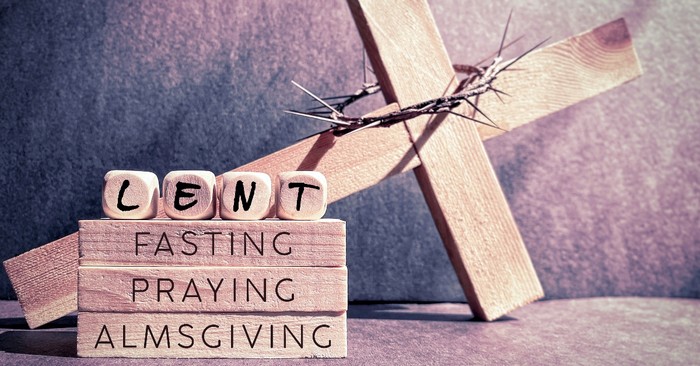
Lent started last week, but it’s not too late to think of what to give up for it. For those struggling to figure out what to give up for Lent, here are the top five unique things that you can sacrifice for the season that’ll help get rid of bad habits and bring you closer to God.

Photo from ibelieve.com

Figuring out what you want to sacrifice for Lent can be a bit tricky. On one hand, you don’t want to pick something so inconsequential that getting rid of it will have no impact on your life whatsoever. But on the other, you shouldn’t pick something so important that it would be too difficult to live without it. With that being said, here are some ideas for things you could sacrifice during Lent.

#5: Fast Food and Takeout

One of the easiest things to give up is fast food, refraining from ordering food online and spending too much on restaurants. This is good for multiple reasons. For one, your wallet will thank you for relieving it from constant purchases. Second, it’s good to relieve your body from junk food and other things that could harm you in the long run.

The time that you spend getting takeout or eating fast food could instead be used to focus on praying and getting yourself closer to God. In fact, giving up fast food is a very easy segue into fasting for Lent in general, so it’s a good option to hit all the big points of the season.

#4: Time on Technology

This could be TVs, radios, but especially phones and computers. Obviously, in today’s world, it’s really difficult to just completely give up these technologies because they’re so prevalent in our lives. A much better idea would be to limit your time on your devices, both to limit the time you spend engaging with social media as well as to spend more time focusing on yourself and your faith.

An easy way to help limit time on your phone would be to use the built in screen time limits in the settings. You can also hide your most used apps from the home screen and change the colors of the screen to greyscale to help discourage you from using it.

#3: Unnecessary Spending

In today’s world, everything is so expensive. The prices of basic groceries have been getting higher and higher, which is only compounded by bills and taxes. The best way you could relieve that burden is by cutting out any purchases that you don’t actually need, such as trendy clothes, games and accessories.

This can help bring you closer to God in a few ways as well. For one, Catholicism often begs the importance of not being drawn in by the things you don’t need. It’s more worth your time to focus on deepening your connection with God.

#2: Negativity

On the news and on social media, there’s always something bad happening. The news is always reporting some horrible event and people on social media are always causing some meaningless drama. All the negative energy around you can cause you to be negative as well. It makes you complain, it gets you into arguments and it makes you feel down.

By “giving up” negativity for Lent, you can cast out the negative influences in your life and better your spirituality. This involves previous points like refraining from social media, but here it’s a bit more than that. You should avoid complaining and fighting with people and learn to forgive just as Jesus did. Giving up negativity is one of the best sacrifices you could make for Lent because it brings you closer to Jesus in acting as he did.

#1: Nothing at all

This might sound very weird, but perhaps one of the best things you can give up for Lent is nothing at all. Many people focus on giving things up because the faith demands it for the season. As a result some people tend to miss the point of Lent, because they see it as a time to sacrifice something they love just because.

But if nothing at all – then what do you do for Lent? The focus shouldn’t just be on “losing something” as much as it should be giving back to your community. Bosco science teacher Mr. Brian Miller uses Lent as an opportunity to better himself and give back to others.

“I feel that Lent should be an opportunity to make myself better, to find ways to improve myself and maybe improve others,” said Mr. Miller. “Doing service in the community is a great way to help others while also providing introspection on how I am both blessed but imperfect.”

Giving things up for Lent is important, because it shows our sacrifice that we’re willing to make. But if we can’t sacrifice, we could spend our time instead doing charity and finding volunteer opportunities. You can also spend more time praying, paying attention at mass, going to confession and overall trying to be closer to God. In the end, that is the most important part of Lent.

Lampoon: Mr. McGueber To Rival St. John Bosco’s Production Of Jersey Boys

by Augustus Rodriguez, Lampoon Editor

Untalented supervillain Mr. McGueber throws his hat into the drama scene with his own play.

Mr. McGueber has done some pretty weird activities in St. John Bosco. Now, he is trying his luck as a director and playwright.

Mr. McGueber is naming the new play I Forgot My Car Keys in My Car, which is set to rival St John Bosco’s newest theater production Jersey Boys

Many students, including the cast of Jersey Boys, don’t mind the competition.

“If the competition is Mr. McGueber, we don’t have to worry that much,” said junior William Pearce. “He has no real budget or even crew to help him set up all this stuff.”

Students are also wondering about the plot of I Forgot My Car Keys in My Car

Mr. McGueber says the story is a harrowing tale of someone losing their car keys.

“It’s about a very handsome man that forgets his car keys in his car,” said Mr. McGueber. “Already a better plot than the other play, like come on people. There is drama in this.”

Despite stating how wonderful this play will be, Mr. McGueber cannot use the Bosco Theater.

This restriction was implemented because of a scene in the play where the main character blows his car up to get his car keys.

Opting for an immersive experience, Mr. McGueber used a combination of smoke and fart bombs thinking it would create an explosion. However, it only left a nasty smell that still lingers in the theater. 

“It’s a shame; we had to stop rehearsing due to Mr. McGueber’s shenanigans,” said senior Dominic Navarro. “He also left several empty cologne bottles in our dressing rooms thinking it would block out the horrendous smell.”

With no place to set up the play, Mr. McGueber is now rehearsing in the Bosco Community Garden of all places.

Students are also wondering how Mr. McGueber even had the time to write a script and cast auditions for this theatrical performance. 

“I had Squaddle write up a script, but his handwriting was so bad that I decided to just go with the flow,” said Mr. McGueber. “I am also just snatching random Bosco and St. Joseph’s students to do this play.”

Mr. McGueber is set to make this the best play that, in his words, will “revive Shakespeare himself.”

Things have gotten so out of hand to the point where Mr. Martin Lang, Bosco’s Director of Theater Production, has tried to figure out what the play really is. 

“I feel anyone could get into theatrical performance if they poured their heart and soul into working on it,” said Mr. Lang. “Creativity is needed, but Mr. McGueber is the one person I feel is terrible at doing anything. This can make this play a hard watch for everyone.”

Mr. McGueber is going to sell tickets for $20 per person. 

“I want money and I want it now, so people better pay for this wonderful experience,” said Mr. McGueber. “It’s beautiful seeing how to get over unknown emotions.”

The characters in the play have been quite weird as the story has odd characters like a set of car keys, Mr. McGueber himself, a ham and cheese sandwich, a dude named Sticky Ricky, a woman named Furious Felicia and many more wacky characters.

The Bosco Theater has nothing to fear with Mr. McGueber putting on a play, as his plans always end up in a train wreck.

Much of the cast from Jersey Boys got curious about how Mr. McGueber would rehearse so they spied on the rehearsal of I Forgot My Car Keys in My Car

“There was not really a rehearsal, it was just Mr. McGueber doing stand-up which was really bad,” said St. Joseph senior Jolynn Hallum. “I would rather watch grass grow.”

Despite the criticism, Mr. McGueber is still set on having one sided beef with the whole Bosco Theater program.

“People don’t want to see a show like that, they want to see something astounding like my play,” said Mr. McGueber. “It’s 100% authentic. I even brought a real ham and cheese sandwich to play the character.”

Mr. McGueber has so much beef with the theater that he even started to put his own poorly made flyers on top of the Jersey Boys flyers around campus.

“I feel it’s very unprofessional for Mr. McGueber to do any of this for a play made purely out of spite,” said junior Kai Maldonado. “The flyers are basically the school’s toilet paper with ‘Come to my show, please’ written on it with crayon. At least he said ‘please.’”

With all of this said, it’s still unknown what type of play it would be, as Mr. McGueber changes his answer every time it’s mentioned. 

“It’s like an investment. You pay to see the play and you are given the best play in the entire world for a cheap price,” said Mr. McGueber. “I totally won’t leave with the money and scam people out of their hard-earned money. I am not evil – remember that.” 

With all this hype that Mr. McGueber is making about the play, there is a massive problem that he has skimmed through.

Since Mr. McGueber can’t use the theater, he won’t be able to sell his tickets there either.

To purchase tickets, students need to go to Mr. McGueber’s lair located on the campus. 

Unfortunately for him, nobody really knows where Mr. McGueber’s lair really is, and Mr. McGueber is not taking any type of online pay.

“I searched far and wide throughout the school but I can’t seem to locate Mr. McGueber’s lair to buy the tickets,” said junior Andrew Iona-Tuivaiti. “You would think if something is so hyped, it would be easy to get but apparently not in this situation.”

Even with all of these issues,  Mr. McGueber will still do the play I Forgot My Car Keys in My Car. Showtimes for the play are unknown, as Mr. McGueber is too lazy to make a correct date.

Additionally, Mr.McGueber has already bought rights to more plays like Ear Candy I Slipped On A Banana Peel and My Balloon Left Me At The Train Station.

All the cast and crew of Jersey Boys would love to see everyone come and support the arts with a better play. Tickets for Jersey Boys are available on TicketLeap. Showtimes start at 7:30pm on Fridays and Saturdays and at 2:30pm on Sundays, from March 14-16 and 21-23. All performances are to happen in the Bosco Theater.

News/Op-Ed: Defiance Arises In L.A. With Protests Of President Trump’s Deportation Policies

by Andy Ortiz, Managing Editor, and Nicholas Valenzuela

Immigration and Customs Enforcement (ICE) officers have been sent throughout the country in a sweep of deportations started by President Donald Trump. In the city of Los Angeles, people have been feeling the effects of deportations, and protests have risen in response.

Photo by Eric Thayer, Associated Press

Nearly as soon as he took office, President Trump signed executive orders sending ICE officers throughout various cities in the United States with the goal of finding and arresting illegal immigrants to send them back to their countries.

Mass deportations have mostly been taking place in large sanctuary states such as California, New York and Arizona. The main cities being impacted by ICE raids have been Chicago, Dallas and most notably LA.

The amount of arrests and deportations have spiked under the new executive orders. The Associated Press reports that the average daily ICE arrests under former president Joe Biden were 311 in one year. In the first week of ICE raids, they have reported that the numbers have gone up to 710 daily immigration arrests.

The local LA community has felt the deportations most heavily because of the high immigrant population in the city. According to the California Community Foundation, immigrants make up about 35% of the whole city.

A clinical social worker, who works at a hospital in the L.A. area, has expressed very deep sadness for the distressed families that have been going through heaps of fear and confusion due to the public operations of ICE.

“We have definitely witnessed the fear and uncertainty in the lives of our patients,” said the social worker. “Our social workers are asked daily by patients about how this will impact the care of their children.”

The social worker says that more families have been coming to her expressing worry that they may be stopped and even arrested by immigration officers, scared over the frenzy being caused by the deportations.

“When I see the names and faces of the children, it brings profound anguish. I can only try to imagine how scary it must be,” said the social worker.

With the deportations greatly affecting the L.A. community, many people have expressed various opinions about whether they are justified or not. Bosco parent and police officer, Anthony Valenzuela, believes that the law should be followed when it comes to legal immigration.

“Those who are here illegally and that have been here some time have had ample opportunity to start the process of becoming a U.S. Citizen or apply for resident status,” said Mr. Valenzuela. “I have empathy for those who are here to work and live a better life, but the laws we have exist for a reason.”

Due to President Trump’s deportation policies following his inauguration, protests erupted across the country, most notably in Los Angeles where a protest took place on 101 Freeway.

According to The Associated Press, the protesters gathered on Olvera Street, a historic street showcasing Mexican culture, before marching to City Hall blocking the 101 Freeway for several hours.

Some of the rhetoric they used included chants like “nobody is illegal” and “immigrants make America great.” Bosco senior Luiz Azamas attended the protest.

“I went to fight for people like my parents who are hard working individuals who want nothing more than a better life for their family,” Luiz said.

There have been many different opinions expressed on the major protests happening in LA. Mr. Valenzuela believes that as long as protests remain peaceful, citizens should feel free to stand up for what they believe in.

“Once people who are protesting become violent and vandalize property, the laws that protect them protesting, now become laws that can incarcerate them,” said Mr. Valenzuela. “I support lawful protests; it’s part of what makes America great.” 

The clinical social worker also believes in the freedom to peacefully protest, but worries that people may use it as a shield to cause more chaos and violence.

“​​In the past, unrelated opportunistic groups hid in these protests and caused chaos and violence,” said the social worker. “Ultimately, the freedom of expression shouldn’t be silenced as long as it’s done in a safe manner.”

Despite protests, President Trump and his administration has not slowed down the deportations of illegal immigrants, and most likely will not back down anytime soon.

News/Op-Ed: Daylight Saving Time – Why Do We Have It?

by Cuahutemoc Solorzano

What’s the point of daylight saving time (DST)? Will it still be here years from now, and when was it implemented?

At the start of daylight saving time, the clocks are sprung forward an hour. Then, at the end of DST, the clocks are moved back one hour – to their original position. 

The foundation of daylight saving time was created by George Hudson, a New Zealand entomologist. He argued to the Wellington Philosophical Society that more time in a day would allow individuals more time for activities. In Hudson’s case, he wanted to have more time to collect his insects, according to the BBC

Hudson was initially rejected, and it wouldn’t be until World War I that daylight saving time would be established in the US. Daylight saving time has a complicated past. It was implemented and repealed various times, and certain aspects of it have changed. 

Because of daylight saving time’s complicated past, many individuals are wondering why it is still implemented. However, there is debate whether or not daylight saving time should still be implemented within the US.

According to a survey conducted by the American Academy of Sleep Medicine conducted in 2020, 63% of US citizens prefer daylight saving time to be abolished.

Initially, daylight saving time was implemented across the US in order to conserve energy and increase efficiency during war time, according to Newsweek. 

However, daylight saving time practices across the US have only saved 0.5% of energy usage, according to a 2008 report from the US Department of Energy.

A study in 2005 by the Massachusetts Institute of Technology says there was a seven-percent decrease in crime with days with more natural light. 

According to the American Academy of Sleep Medicine, the US should abolish daylight saving time due to it disrupting sleep habits. A disruption in sleep will cause an individual to become prone to certain health risks. 

Many individuals don’t enjoy losing an hour of sleep, especially since most lives revolve around a schedule that may become disrupted due to daylight saving time. 

The Uniform Time Act states that while the US is required to use daylight saving time, states are given the option to not recognize it. Yet, the Uniform Time Act doesn’t allow states that want to implement daylight saving time year-long, as it only allows states to use standard time year-round.

In the past six years, 20 states have passed legislation to have daylight saving time year-round. The state of Arizona (save for the Navajo reservation within it) and Hawaii do not recognize daylight saving time, according to Forbes. 

Daylight saving time began yesterday on March 9th, moving from 2:00 a.m. to 3:00 a.m. It will end on November 2nd, thrusted back an hour from 2:00 a.m. to 1:00 a.m., according to the Time and Date website.

News/Op-Ed: Year 2025 Commences With Series Of Tragic Oddities

by Josue Sanchez, co-Editor-in-Chief

The first quarter of the century concluded with the arrival of January earlier this year; however, it seems like there hasn’t been a single week without the emergence of some unusual event.

On January 1st, like every year, millions of people from both major cities and rural communities celebrated the arrival of the New Year. Many traditions were kept; fireworks lit up the skies of major cities including Auckland, Dubai, London and, of course, across cities in the United States.

Soon after the initial celebrations, however, the year has been beset with a barrage of notable (if for all the wrong reasons) events spanning across the first two months.

Many of these events have had a direct impact on the United States, and within the confines of Los Angeles county as well. Perhaps most notable in this regard was the outbreak of wildfires that sprang up throughout the county in early January.

The first of these was the Palisades Fire, which began shortly before noon on January 7th in the Pacific Palisades community in the west of Los Angeles. By the end of the day, the fire had spread across many of the region’s notable parks and landscapes, including Santa Ynez Canyon and Topanga State Parks.

Fueled by the power of strong katabatic winds, other fires began to pop up across the county. The Eaton Fire, named for its origin, the Eaton Canyon Natural Area near Pasadena, ended up consuming about 14,000 acres of land north of Pasadena, including the community of Altadena in the north of Los Angeles.

Several other fires began, the causes of which varied depending on the incident in question. By the end of January, most of the fires were placed under control, with the largest Palisades and Eaton fires finally being placed under 100% containment on January 31st.

Weather occurrences haven’t been limited to California, however. January was both a month of fire and ice, as shown by the snowstorms that swept the South in the latter half of January. On the 21st, the historic snowstorm engulfed much of the region, particularly affecting the states of Texas, Louisiana and Georgia, among others.

Major cities in the region, including New Orleans, LA and Mobile, AL were severely affected, halting road traffic across the cities, and according to the National Oceanic and Atmospheric Administration, this particular snowstorm broke snowfall records that had been kept for approximately 130 years.

Some speculate that this could be a sign of more drastic weather and climate events due to the impact of climate change.

2025’s unusual events haven’t been limited to the weather, however. Things began to occur since the very first day of the new year, as shown by the two vehicular attacks that occurred on New Years’ Day.

The first happened in the city of New Orleans, following New Years’ celebrations occurring in the very center of the city. Three hours after midnight (Central Standard Time,) a Ford truck rented by American-born Shamsud-Din Bahar Jabbar was driven into the city’s Bourbon Street, one of the most crowded parts of the city. There, 57 people were injured, with 15 additional people killed, including the perpetrator, who was killed after a shootout.

The second attack occurred approximately eight hours later across the country in the metropolitan area of Las Vegas, Nevada. At that time, a Tesla Cybertruck driven by Matthew Alan Livelsberger arrived at the main entrance of the Trump International Hotel. Shortly after it arrived, it suddenly exploded, killing Livelsberger and injuring seven others. 

Due to the timing of the two events, as well as some similarities in how they were conducted (involving the same car rental platform, Turo), initial reports proposed the idea that the two attacks were linked. 

However, more recent information seems to confirm that these two incidents were unrelated; the former was reported as a case of domestic terrorism while the latter was seen as a provocative political message, as it came mere weeks before the inauguration of the 47th President of the United States.

One of the more widespread trends, notable in the first few months of this new year, has been the rise of aviation incidents beginning in January. On the 29th, American Airlines flight 5342 collided with a Black Hawk helicopter operated by the United States Army near Washington D.C’s Ronald Reagan Washington International Airport. 

The collision happened in the skies over the Potomac River, likely due to a lack of proper communication between the two aircraft. As of March 2nd, it seems that both aircraft were aware of each other upon arrival in Washington; however, the aircraft did not maintain distance from each other, leading to a collision approximately 100 meters off the surface of the Potomac.

Unfortunately, all 67 passengers in both the helicopter and the American Airlines flight were killed.

While this was the first notable aviation incident seen across national news broadcasts in 2025, others have followed. As January turned into February, crashes occurred in both the city of Philadelphia (January 31st) and in northern Alaska (February 6th.)

Perhaps the most notable of these incidents happened on February 17th. On that day, Delta Connections Flight 4819, flying from Minneapolis, MN to Toronto, Canada, was flipped upside down upon its arrival at Toronto Pearson International Airport. This particular incident was likely caused by unfavorable weather conditions, although the incident is still under investigation. The incident had no casualties.

Many have linked these recent incidents to one of the actions taken against the Federal Aviation Administration (FAA). Shortly after the inauguration of President Donald Trump on January 20th, several hundred employees were fired from the FAA.

This year has already brought on a variety of unusual events within its first two months, and more is bound to come. If anything, the variety of odd events showcases how weird the start of this year has been — as well as how much weirder it could potentially become.

« Older Entries Recent Entries »